 Save
Save The smell of charcoal lighting on a summer evening has always meant something special in our house. My husband picked up two enormous bone-in rib eyes on his way home one Friday, grinning like he'd won something. We stood on the back deck with cold drinks while the grill heated, debating perfect doneness and whether rosemary really made a difference. That night taught me that sometimes the best meals aren't about complexity, they're about good meat, high heat, and not overthinking it. I've chased that same smoky, juicy result ever since.
I made this for my in-laws the first time they visited our new place. My father-in-law stood by the grill with me, offering quiet advice about when to flip and how to tell doneness by touch. We didn't talk much, but it was one of those comfortable silences where you realize you're building something. When we finally sat down, he nodded at his plate and said it was perfect. I've never forgotten that, or the way my mother-in-law went back for seconds on the potatoes.
Ingredients
- Bone-in rib eye steaks: The bone conducts heat and keeps the meat juicy, and the marbling in rib eye means every bite is rich and tender.
- Olive oil: This helps the seasoning stick and promotes a beautiful crust without any flare-ups on the grill.
- Kosher salt: Coarse salt clings better to the meat and seasons more evenly than table salt, bringing out the natural beef flavor.
- Freshly ground black pepper: Crack it fresh right before rubbing the steaks for a sharper, more aromatic bite.
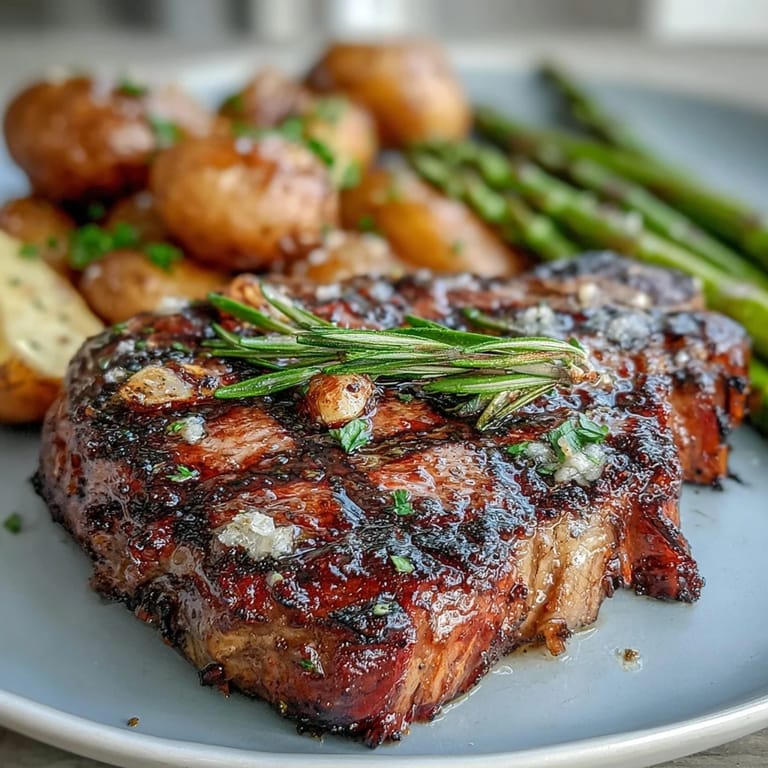
- Fresh rosemary: Tossing sprigs directly on the steak while grilling infuses a woodsy, piney aroma that clings to the crust.
- Garlic cloves: Smashing them releases their oils, which perfume the steak as it cooks without burning.
- Baby potatoes: Their thin skins mean no peeling, and they soak up butter like little sponges.
- Unsalted butter: You control the salt level this way, and it makes the potatoes glossy and irresistible.
- Fresh parsley: A handful of chopped parsley brightens the buttery potatoes and adds a pop of color.
- Asparagus: Grilling brings out a slight sweetness and adds char that balances the richness of the steak.
- Lemon wedges: A squeeze over the asparagus or even the steak cuts through the fat and wakes up the whole plate.
Tired of Takeout? 🥡
Get 10 meals you can make faster than delivery arrives. Seriously.
One email. No spam. Unsubscribe anytime.
Instructions
- Bring the steaks to room temperature:
- Pull them out of the fridge 30 minutes before you plan to grill, then pat them bone-dry with paper towels. Rub each steak all over with olive oil, then season generously with salt and pepper, pressing it into the meat so it sticks.
- Get the grill screaming hot:
- Preheat your grill to high heat, aiming for 450 to 500 degrees Fahrenheit. You want to hear that sizzle the moment the steak hits the grates.
- Grill the steaks:
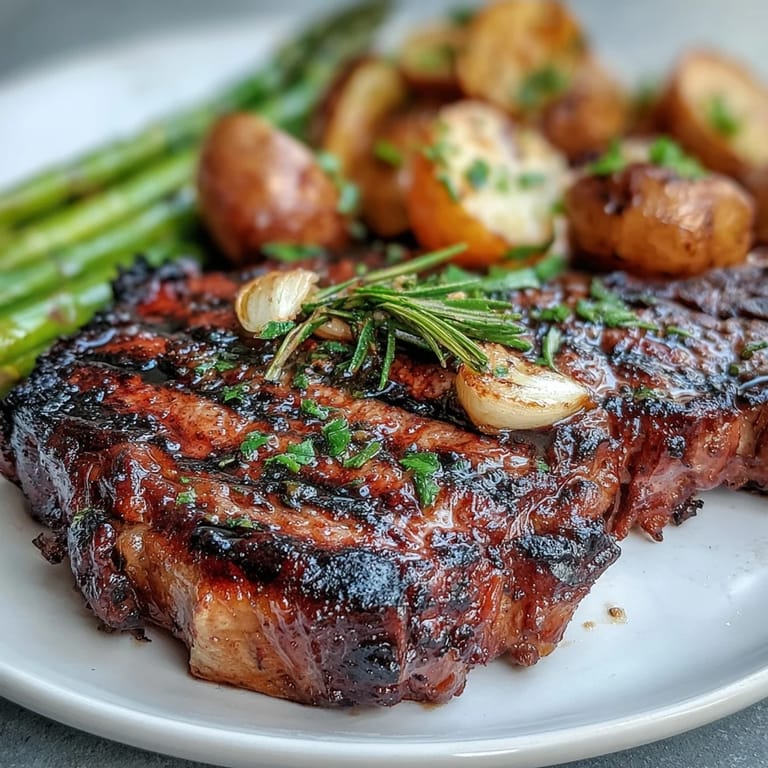
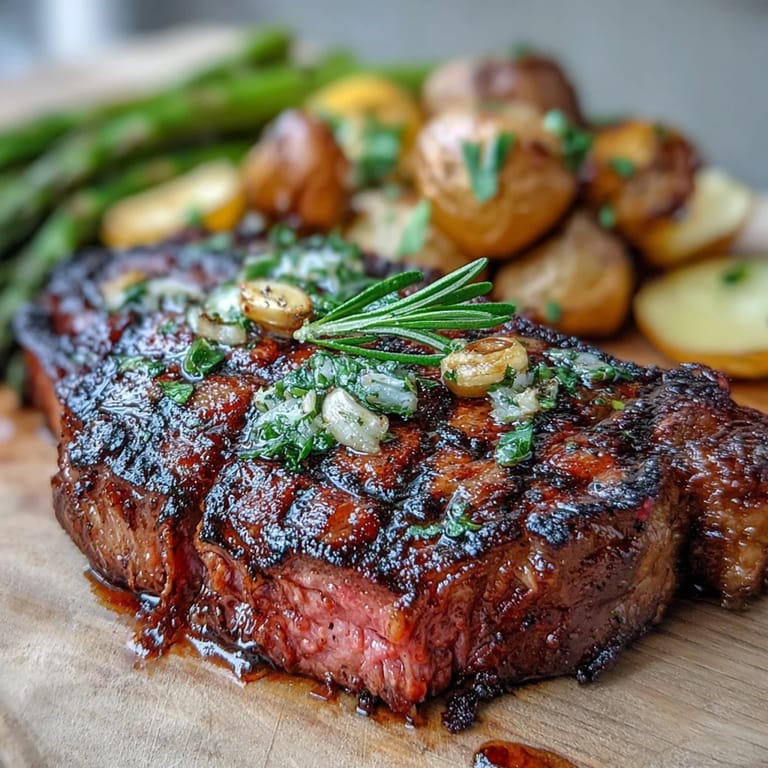
- Lay the steaks on the hottest part of the grill and place a rosemary sprig and smashed garlic clove on top of each one. Grill for 4 to 5 minutes per side for medium-rare, flipping only once, then move them to a plate and tent loosely with foil to rest for 8 minutes.
- Boil the potatoes:
- While the steaks cook, add halved baby potatoes to a pot of salted boiling water. Cook for 10 to 12 minutes until fork-tender, then drain and toss immediately with butter and chopped parsley while they're still steaming.
- Grill the asparagus:
- Toss the trimmed asparagus with olive oil, salt, and pepper, then lay them across the grill grates during the last 5 minutes of steak cooking. Turn them once until they're tender with light char marks.
- Serve it all together:
- Slice the steak off the bone if you like, or serve it whole on a big platter with the asparagus, buttered potatoes, and lemon wedges on the side. Let everyone squeeze their own lemon and dig in.
 Save
Save One summer evening, I plated this meal for a small dinner with neighbors and someone asked if I'd gone to culinary school. I laughed and said no, just a good cut of meat and a hot grill. But truthfully, it felt like a compliment I'd earned through trial and error, overcooked steaks, and learning when to trust my instincts. That's when I realized cooking isn't about being perfect, it's about showing up and caring enough to get it right.
Choosing Your Steak
Look for steaks with generous marbling and a bright red color, avoiding any with a grayish tint. The bone should be cleanly cut and the meat should feel firm, not slimy. If you can, ask the butcher for steaks that are at least an inch and a half thick so they don't overcook before they get a good crust. I've learned that spending a little extra on quality meat makes all the difference, you can taste it in every bite.
Getting the Doneness Right
An instant-read thermometer takes all the guesswork out, aim for 130 degrees Fahrenheit for medium-rare and pull it off a few degrees early since it keeps cooking while it rests. If you don't have a thermometer, press the steak gently with your finger, it should feel like the fleshy part of your palm below your thumb when you touch your thumb to your middle finger. I used to rely on timing alone and ended up with everything from raw centers to leather, so now I always check the temp.
Pairing and Serving Suggestions
A bold red wine like Cabernet Sauvignon or Malbec stands up to the richness of the rib eye and doesn't get lost. If you want to add another side, a simple arugula salad with shaved Parmesan and lemon vinaigrette keeps things light. I've also served this with garlic bread for soaking up any steak juices left on the plate, which is honestly the best part.
- Swap the asparagus for broccolini or green beans if that's what you have on hand.
- Try finishing the steak with a pat of herb butter right before serving for extra richness.
- Leftover steak makes an incredible breakfast hash the next morning with fried eggs.
 Save
Save This meal has become my go-to when I want to impress without stressing, and it never fails to deliver. There's something about a perfect steak that makes any evening feel like a celebration.
Recipe FAQs
- → How do I know when the rib eye is cooked to medium-rare?
For medium-rare, grill 4-5 minutes per side until the internal temperature reaches 130-135°F. The steak should feel slightly firm with some give when pressed. Using a meat thermometer is the most accurate method.
- → Why should I let the steaks rest before serving?
Resting for 8 minutes allows the juices to redistribute throughout the meat. If you cut immediately, those flavorful juices will run out onto the plate instead of staying in the steak, resulting in a drier texture.
- → Can I cook this indoors without a grill?
Yes, use a cast iron skillet or grill pan over high heat. Sear the steaks for 4-5 minutes per side, then finish in a 400°F oven if needed. You'll get excellent results with a beautiful crust.
- → What's the best way to season a rib eye steak?
Keep it simple with kosher salt, freshly ground black pepper, and quality olive oil. The bone-in cut has incredible natural flavor, so herbs like rosemary and garlic enhance rather than overpower the meat.
- → How thick should the steaks be for grilling?
Aim for 1.5 inches thick, which allows you to develop a nice char on the outside while keeping the inside perfectly medium-rare. Thinner steaks cook too quickly and can easily overcook.
- → What wine pairs best with grilled rib eye?
Bold red wines like Cabernet Sauvignon or Malbec complement the rich, fatty flavors of rib eye beautifully. Their tannins cut through the meat's richness while enhancing the savory grilled notes.