 Save
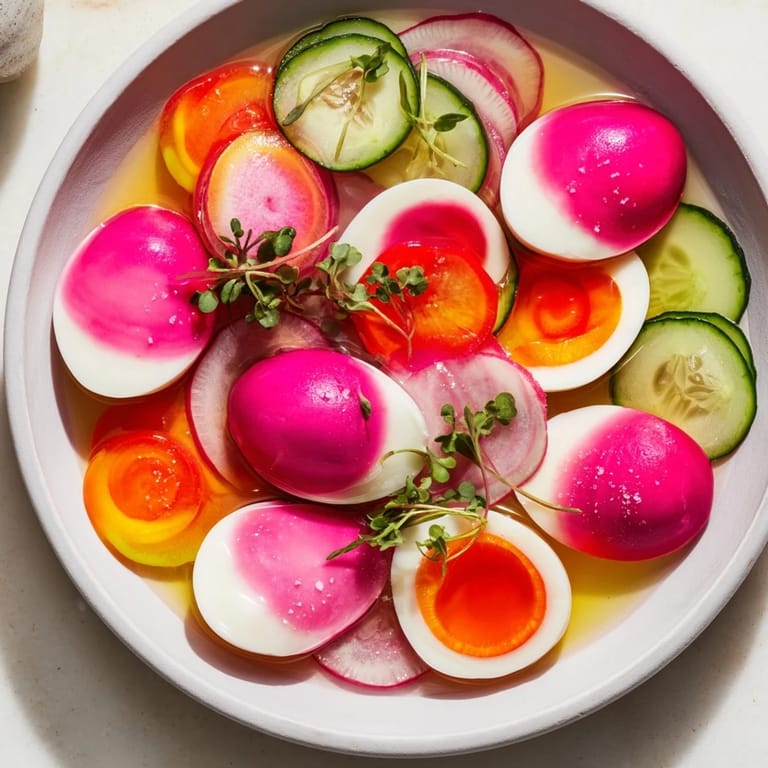
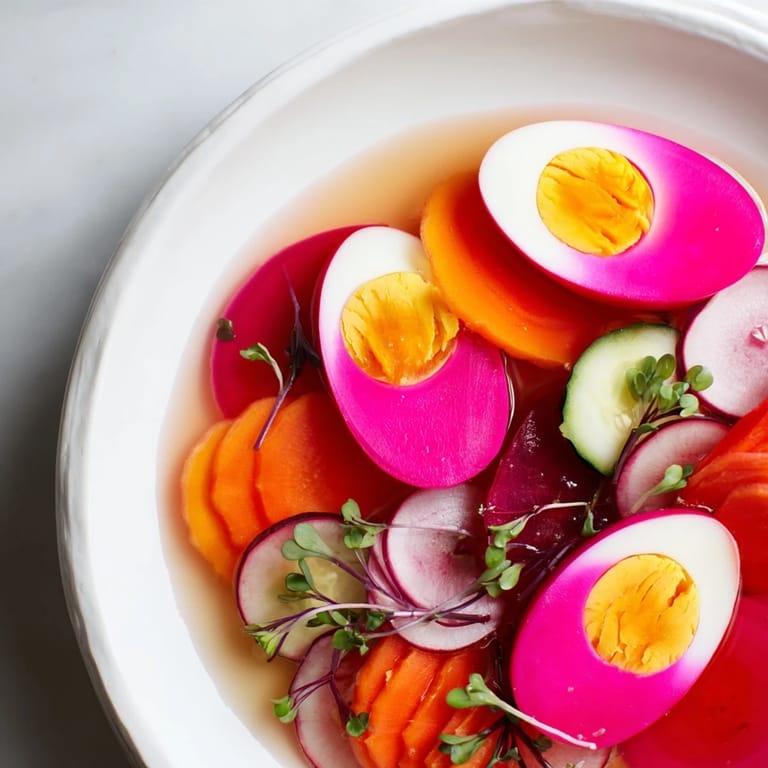
Save The first time I arranged a platter with beet-dyed eggs, I was frantically prepping for a dinner party and somehow ended up with vibrant magenta eggs staring back at me from a mason jar. I'd been skeptical about the whole thing until I saw them halved on a black board, surrounded by pickled rainbows and fresh fruit, and realized I'd accidentally created something that looked like it belonged in a gallery, not on a dinner table. That's when "The Neon Night" was born—not from careful planning, but from a happy accident that turned into the most-requested appetizer I make now.
I made this for my sister's engagement party and watched her friends photograph it more than they photographed the actual bride—which she found hilarious, not offensive. One guest kept asking if the eggs were "fake" because they couldn't believe the color was real, and I loved having that moment to explain the magic of beets and vinegar and a little patience. It became the thing people talked about most, not because it was complicated, but because it was memorable and tasted even better than it looked.
Ingredients
- Mini cucumbers (1 cup/120g), sliced: These stay crispier than regular cucumbers and pickle more evenly in a short time.
- Rainbow carrots (1 cup/120g), sliced on the bias: The angle matters—it catches light better and makes them feel intentional, not like you just chopped whatever was in the fridge.
- Radishes (1 cup/120g), thinly sliced: They add peppery bite and their natural pink edges contribute to the neon effect.
- Red onion (1/2), thinly sliced: Red onion mellows beautifully in the brine and turns everything around it a gorgeous pink.
- White vinegar (1 cup/240ml): Use quality vinegar—cheap stuff tastes thin and bitter when it hits your tongue.
- Water (1 cup/240ml): This dilutes the vinegar so the vegetables pickle gently rather than turning into sour bombs.
- Sugar (2 tbsp) and kosher salt (1 tbsp): These balance the acid and make the pickling liquid taste like something you'd actually want on your tongue repeatedly.
- Mustard seeds (1 tsp) and peppercorns (1 tsp): These float around and give you tiny surprises of flavor—don't skip them just because they're small.
- Large eggs (6) for beet-dyed version: Older eggs peel cleaner, so don't use the ones from this morning if you can help it.
- Cooked beet (1 medium), peeled and sliced: The slices stay in the jar and create a gradient effect as the eggs absorb color—it's like watching time-lapse photography.
- Apple cider vinegar (1 cup/240ml): This is sweeter than white vinegar and pairs beautifully with the earthiness of beets.
- Fresh blueberries, blackberries, kiwi, mango, and dragon fruit (1 cup each/150g): Pick whatever's brightest at your market—the variation in color is the whole point.
- Microgreens or edible flowers: These are the final flourish that make people lean in and go "oh, fancy."
- Flaky sea salt: The texture matters here more than you'd think—it adds visual drama and tastes bright.
Tired of Takeout? 🥡
Get 10 meals you can make faster than delivery arrives. Seriously.
One email. No spam. Unsubscribe anytime.
Instructions
- Make the pickling brine:
- Pour vinegar, water, sugar, salt, mustard seeds, and peppercorns into a saucepan and bring to a simmer, stirring until everything dissolves—you'll smell it before it's ready, a sharp vinegar perfume that's weirdly comforting.
- Pickle the vegetables:
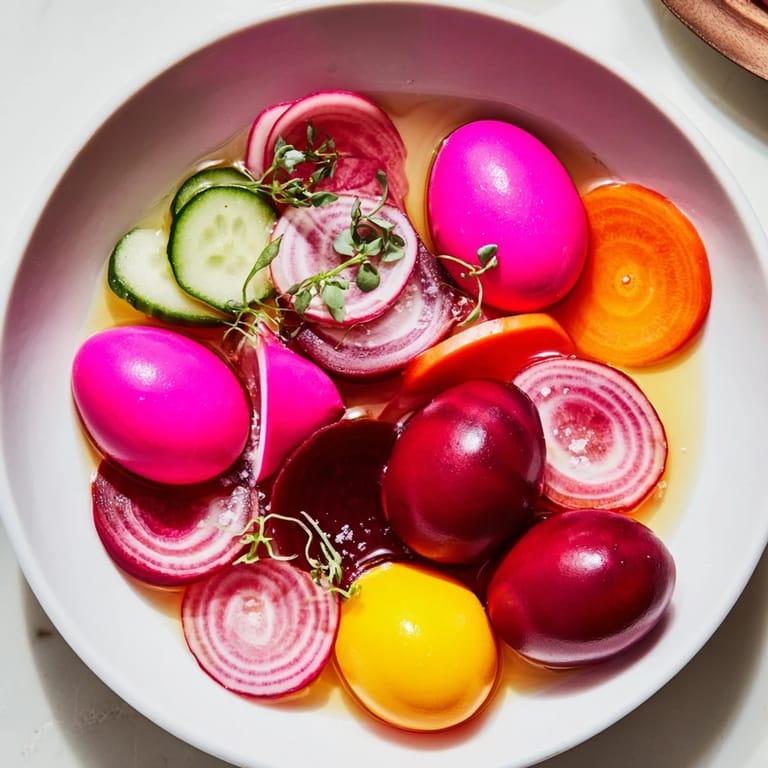
- Put your sliced cucumbers, carrots, radishes, and red onion into a heatproof container (glass is prettier if you're peeking) and pour that hot brine over everything. Let it cool at room temperature first, then refrigerate for at least 2 hours, but overnight is when the magic really happens and the colors deepen into jewel tones.
- Boil and chill the eggs:
- Place eggs in cold water and bring to a boil, then cook for 8-9 minutes depending on how runny you like the yolk (I aim for just set, so there's a tiny bit of give). Immediately transfer them to ice water—this stops the cooking and makes peeling less heartbreaking.
- Create the beet dye:
- Slice your cooked beet and combine it in a jar with apple cider vinegar, water, sugar, and salt. Peel those cooled eggs carefully and add them to the jar, pressing them gently into the liquid so they get coated.
- Let the eggs transform:
- Refrigerate for at least 2 hours, though 4-6 hours gives you those deeply saturated magenta eggs that look almost unnatural. You can peek at them every couple hours if you want—I do.
- Assemble on the board:
- Arrange pickled vegetables, halved or sliced beet eggs, and all those fresh fruits across your black board in loose clusters rather than rigid lines. It should look abundant and a little chaotic, like you just poured color across something dark.
- Final garnish and serve:
- Scatter microgreens or edible flowers across the board, finish with flaky salt, and bring it straight to the table while it's still chilled. Let people help themselves—it's an appetizer that encourages grazing.
 Save
Save There's something about setting this platter in the center of a table that immediately changes the mood—suddenly it's not just dinner, it's an experience. People slow down, they look at what they're eating, they actually taste things instead of just consuming them.
The Art of Color on a Plate
When you start thinking about food as color and not just sustenance, everything shifts. This platter taught me that neon doesn't have to be artificial—beets and radishes and fruit naturally glow if you give them the right background. A black board does the work for you, making every color pop without you having to do anything fancy. I've since used this principle on other boards, and it never stops being satisfying to watch someone's face light up when they see it.
Timing and Preparation
The beauty of this dish is that almost everything happens in jars and containers while you're doing something else entirely. I've prepped the pickles and eggs on a Tuesday morning and not touched them again until Friday evening, pulling them straight from the fridge to arrange while my guests poured drinks. It's one of those rare appetizers that actually saves you stress instead of creating it, and it tastes better for having had time to develop.
Customizations and Variations
Once you understand how pickling works, you can riff endlessly on this concept. I've used turmeric for yellow brines, red cabbage for deep blue eggs, and even beetroot juice straight for extra-intense magenta. The fruit can shift with the season—stone fruits in summer, pomegranate in fall, citrus in winter. What matters is that you're building something that feels fresh and surprising to you.
- For a vegan version, double down on pickled vegetables and add toasted seeds or nuts for protein and crunch.
- If you're making this for a crowd, prep components in advance but assemble on the board no more than 30 minutes before serving so everything stays crisp and cold.
- Leftover pickled vegetables keep in the fridge for at least a week and are incredible on grain bowls, sandwiches, or just eaten straight from the jar at midnight.
 Save
Save This platter is proof that the most memorable food doesn't need to be complicated—it just needs to be intentional and a little bit bold. Make it once and you'll understand why I keep coming back to it.
Recipe FAQs
- → How long should the pickled vegetables marinate?
For best flavor, refrigerate the pickled vegetables for at least 2 hours or overnight to allow the spices and brine to fully infuse.
- → What gives the eggs their vibrant color?
The eggs are soaked in a mixture of cooked beet slices, apple cider vinegar, and sugar, which imparts a rich red-purple hue naturally.
- → Can I prepare this platter in advance?
Yes, both the pickled vegetables and beet-dyed eggs can be prepared a day ahead and chilled to deepen flavors and colors.
- → What garnishes work well with this dish?
Microgreens, edible flowers, and a sprinkle of flaky sea salt add freshness and a delicate finishing touch to the platter.
- → Is this dish suitable for gluten-free diets?
Yes, all ingredients used are naturally gluten-free, but always verify packaged items like vinegar for hidden gluten.