 Save
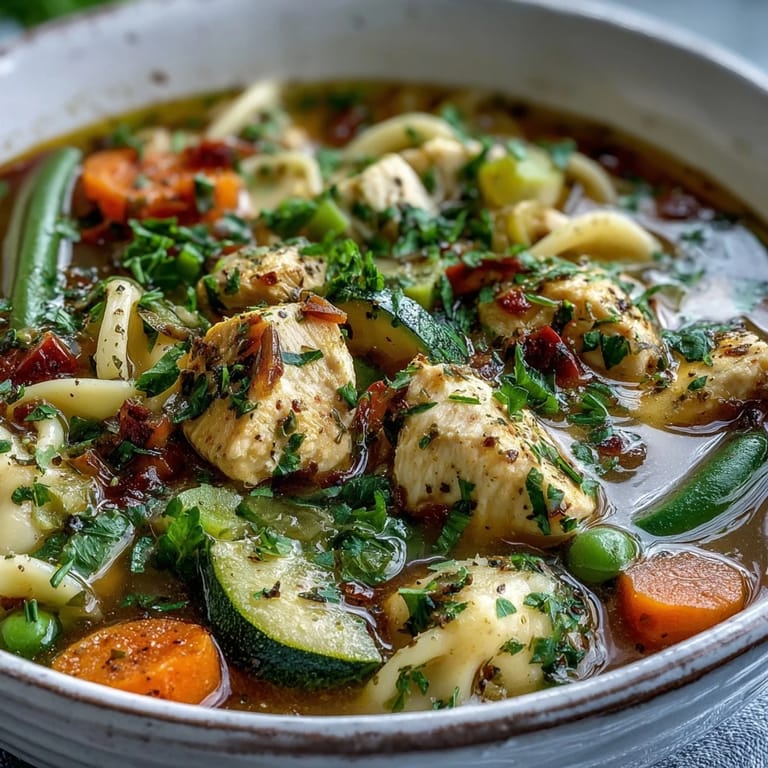
Save There's something about a pot of soup simmering on the stove that makes a kitchen feel like home. I discovered this pasta soup quite by accident on a chilly Tuesday evening when I had chicken, half a vegetable drawer, and nothing else figured out. What started as an improvisation became the recipe I now make whenever someone needs comfort in a bowl. The way the pasta softens into the broth, how the chicken becomes impossibly tender—it all comes together without fuss or pretension.
I made this soup for my neighbor last winter when she came home from the hospital, and watching her taste it was unexpectedly moving. She closed her eyes on the first spoonful and smiled in a way that suggested her appetite was finally returning. That's when I realized this wasn't just dinner—it was proof that someone cared enough to spend time at the stove thinking of her.
Ingredients
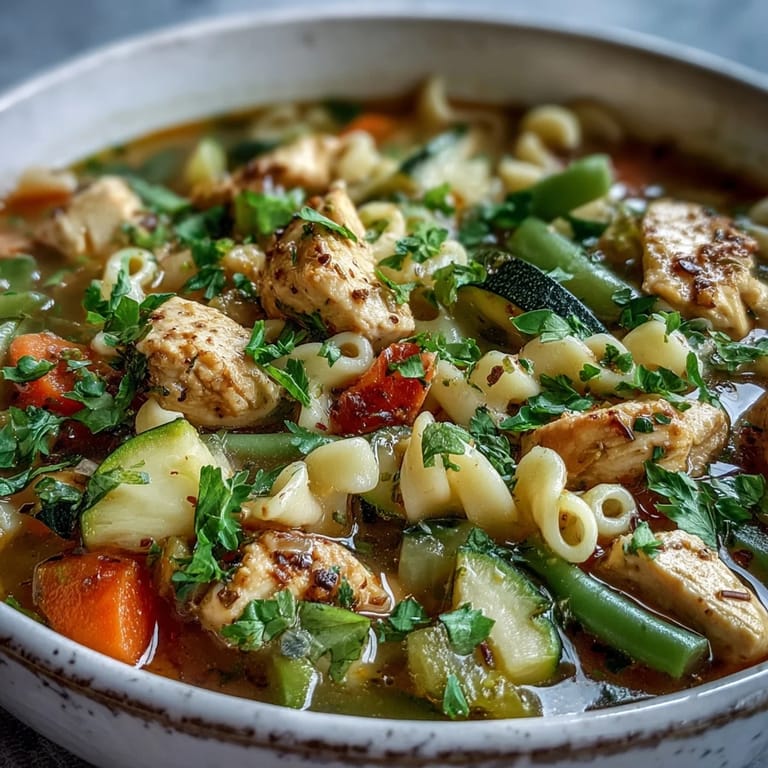
- Boneless, skinless chicken breasts: Cut into small cubes so they cook quickly and distribute evenly throughout the soup, becoming tender nuggets rather than tough chunks.
- Carrots and celery: The aromatic foundation that builds flavor from the moment they hit the hot oil, sweet and subtle beneath everything else.
- Onion and garlic: These two are non-negotiable—the garlic especially comes alive after that brief minute in the pan, filling your kitchen with a smell that promises something good is happening.
- Zucchini and green beans: Fresh vegetables that add texture and color without weighing down the broth, staying slightly firm if you watch your timing.
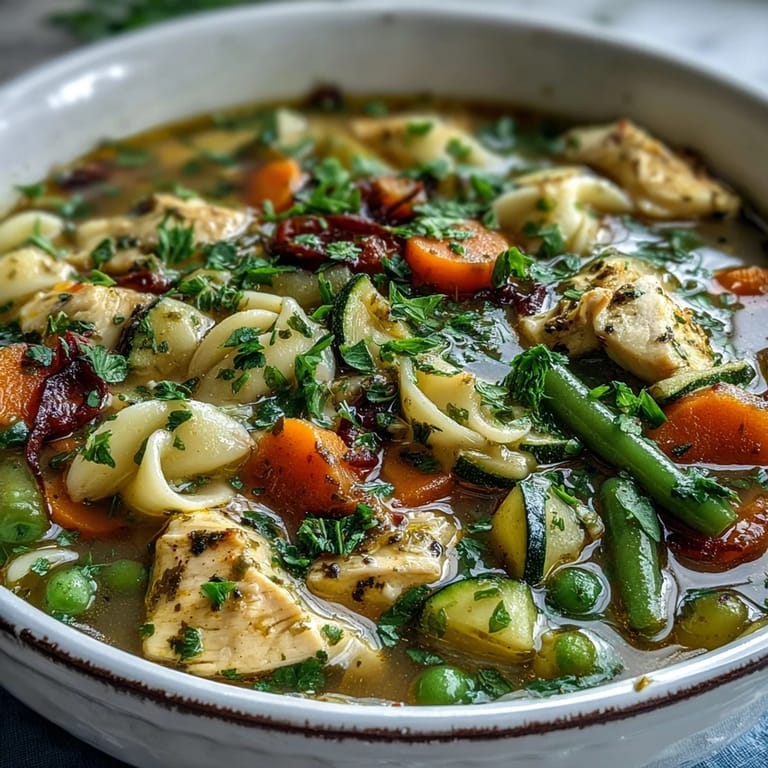
- Frozen peas: Don't overlook them because they're frozen—they add sweetness and contribute a pop of brightness that feels deliberate.
- Diced tomatoes: The acidity anchors everything, preventing the soup from tasting one-dimensional or overly salty.
- Small pasta shapes: Ditalini or elbow macaroni works best because larger shapes get lost and smaller ones vanish completely.
- Chicken broth: Use low-sodium so you control the salt level as you taste and adjust near the end.
- Olive oil: Just a tablespoon to start the aromatics, keeping the soup light rather than heavy.
- Thyme, basil, and bay leaf: This combination is classic for a reason—thyme adds earthiness, basil contributes a gentle floral note, and the bay leaf brings everything into focus.
- Fresh parsley: Stirred in at the very end, it tastes bright and alive, reminding you that this came from your kitchen moments before eating.
Tired of Takeout? 🥡
Get 10 meals you can make faster than delivery arrives. Seriously.
One email. No spam. Unsubscribe anytime.
Instructions
- Build your flavor base:
- Heat the olive oil in your pot and add the onion, carrots, and celery together. You're looking for them to soften and become translucent at the edges—this takes about five minutes and fills your kitchen with the most inviting smell. Listen for a gentle sizzle and stir occasionally so nothing sticks to the bottom.
- Wake up the garlic:
- Add your minced garlic and let it cook for just one minute until fragrant. Resist the urge to let it go longer or it'll turn bitter and sharp rather than sweet and aromatic.
- Introduce the chicken:
- Stir in your cubed chicken and cook it for four to five minutes, letting it develop a light golden color on the outside. It doesn't need to be fully cooked yet—you're just beginning the process and giving it a head start on flavor.
- Gather everything together:
- Add the zucchini, green beans, diced tomatoes with their juice, and all your seasonings. Give everything a good stir so the herbs and spices coat the vegetables. This is your moment to smell that wonderful combination and know you're on the right track.
- Bring it to a simmer:
- Pour in the chicken broth and increase the heat until you see a gentle boil. Then reduce the heat, cover the pot, and let it simmer quietly for fifteen minutes while the flavors marry and deepen. This is when you can finally sit down.
- Add the pasta and peas:
- Uncover the pot and stir in the pasta and frozen peas. Simmer uncovered for ten to twelve minutes, stirring occasionally, until the pasta reaches that perfect al dente texture and the chicken is cooked all the way through. The soup will look slightly thicker as the pasta releases its starch.
- Finish with fresh herbs:
- Remove the bay leaf by fishing it out with a spoon, then stir in your fresh parsley. Taste the soup now and adjust salt and pepper to your preference—this final seasoning makes all the difference.
 Save
Save My son once asked why I always made this soup when he was sick, and I didn't have a simple answer. But thinking about it now, I think it's because this soup asks nothing difficult of you while giving everything in return—nourishment, warmth, the feeling that someone understands what you need.
Variations Worth Trying
The beauty of this soup is how willingly it adapts to what you have on hand or what you're craving. I've made it with rotisserie chicken from the grocery store on nights when I didn't want to deal with raw poultry, and it was just as satisfying. Swapping in corn for zucchini gives it a sweeter profile, while spinach or kale added at the very end brings an earthy note that feels intentional rather than like you were just using up greens. Bell peppers work wonderfully too, adding color and a subtle sweetness that complements the tomatoes.
Pairing and Serving Suggestions
Serve this soup in wide bowls with crusty bread that can handle a little dunking, or pair it with a simple grilled cheese for something more substantial. A crisp white wine like Sauvignon Blanc cuts through the richness beautifully if you're inclined to cook with a glass nearby. I've also found that grated Parmesan stirred in just before eating adds a savory depth that makes people ask for the recipe.
Make It Your Own
This is the kind of recipe that improves with your personal touch rather than diminishing. Pay attention to how your family eats and adjust the vegetables, pasta shape, or herbs accordingly. The best version of this soup isn't the one written here—it's the one you make repeatedly until it becomes as familiar as your own kitchen.
- Use gluten-free pasta if needed, and the soup will taste exactly as good and comforting.
- Make a big batch on Sunday and reheat portions throughout the week, though the pasta will soften more with time.
- Keep a ladle and extra bowls near the pot because people always want seconds before they've finished their first serving.
 Save
Save There's real magic in how something so simple can become such a cornerstone of comfort in your home. Make this soup for people you love, and watch how it becomes more than just dinner—it becomes a memory they ask for by name.
Recipe FAQs
- → Can I make this soup ahead of time?
Absolutely. The flavors deepen when refrigerated overnight. If storing, keep the pasta separate or note that it will continue softening. Reheat gently over medium-low heat, adding a splash of broth if needed.
- → What pasta shapes work best?
Small shapes like ditalini, elbow macaroni, orzo, or small shells are ideal—they cook evenly and fit well on a spoon. Avoid long pasta or large varieties that may overwhelm the spoonful.
- → Can I use rotisserie chicken instead?
Yes. Add shredded rotisserie chicken during the last 5 minutes of simmering, just when you add the pasta. This prevents the cooked chicken from becoming tough or dry.
- → How do I make this gluten-free?
Simply substitute the regular pasta with your favorite gluten-free pasta variety. Also ensure your chicken broth is certified gluten-free, as some brands contain wheat-based additives.
- → What vegetables can I substitute?
Feel free to swap zucchini for yellow squash, green beans for corn or spinach, or add bell peppers. The soup is quite forgiving—use whatever fresh vegetables you have on hand.
- → Can I freeze this soup?
Freezing works well, though the pasta will soften upon reheating. For best results, freeze without pasta and cook fresh pasta when reheating. Store in airtight containers for up to 3 months.