 Save
Save There's this moment when roasted cabbage stops being a side dish and becomes something you actually crave—it happened to me on a Tuesday night when I needed to use up half a head from the crisper drawer. I threw wedges in the oven with olive oil and salt, and when those edges turned golden and crispy, the kitchen filled with this sweet, almost nutty smell that made me pause mid-scroll. Then I drizzled tahini sauce over the top, and my partner walked in asking what smelled like a Middle Eastern restaurant, and I realized I'd accidentally discovered dinner.
I made this for a dinner party last spring when someone mentioned they'd given up heavy starches, and I wanted to prove that vegetables could be the main event. Everyone went back for seconds, and one guest actually asked for the tahini sauce recipe thinking it was some complicated technique—when really it's just five ingredients whisked together in a bowl. That's when I knew this wasn't just a recipe, it was a conversation starter.
Ingredients
- 1 medium green cabbage (about 2 lbs), cut into 8 wedges with core intact: The core is your best friend here—it holds everything together so the leaves get tender while staying cohesive, and you get those crispy charred edges.
- 2 tbsp olive oil: Use something you actually like the flavor of, not the cheapest bottle—it matters when there aren't many ingredients to hide behind.
- 1/2 tsp kosher salt and 1/4 tsp freshly ground black pepper: Coarse salt seasons better than fine, and fresh pepper makes a noticeable difference in the tahini sauce too.
- 1/3 cup tahini (sesame seed paste): Stir the jar before measuring—tahini separates and a spoon from the top tastes different than one from the bottom.
- 1 small garlic clove, finely grated: A microplane grater is worth the drawer space here; it breaks down the garlic so thoroughly it blends invisibly into the sauce.
- 2 tbsp fresh lemon juice: Bottled works in a pinch, but fresh lemon makes the sauce brighter and more alive.
- 2–4 tbsp cold water, ground cumin, and kosher salt: The water is what makes or breaks the sauce—add it slowly so you don't oversoak and end up with tahini soup.
- Toasted sesame seeds, fresh herbs, and smoked paprika for garnish: These aren't optional if you want the dish to feel intentional—toast the seeds yourself if you can, it's a different flavor experience.
Tired of Takeout? 🥡
Get 10 meals you can make faster than delivery arrives. Seriously.
One email. No spam. Unsubscribe anytime.
Instructions
- Get the oven ready and line your sheet:
- Preheat to 425°F and line a baking sheet with parchment paper so you're not scraping anything off later.
- Arrange and season the cabbage:
- Place wedges on the sheet, drizzle with olive oil, and dust with salt and pepper on both sides—you want every surface to have a chance at those crispy edges.
- Roast until the magic happens:
- 25–30 minutes at 425°F, flipping halfway through. You're looking for browned, almost caramelized edges while the inside stays tender. The first time you do this, set a timer so you don't miss the flip.
- Build the tahini sauce while everything roasts:
- In a bowl, whisk together tahini, grated garlic, lemon juice, cumin, and salt. The mixture will seize up and look broken at first—that's normal. Add cold water one tablespoon at a time, whisking steadily, until it transforms into something smooth and pourable, like a thick dressing.
- Plate and finish:
- Transfer roasted cabbage to a serving platter, drizzle generously with tahini sauce, then scatter toasted sesame seeds, fresh herbs, and a pinch of paprika across the top. Serve warm or let it cool to room temperature.
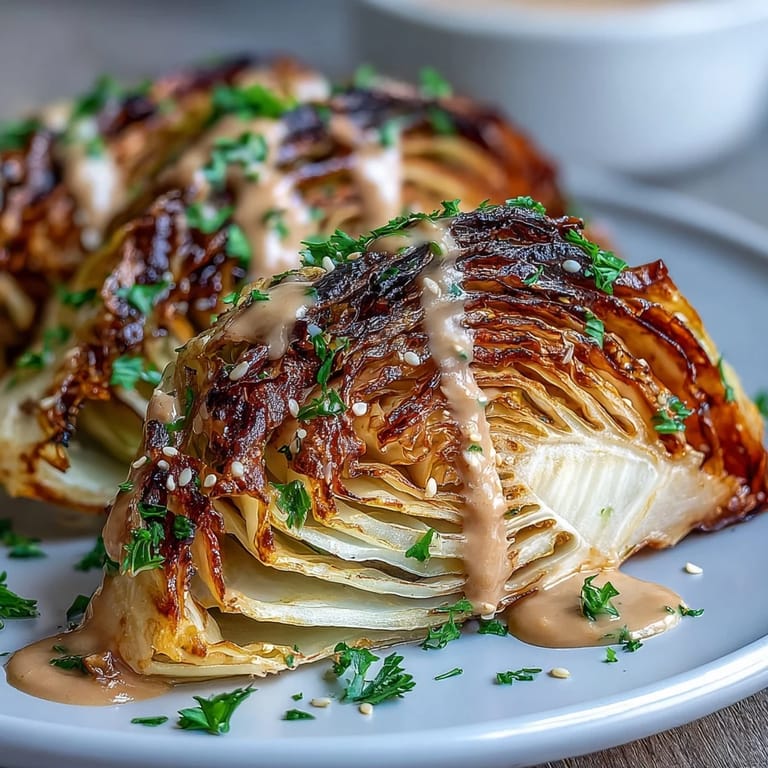 Save
Save There's something grounding about serving something this simple and watching people actually enjoy it, no apologies needed. This dish taught me that vegetables don't need to be complicated to be memorable—they just need respect, heat, and a sauce that knows what it's doing.
The Tahini Sauce Technique
The sauce is honestly the whole experience here, so it deserves attention. Tahini is stubborn—it seizes up when you first add liquid, and that moment always feels like you've broken something. You haven't. Keep whisking steadily, and it'll release and become creamy. The cold water matters more than you'd think; warm water makes it break apart, so fill your glass from the cold tap or use water straight from the fridge.
Roasting Cabbage Right
The secret is leaving the core intact so the wedges hold their shape. If you cut the core out, the leaves fall apart mid-roast and you end up with roasted cabbage pieces instead of wedges. The core gets tender and sweet, almost like a different vegetable by the time it's done. Temperature matters too—425°F is hot enough to brown the edges in 30 minutes without turning the whole thing to ash.
Making It Your Own
This is the kind of dish that invites playing around. I've made it with red cabbage when that's what was on hand, bumped up the roasting time by five minutes since red takes a hair longer. I've added a pinch of chili flakes to the sauce for heat, stirred in pomegranate seeds for brightness, or served it alongside warm pita to turn it into something more substantial.
- Add sumac to the garnish instead of paprika if you want sharp, citrusy notes without actual acid.
- Toss the roasted wedges with the tahini sauce right before serving if you like them completely coated, or drizzle it on just before plating for contrast.
- Leftover tahini sauce keeps in the fridge for days and works on grain bowls, roasted vegetables, or as a dip for raw carrots and celery.
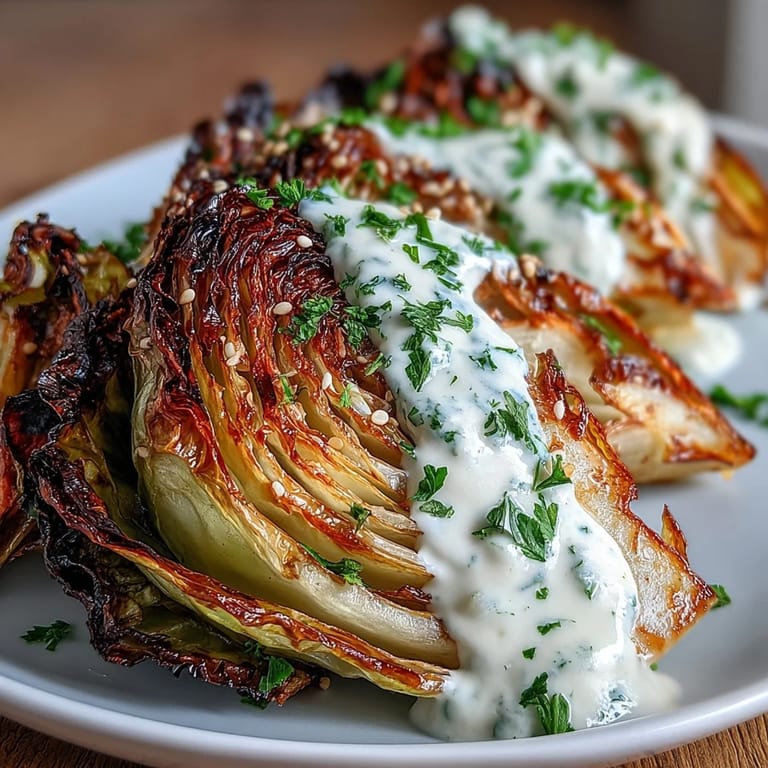 Save
Save This recipe proved to me that the most memorable meals sometimes come from the simplest combinations of good ingredients treated with care. Once you've made it once, you'll find yourself reaching for it again.
Recipe FAQs
- → Can I prepare the tahini sauce ahead of time?
Yes, the tahini sauce can be made up to 3 days in advance and stored in an airtight container in the refrigerator. It may thicken when chilled—simply whisk in a teaspoon of water to restore the creamy consistency before serving.
- → What's the best way to reheat leftovers?
Reheat cabbage wedges in a 375°F oven for 10-12 minutes until warmed through. Avoid microwaving, which can make the cabbage soggy. Store sauce separately and drizzle over reheated cabbage just before serving.
- → Can I use red cabbage instead of green?
Absolutely. Red cabbage works beautifully and adds vibrant color. Note that red cabbage may need an extra 5-10 minutes of roasting time to reach the same tenderness as green varieties.
- → How do I know when the cabbage is done roasting?
Look for deep golden-brown caramelization on the cut edges and the outer leaves. The thickest part of the wedge should yield easily when pierced with a fork, offering tender-crisp texture without mushiness.
- → What can I serve alongside this dish?
This pairs wonderfully with grilled meats, roasted chicken, or lentil dishes. For a complete vegetarian meal, serve over rice or quinoa, or stuff into warm pita bread with extra tahini sauce drizzled on top.
- → My tahini sauce is too thick or separated—how do I fix it?
If the sauce is too thick, gradually whisk in additional cold water, one tablespoon at a time, until smooth and pourable. If it has separated, continue whisking vigorously—the emulsion will come together into a creamy consistency.