 Save
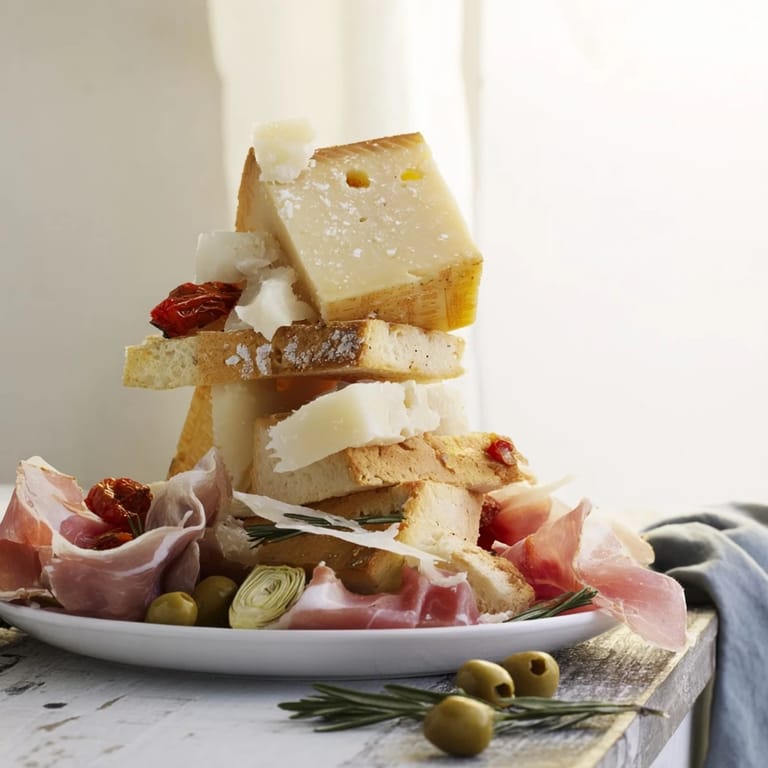
Save I'll never forget the first time I stood in a little trattoria in Tuscany, watching the owner sweep a weathered arm across a sprawling wooden board laden with cheeses, cured meats, and torn bread. It wasn't fancy plating or technique that moved me—it was the casual generosity of it all, the way everything looked like it had been arranged by someone who simply knew what tasted good together and didn't overthink it. That moment taught me that the most memorable meals aren't always cooked; sometimes they're composed. This Rustic Italian Farmhouse Board is my love letter to that philosophy—a celebration of quality ingredients piled high without pretense, inviting everyone around the table to eat with their hands and their hearts.
I remember assembling one of these boards on a crisp autumn evening for friends who'd driven out to visit. The second I set it on the table, conversations stopped. People gathered around it like moths to flame, and suddenly the board became the center of everything—not just the food, but the moment. That's when I realized this wasn't just an appetizer; it was an experience wrapped in the flavors of Italy.
Ingredients
- Parmigiano-Reggiano, 200 g, broken into large chunks: This is the anchor of your board—its crystalline crunch and deep umami flavor remind people why they fell in love with Italian food in the first place. Break it into irregular pieces rather than cubing; the jagged edges catch light and look more inviting.
- Pecorino Toscano, 200 g, cut into wedges: If Parmigiano is the classic, Pecorino is the wild card—sharper, more assertive, with a peppery finish that makes the palate dance. I learned to cut it into wedges because they're easier to break off and share.
- Taleggio, 150 g, torn into rustic pieces: This is your creamy counterpoint, a cheese that softens slightly at room temperature and becomes almost buttery. Tear it by hand rather than cutting; it feels more authentic and showcases its yielding texture.
- Prosciutto di Parma, 150 g, loosely piled: The aristocrat of cured meats. Let it tumble onto the board in loose, generous folds rather than stacking it neatly. It should look abundant, inviting fingers to grab and savor.
- Finocchiana salami, 120 g, thickly sliced: The fennel notes in this Tuscan salami are a revelation—herbaceous and slightly sweet. Thick slices showcase the quality better than paper-thin ones.
- Coppa, 120 g, arranged in rustic folds: Marbled with fat, coppa is silky and rich. Arrange it in soft folds so it looks like it was carefully placed but still feels casual.
- Rustic Italian loaf, 1 large (such as ciabatta), torn into rough pieces: The bread is your canvas and your vehicle for all these flavors. Tear it unevenly; those irregular pieces catch more olive oil and toast at different rates if you warm them slightly.
- Castelvetrano olives, 1 cup: These buttery, mild olives are the peacemakers on the board—approachable even for olive skeptics. Use good ones; the difference between ordinary and excellent olives is profound.
- Sun-dried tomatoes in olive oil, 1 cup, drained: They add a concentrated sweetness and chewy texture that plays beautifully against the salty meats and creamy cheeses. Drain them well so they don't make the board soggy.
- Marinated artichoke hearts, 1 cup, quartered: Tangy and tender, these provide a bright acidic note that refreshes the palate between bites of rich cheese and meat.
- Fresh grapes or figs, 1 small bunch, halved: The sweetness of fruit next to savory elements creates magic. I use whatever's in season—grapes in late summer, figs in early fall. This detail alone elevates the entire board.
- Extra-virgin olive oil, 1/4 cup, for drizzling: The best oil you can afford. It's not just a garnish; it's an ingredient that ties everything together with its fruitiness and warmth.
- Fresh rosemary sprigs, for garnish: A small touch that transforms the visual appeal and adds an herbal whisper to every bite. These little sprigs remind people they're eating from a landscape.
- Coarse sea salt and cracked black pepper, to taste: Season generously but not heavily. The salt brings out the subtle flavors in cheese and meat; the pepper adds a gentle heat.
Tired of Takeout? 🥡
Get 10 meals you can make faster than delivery arrives. Seriously.
One email. No spam. Unsubscribe anytime.
Instructions
- Start with the canvas:
- Place your large wooden board in front of you. I like to use one that's still warm from being wiped with a cloth—there's something about temperature that makes everything feel more welcoming. You're not arranging ingredients; you're composing a landscape.
- Build the cheese foundation:
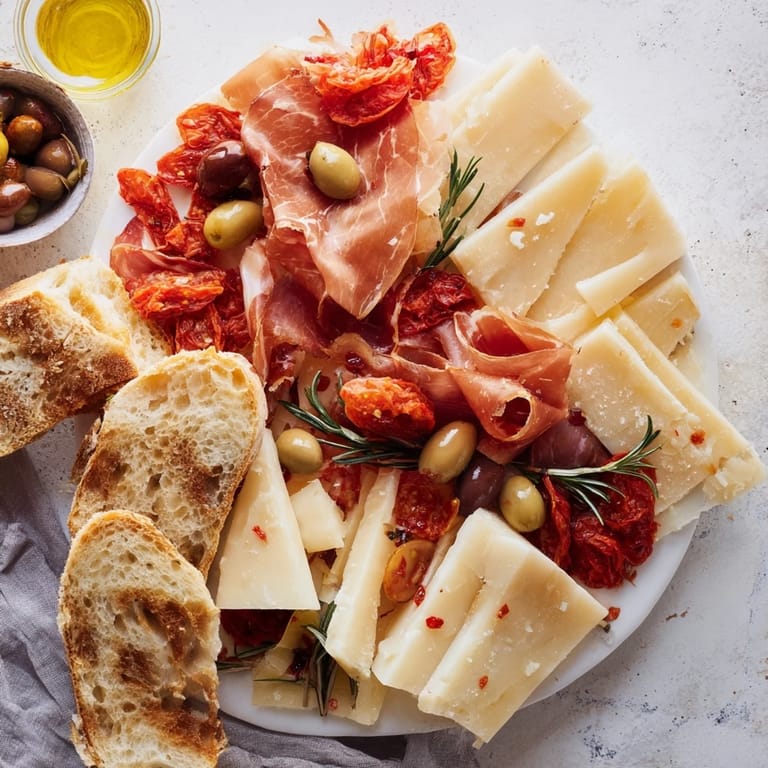
- Break the Parmigiano-Reggiano into irregular chunks and scatter them across the board in two or three clusters. This cheese is sturdy and sets the tone. Add the Pecorino wedges nearby—notice how the contrast in color and texture immediately makes the board more interesting. Finally, tear the Taleggio into soft, creamy-looking pieces and nestle them among the harder cheeses. You want the eye to travel across different textures and colors.
- Layer in the cured meats:
- Now comes the part where you let your hands guide you. Take the prosciutto and loosely pile it in dramatic folds—let it bunch and tumble naturally. Don't flatten it or arrange it too precisely. Arrange the coppa next, again in soft waves that catch light. Lay the salami slices in overlapping arrangements, like fallen leaves. The meats should look abundant and slightly chaotic, as if someone just tossed them on without overthinking it.
- Scatter the bread:
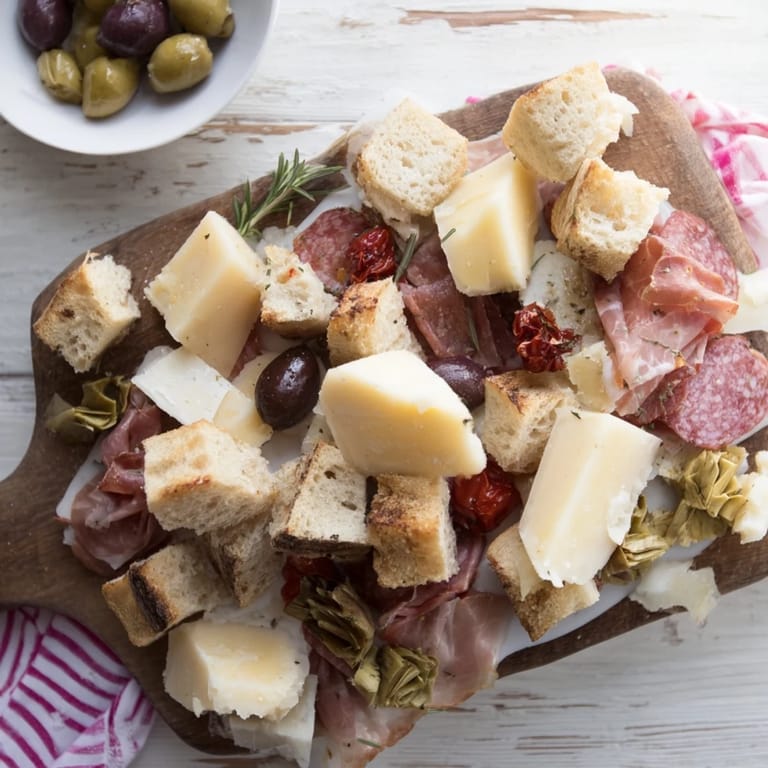
- Tear your rustic loaf into rough, uneven pieces. Toast them lightly if you like (I sometimes do, especially if the bread is very fresh), then scatter them around the board, filling gaps between the cheese and meat. The bread should look like an afterthought in the best possible way—casual and inviting.
- Create flavor pockets:
- Now for the supporting cast. Fill small pockets on the board with the olives, sun-dried tomatoes, and artichoke hearts. Group them loosely rather than scattering them individually—this creates natural gathering spots for your guests' hands. Add the halved grapes or figs in one or two clusters where they'll catch people's eyes.
- Finish with olive oil and herbs:
- Drizzle your best olive oil over the bread and across the cheeses in thin, generous threads. Watch how it pools slightly in the crevices. Lay fresh rosemary sprigs across the board as if you've just picked them from the garden and scattered them for decoration. Finally, dust lightly with coarse sea salt and cracked black pepper, letting the seasonings land where they may.
- Bring it to the table:
- Step back and look at what you've created. If there are gaps, that's fine. If something looks imperfect, that's exactly right. Carry it to the table and watch people's faces as they approach. That moment—when eyes widen at the generosity—is what this is all about.
 Save
Save I was teaching my daughter to cook a few years ago, and I assembled one of these boards to share while we worked. She wasn't interested in following recipes that night—she wanted to understand flavor and how different foods played together. We stood at the kitchen counter, each of us picking combinations and tasting them side by side, learning that the Taleggio's creaminess mellowed the Pecorino's sharpness, that the fruit's sweetness woke up the salty meats. That board became our teacher, and I realized then that food doesn't always have to be cooked to be meaningful.
Sourcing Your Ingredients Like a Local
The foundation of this board is finding exceptional ingredients. I've learned that Italian delis and specialty cheese shops are worth the extra trip—the people there know their products and will tell you stories about where each cheese comes from, what season brings the best salami, which rosemary is most fragrant. A good cheesemonger can change your entire approach to cooking. They'll let you taste before you buy and will often offer recommendations based on what they're excited about that week. Don't rush this part. Spend time choosing, asking questions, and letting the ingredients guide you toward what feels right.
Creating the Perfect Wine Pairing
One of my favorite lessons came from a winemaker in Chianti who explained that robust red wines with those salty, savory cured meats and peppery cheeses create a conversation in your mouth. A good Chianti Classico or Sangiovese won't overpower the delicate prosciutto or the creamy Taleggio; instead, it enhances them, creating bridges between flavors. If you prefer white, try a crisp Vermentino or a mineral-forward Gavi—the acidity cuts through the richness beautifully. The goal is balance, not dominance. Serve the wine at a slightly cool room temperature, and pour generously. This is the kind of meal where wine isn't an accompaniment; it's a partner in the experience.
Making It Your Own
The beauty of this board is that it's infinitely adaptable while still honoring the tradition. Some nights I add creamy Gorgonzola for those who love blue cheese's boldness, or swap in Asiago for something with more bite. Other times I'll add roasted almonds or walnuts for textural contrast, or include pickled peppers and marinated mushrooms for guests who want more vegetables. I've added fresh figs when they're in season, switched from grapes to pears in the fall, and once included honeycomb because it seemed right. The framework stays the same—good cheese, good meat, good bread—but the details shift with the season and with whoever is gathering around the table.
- Try adding roasted hazelnuts or candied walnuts for a sweet-savory element that catches people off guard in the best way.
- Pickled vegetables like peperoncini or marinated mushrooms add brightness and another layer of flavor complexity.
- Don't be afraid to include something unexpected—a small bowl of fresh ricotta drizzled with honey, or a spoonful of high-quality pesto that people can spread on bread.
 Save
Save This board has taught me that some of life's best moments don't require a stove or a recipe—just excellent ingredients arranged with intention and people you want to share them with. Every time I assemble one, I'm reminded of that afternoon in Tuscany and everything I've learned since about what makes food memorable.
Recipe FAQs
- → What cheeses are best for this Italian board?
Parmigiano-Reggiano, Pecorino Toscano, and Taleggio offer a tasty balance of textures and sharpness perfect for this spread.
- → How should the bread be prepared?
Tear rustic Italian bread like ciabatta into rough, uneven pieces to add rustic appeal and absorb olive oil flavors.
- → Can I substitute any cured meats?
Yes, prosciutto, finocchiona salami, and coppa can be swapped with other Italian charcuterie like soppressata or bresaola.
- → What accompaniments enhance the board?
Olives, sun-dried tomatoes, marinated artichoke hearts, fresh grapes or figs, and a drizzle of extra-virgin olive oil provide vibrant contrasts.
- → How to season the board for best flavor?
Lightly sprinkle coarse sea salt and cracked black pepper over the cheeses and bread, then garnish with fresh rosemary sprigs.