 Save
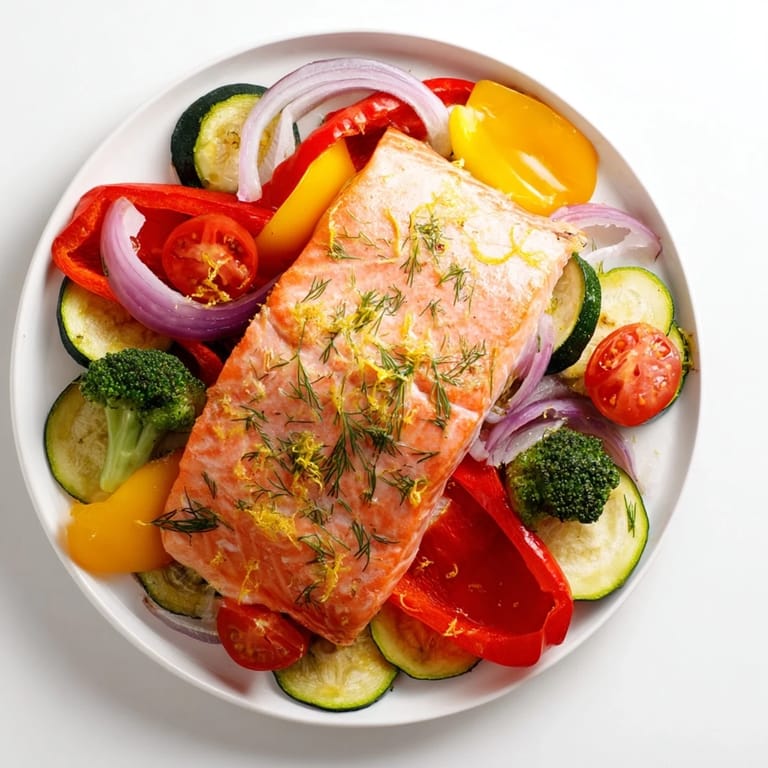
Save There's something almost magical about watching salmon turn from translucent to perfectly opaque in just twenty minutes, and this sheet pan method has become my go-to whenever I want dinner that tastes impressive but requires almost no fussing. One Tuesday evening, I threw this together last-minute with whatever vegetables were lounging in my crisper drawer, and my partner actually asked if I'd been secretly taking cooking classes. The secret? Letting everything roast together so the vegetables soften while the salmon stays tender and the flavors mingle naturally.
I remember making this for my mom when she was visiting, and she kept sneaking extra cherry tomatoes off the cooling pan, saying they'd somehow become sweet and jammy from the roasting. That's when I realized this dish has a way of making people slow down and actually taste their food instead of rushing through dinner.
Ingredients
- Salmon fillets: Look for ones that feel firm and smell fresh and oceanic, not fishy, which means they're truly fresh.
- Olive oil: Don't use the expensive stuff for cooking, but grab something decent you'd actually want to taste.
- Lemon zest and juice: Fresh lemon is non-negotiable here; the bottled stuff tastes tired by comparison.
- Fresh dill: If you find it, use it instead of dried, but don't stress if you only have the dried version.
- Bell peppers: Red and yellow are sweeter and more forgiving than green, which can taste bitter when roasted.
- Cherry tomatoes: They concentrate and caramelize beautifully in the oven's heat, becoming almost candy-like.
- Broccoli florets: Cut them roughly the same size so they roast evenly without some turning into burnt bits.
Tired of Takeout? 🥡
Get 10 meals you can make faster than delivery arrives. Seriously.
One email. No spam. Unsubscribe anytime.
Instructions
- Set your oven stage:
- Preheat your oven to 425°F and line your sheet pan with parchment paper or foil. This small step saves you from scrubbing charred bits later, which is worth every second.
- Create the seasoning base:
- Whisk together olive oil, lemon zest, juice, dill, garlic powder, salt, and pepper in a small bowl until it smells bright and alive. This is your entire flavor foundation, so don't rush it.
- Prep and coat your vegetables:
- Spread all your chopped vegetables across the sheet pan in a single layer, then drizzle with half the oil mixture and toss until everything glistens. The vegetables should look seasoned and eager to roast.
- Nestle in the salmon:
- Arrange the salmon fillets among the vegetables like you're tucking them in for their final transformation, then brush the remaining oil mixture over the top. Watch how the salmon's surface gets glossy and sealed.
- Let the oven do the work:
- Roast for 18 to 20 minutes, resisting the urge to open the oven door constantly. The salmon is ready when it flakes easily with a fork and has turned opaque all the way through.
- Finish with brightness:
- Pull the pan out, scatter fresh parsley over everything, squeeze lemon wedges over the top, and serve immediately while the heat is still working its magic.
 Save
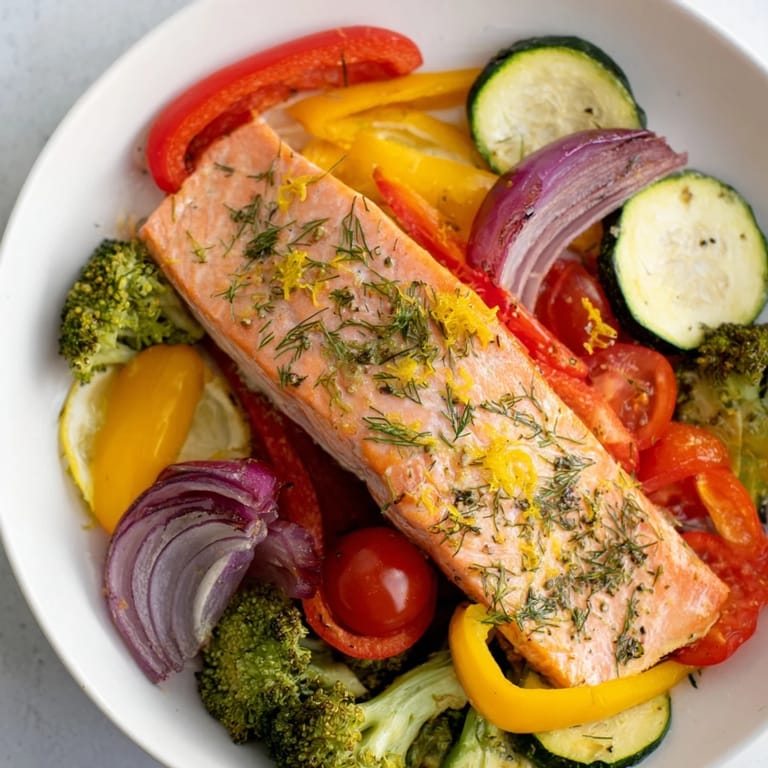
Save My eight-year-old nephew once looked at his plate and said, 'It's so pretty I don't want to eat it,' which is the highest compliment a weeknight dinner could possibly receive. Food that nourishes both belly and spirit doesn't need to be complicated.
Why This Method Works
Sheet pan cooking is genius because everything roasts at the same temperature and emerges at the same moment, ready and golden. The vegetables release moisture as they soften, which seasons the salmon from below while the oven's dry heat keeps the fillets from getting steamed and mushy. It's honest, straightforward cooking that respects both the salmon and the vegetables.
Seasonal Flexibility and Swaps
This recipe welcomes improvisation like an old friend who's seen you at your worst and still calls you back. In spring, I swap the bell peppers for fresh asparagus and thin green beans; in summer, I add zucchini and heirloom tomatoes. Autumn calls for root vegetables like carrots and small beets, which caramelize beautifully alongside the salmon. The dill remains constant, a reliable anchor while everything else shifts with the seasons.
Simple Ways to Make It Yours
Once you understand the basic formula, this dish becomes a canvas for your preferences and what's available to you. Some nights I finish with crumbled feta cheese, other times with capers for a briny edge. A drizzle of lemon oil, a scattering of pomegranate seeds, or even a light sprinkle of everything bagel seasoning can completely change the personality of the plate.
- Try adding capers or feta cheese for different flavor directions without extra cooking steps.
- A crisp Sauvignon Blanc or light Chardonnay pairs perfectly if you're looking for wine pairing inspiration.
- Leftovers actually taste wonderful cold the next day, making it unexpectedly great for lunch boxes.
 Save
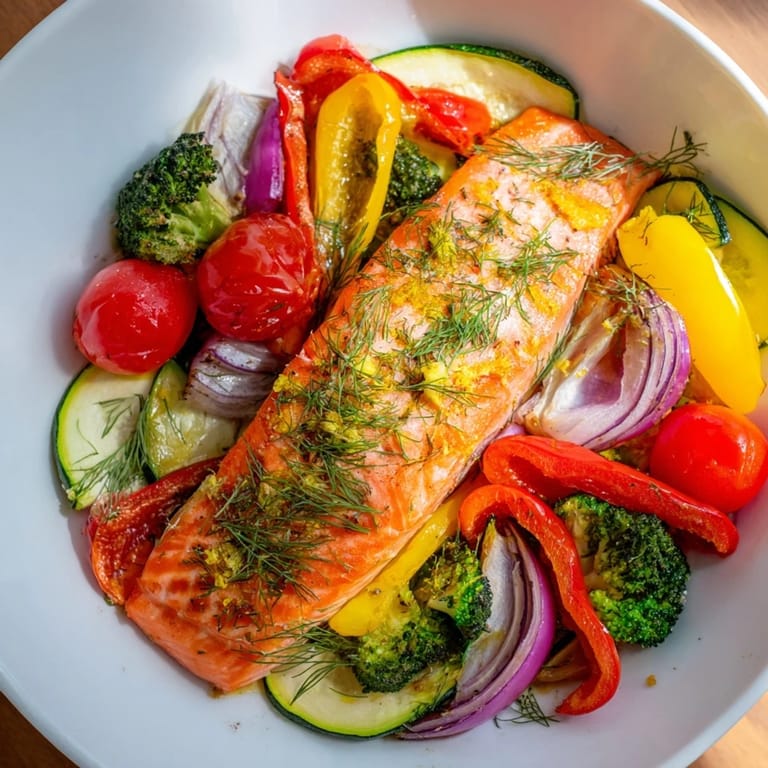
Save This is the kind of dish that reminds you why home cooking matters, especially on nights when you're too tired to think. It brings people to the table without requiring any apologies or elaborate explanations.
Recipe FAQs
- → Can I use frozen salmon fillets for this dish?
Yes, though it's best to thaw them completely and pat dry before seasoning to ensure even cooking and proper seasoning absorption.
- → What vegetables work best for roasting alongside salmon?
Vegetables like bell peppers, zucchini, cherry tomatoes, broccoli, and onions roast well and complement salmon’s flavor and texture.
- → How can I tell when the salmon is cooked properly?
The salmon is done when it flakes easily with a fork and has an opaque appearance throughout the fillet.
- → Is it possible to prepare this dish in advance?
Yes, you can chop vegetables and prepare the seasoning mix ahead of time. Assemble and bake just before serving for optimal freshness.
- → Can I modify the seasoning to suit different tastes?
Absolutely. Experiment with herbs like thyme or rosemary, or add spices such as smoked paprika for a different flavor profile.