 Save
Save There's something about the sizzle of salmon hitting a hot skillet that makes everything feel worth the effort. My first teriyaki bowl came together almost by accident one Tuesday night when I had salmon thawing and a craving for something that tasted restaurant-quality but didn't demand hours in the kitchen. The glaze caught me off guard with how quickly it transformed from individual ingredients into something glossy and irresistible. Now it's the meal I make when I want to feel like I actually know what I'm doing in the kitchen.
I made this for my sister during her first week of trying to eat healthier, and watching her expression when she tasted it was worth every pan I used. She expected something virtuous and boring, but the savory-sweet sauce and the way the crispy vegetables contrasted with the tender fish completely surprised her. That bowl sparked a whole conversation about how good food doesn't have to be complicated or feel like punishment.
Ingredients
- Salmon fillets (4, about 150 g each): Look for pieces that feel firm and smell fresh like the ocean, never fishy or ammonia-tinged; skin-on versions are forgiving and add flavor, but skinless works beautifully too.
- Soy sauce (60 ml): This is the backbone of the glaze, so don't cheap out here—a decent quality soy sauce makes a noticeable difference in depth.
- Mirin (60 ml): The secret ingredient that gives the sauce its glossy finish and subtle sweetness; regular white mirin works, but hon-mirin tastes noticeably richer if you find it.
- Brown sugar (2 tbsp): Adds caramel notes and helps the sauce cling to the salmon instead of sliding off.
- Rice vinegar (1 tbsp): Provides brightness and prevents the sauce from becoming one-dimensional and cloying.
- Sesame oil (2 tsp): A little goes a long way—this nutty oil is pure flavor in small doses and can overpower if you're heavy-handed.
- Garlic and ginger (2 cloves minced, 1 tsp grated): Fresh versions are non-negotiable here; they add sharp, living notes that jarred versions simply can't match.
- Cornstarch slurry (1 tsp with 2 tsp water): This thickens the sauce so it becomes glossy and coats the salmon instead of pooling at the bottom of the bowl.
- Bell pepper, carrot, broccoli, sugar snap peas: Choose vegetables that have some crunch and color; the contrast matters as much as the taste.
- Jasmine or sushi rice (300 g): Jasmine rice has a subtle floral note that pairs beautifully with the teriyaki, while sushi rice is stickier if that's your preference.
- Sesame seeds and spring onions (for garnish): These aren't optional if you want the bowl to feel complete—they add textural contrast and a fresh finish.
Tired of Takeout? 🥡
Get 10 meals you can make faster than delivery arrives. Seriously.
One email. No spam. Unsubscribe anytime.
Instructions
- Prepare your rice the right way:
- Rinse your rice under cold running water until the water runs completely clear—this removes excess starch and prevents your rice from becoming gluey. Combine rinsed rice and water in a saucepan, bring to a boil over high heat, then immediately reduce the heat to low, cover with a lid, and let it simmer undisturbed for exactly 15 minutes.
- Build the teriyaki sauce while rice simmers:
- In a small saucepan over medium heat, combine soy sauce, mirin, brown sugar, rice vinegar, sesame oil, minced garlic, and grated ginger, stirring gently until the sugar dissolves and the mixture turns amber and fragrant. Once it's simmering, create a cornstarch slurry by mixing cornstarch with water until smooth, then stir it into the sauce and let it cook for another 1 to 2 minutes until it thickens noticeably and coats the back of a spoon.
- Sear the salmon with confidence:
- Pat your salmon fillets dry with paper towels and season generously with salt and pepper on both sides. Heat a splash of oil in a large nonstick skillet over medium-high heat until it shimmers, then lay the salmon skin-side down (if using skin-on) and resist the urge to move it—let it cook undisturbed for 3 to 4 minutes until the skin turns golden and crispy, then flip gently and cook the other side for 2 to 3 minutes just until the flesh turns opaque throughout.
- Glaze and finish the salmon:
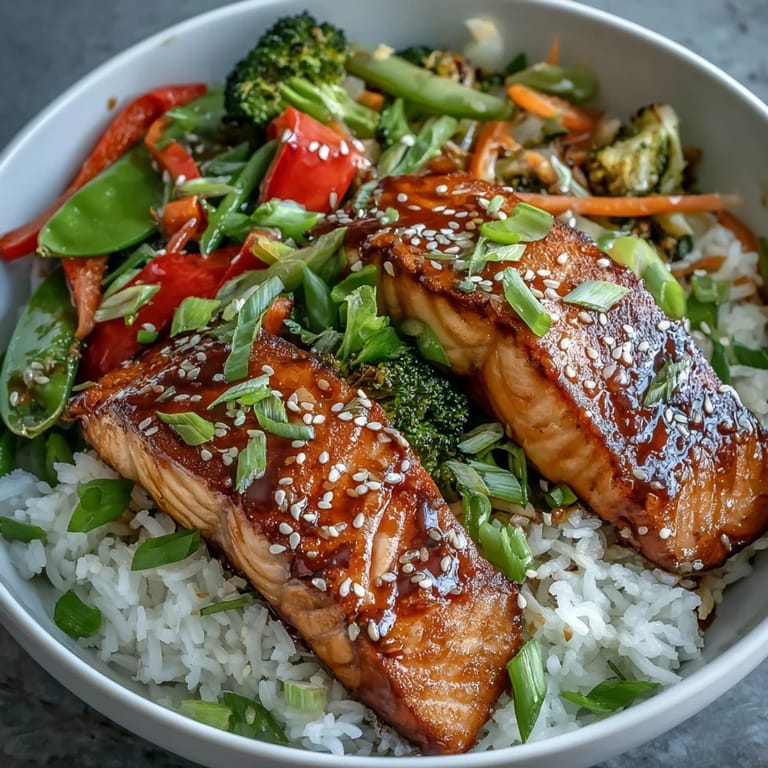
- Remove the skillet from heat and brush each salmon fillet generously with your finished teriyaki sauce, letting it pool slightly and coat the top. Return to heat for exactly 1 minute so the sauce caramelizes against the warmth of the fish, then transfer to a plate.
- Stir-fry vegetables until they're crispy-tender:
- Heat vegetable oil in a wok or large skillet over high heat until it barely starts to smoke, then add your bell pepper and carrot first since they take longer to cook. After about 1 minute, add the broccoli and sugar snap peas, tossing everything constantly for another 2 to 3 minutes until the vegetables are tender but still have that satisfying crunch—if they're completely soft, you've gone too far.
- Assemble your bowls like you're plating in a restaurant:
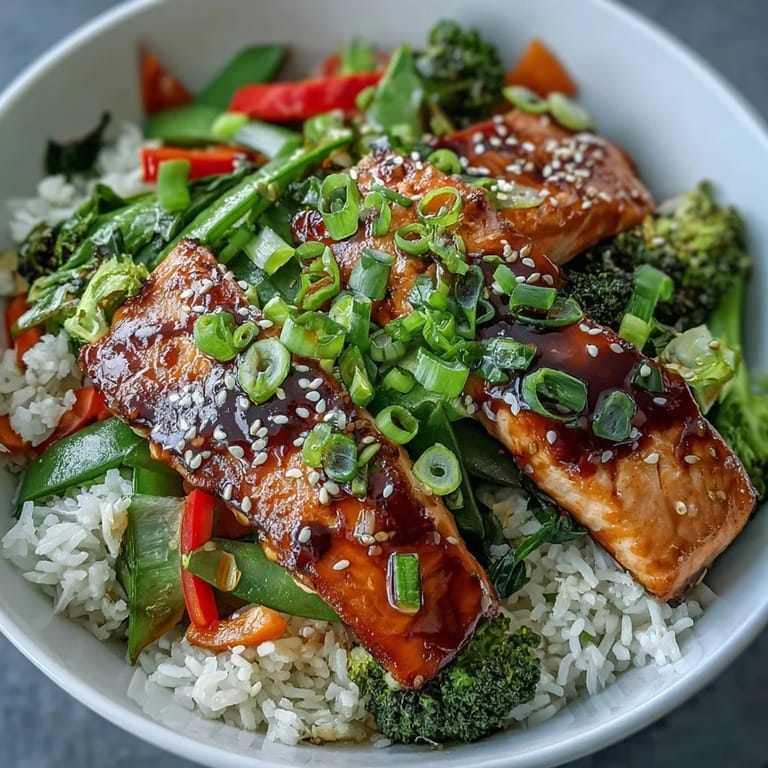
- Divide your fluffy rice among four bowls, creating a bed that will hold everything you're about to pile on top. Arrange the stir-fried vegetables on the rice, then top each bowl with one glazed salmon fillet, and drizzle extra teriyaki sauce around the plate—finish with a sprinkle of sesame seeds and a scatter of fresh spring onion slices.
 Save
Save My kitchen suddenly felt like a real place when I realized my teenager had been quietly watching me cook this bowl, and when I handed them a spoonful of glazed salmon to taste, they actually put their phone down. That moment—where food became a reason to pause and connect instead of just refuel—is when I understood why I keep coming back to this recipe.
The Magic of the Glaze
The teriyaki sauce is genuinely forgiving once you understand what each ingredient does. The soy sauce provides umami depth, the mirin adds body and a subtle sweetness that balances the salt, and the rice vinegar keeps everything from tasting flat. That cornstarch slurry is quietly doing all the heavy lifting—without it, you just have a thin sauce that slides right off your salmon into the bottom of the bowl, but with it, you get something glossy that catches the light and actually stays put.
Why Salmon Is the Perfect Canvas
Salmon's natural richness means it can handle the bold flavors of teriyaki without getting lost or overpowered. The slight bitterness in the char on the skin (if you use skin-on) creates an interesting complexity against the sweet sauce, and the flesh itself stays buttery and forgiving even if your timing is off by a minute or two. I've tried this with other fish, but salmon is what makes the bowl feel complete and satisfying rather than virtuous.
Making It Your Own
Once you've made this bowl twice, you'll start seeing variations everywhere. I've swapped vegetables based on what looked good at the market—zucchini, mushrooms, and baby corn work beautifully in place of the standard mix. The sauce is also your playground; I've added a tiny splash of orange juice once when I was feeling experimental, and it added a brightness that actually works. This recipe is forgiving enough to be a template rather than a rigid set of rules.
- Marinate the salmon in half the teriyaki sauce for 15 minutes before cooking if you want an extra layer of flavor that permeates the flesh.
- Make the sauce ahead of time—it keeps for several days in the refrigerator and actually tastes better when the flavors have melded.
- Pair this with a crisp white wine like Sauvignon Blanc or a light Japanese beer if you're thinking about what to drink alongside it.
 Save
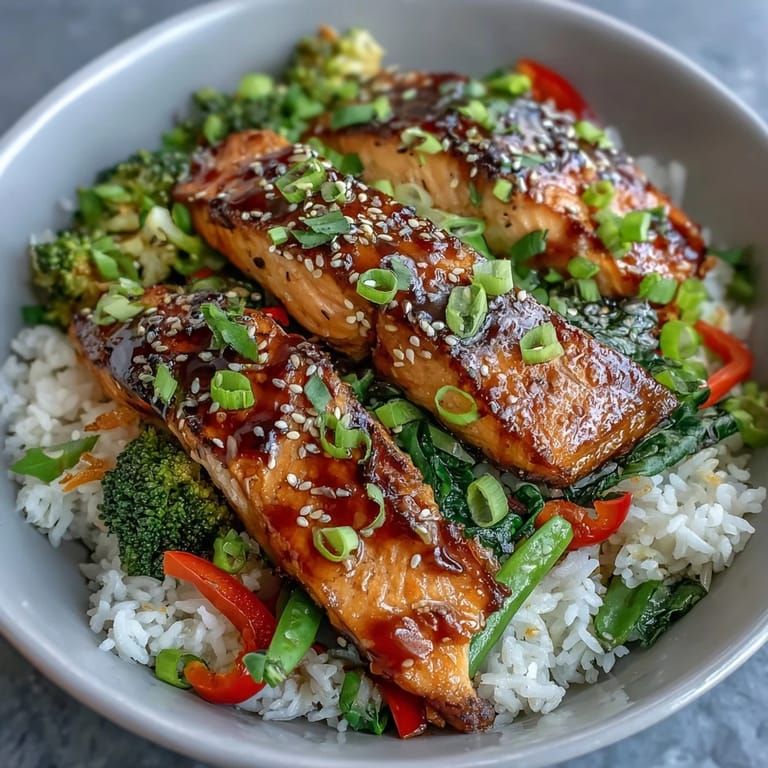
Save This bowl has become my answer to the question of what to cook when I want something that feels special without actually stressing me out. It's reliable enough to make on a Wednesday night and impressive enough to serve when people are coming over.
Recipe FAQs
- → Can I use other fish besides salmon?
Yes, this teriyaki glaze works beautifully with other fatty fish like trout, mackerel, or sea bass. For leaner options like cod or tilapia, reduce cooking time slightly to prevent drying. The glaze also complements shrimp or scallops perfectly.
- → How do I store leftovers?
Store components separately in airtight containers for up to 3 days. Keep rice, salmon, and vegetables in different containers. Reheat gently in the microwave or on the stovetop, adding a splash of water to the rice to refresh it. The sauce can be stored refrigerated for up to 1 week.
- → Can I make the teriyaki sauce ahead?
Absolutely. Prepare the sauce up to 1 week in advance and store it in an airtight container in the refrigerator. The cornstarch may thicken it when cold, so gently reheat with a splash of water to reach pouring consistency again.
- → What vegetables work best in this bowl?
Bell peppers, carrots, broccoli, and sugar snap peas provide excellent color and texture. Other great options include zucchini, mushrooms, baby corn, snow peas, bok choy, or shredded cabbage. Aim for a colorful mix that cooks quickly and maintains some crunch.
- → Is this suitable for meal prep?
Yes, this bowls meal preps wonderfully. Cook all components and let cool completely before portioning into containers. The flavors actually develop and meld overnight. Keep the garnishes separate and add them just before serving for maximum freshness and texture.
- → Can I make this gluten-free?
Simply substitute regular soy sauce with gluten-free tamari or coconut aminos. Double-check that your mirin is gluten-free, as some brands contain wheat. The remaining ingredients including rice, fresh vegetables, and salmon are naturally gluten-free.