 Save
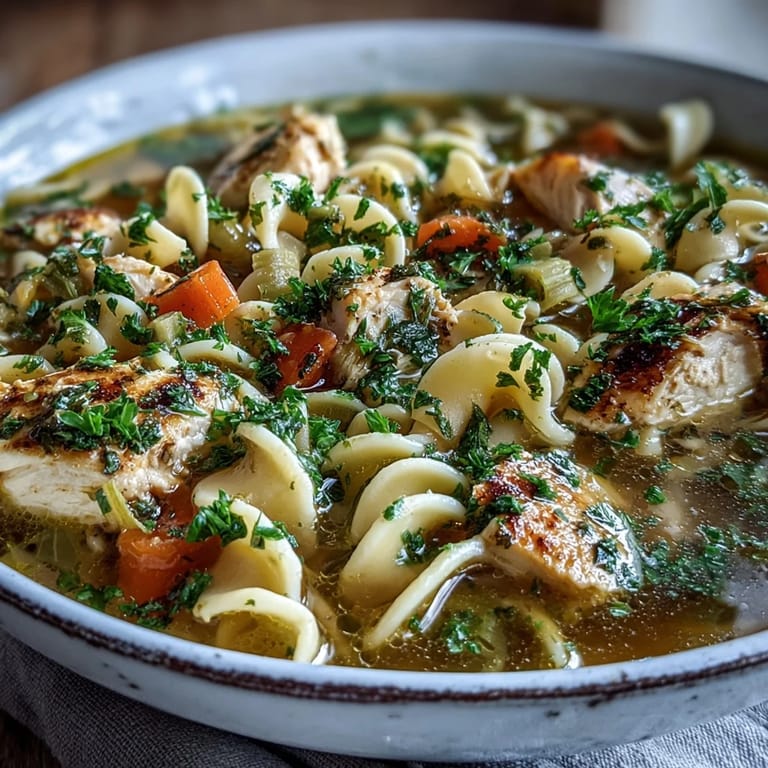
Save My neighbor knocked on the door one gray February afternoon with a box of chicken breasts and a sheepish smile, explaining she'd over-bought at the market. By the time she left, I'd already got a pot heating and was chopping vegetables on autopilot, the way you do when comfort food calls. Twenty-five minutes later, we were both at my kitchen table with steaming bowls, and she said something I've never forgotten: this is what home tastes like. That's when I realized this soup wasn't just a recipe—it was permission to slow down.
I made this for my daughter when she was recovering from a cold, and watching her eat with actual appetite for the first time in days felt like a small miracle. She asked for seconds, which never happens, and that's when I understood why this soup has survived generations—it meets you exactly where you are, whether that's sick and needing care or simply cold and seeking solace.
Ingredients
- Boneless, skinless chicken breasts (2, about 350 g), diced: Cut them into bite-sized pieces so they cook evenly and distribute through every spoonful of broth.
- Medium onion (1), diced: This is your flavor foundation—don't skip the sautéing step, as it transforms the onion's sharpness into sweetness.
- Medium carrots (2), peeled and sliced: The natural sugars caramelize slightly as the soup simmers, adding depth you won't find in store-bought versions.
- Celery stalks (2), sliced: Often overlooked, but celery builds umami and that classic chicken soup character.
- Garlic cloves (2), minced: Fresh is non-negotiable here; it perfumes the entire pot with warmth.
- Low-sodium chicken broth (1.5 liters or 6 cups): Choose a quality broth you'd actually drink on its own, as it becomes the soul of this dish.
- Egg noodles (120 g or 4 oz): These tender strands absorb the broth beautifully and add a gentle texture contrast.
- Bay leaf (1): An old-school trick that whispers complexity into the broth without announcing itself.
- Dried thyme (1/2 teaspoon): This herb is subtle but essential; it ties the whole thing together with a hint of woodsy comfort.
- Dried parsley (1/2 teaspoon, plus extra for garnish): The dried version blends into the broth, while fresh leaves on top add a bright finish.
- Salt and freshly ground black pepper, to taste: Don't be shy—taste as you go and adjust at the end when flavors have melded.
- Olive oil (2 tablespoons): This prevents sticking and gives the vegetables a gentle head start.
Tired of Takeout? 🥡
Get 10 meals you can make faster than delivery arrives. Seriously.
One email. No spam. Unsubscribe anytime.
Instructions
- Warm your pot and soften the vegetables:
- Heat olive oil over medium heat, then add onion, carrots, and celery. Let them sit undisturbed for a minute so they start to caramelize, then stir and cook for another 3-4 minutes until the edges turn golden and the kitchen smells like dinner.
- Wake up the garlic:
- Add minced garlic and stir constantly for about a minute—you'll know it's ready when the raw bite softens and the aroma becomes impossible to ignore.
- Add the chicken:
- Scatter diced chicken over the vegetables and stir gently, cooking for 3-4 minutes until the outside loses its raw appearance. Don't worry about cooking it through; the simmering broth will finish the job.
- Build the broth:
- Pour in chicken broth, then add bay leaf, thyme, parsley, salt, and pepper. Bring to a gentle boil—you'll see lazy bubbles breaking the surface—then reduce heat to a simmer.
- Give it time to marry:
- Let the pot bubble softly for 10 minutes, allowing the herbs and seasonings to infuse into the broth and the chicken to cook through completely.
- Add the noodles:
- Stir in egg noodles and simmer for 8-10 minutes, stirring occasionally, until the noodles are tender and the chicken is fully cooked. The broth will thicken slightly as the noodles release their starches.
- Final touches:
- Fish out the bay leaf, then taste the soup and adjust seasoning if needed. Some days it wants more salt, other times a crack of pepper is all it needs.
- Serve with care:
- Ladle into bowls and crown each one with a sprinkle of fresh parsley, letting the green catch the light.
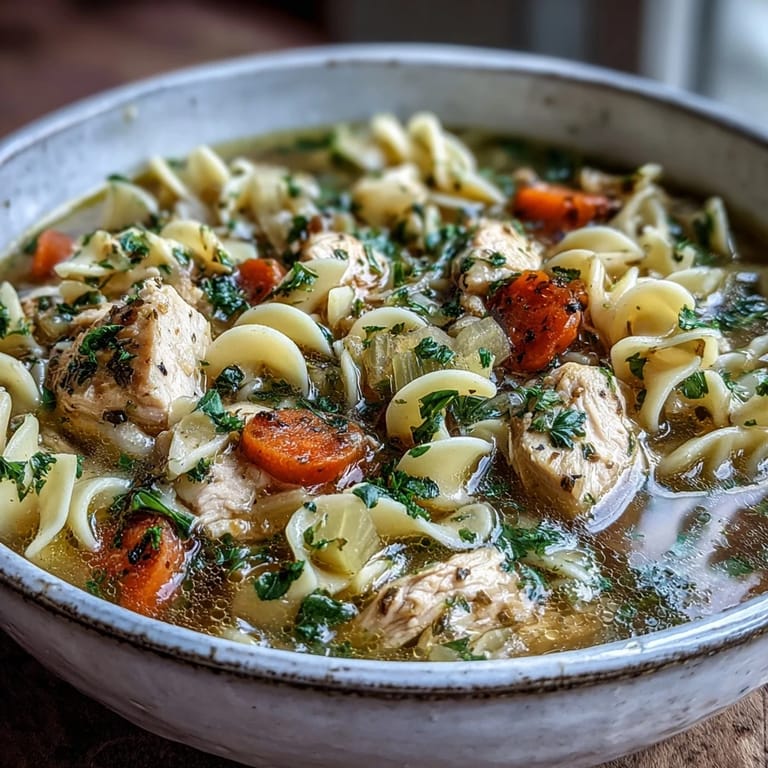 Save
Save There's something sacred about standing at the stove, watching steam rise from a pot of soup that's about to nourish someone you care about. My mother always said a good soup is an act of love disguised as a meal, and I finally understand what she meant.
When Simple Becomes Profound
The genius of chicken noodle soup lies in its restraint—it doesn't demand fancy techniques or obscure ingredients, yet somehow tastes like it belongs in a beloved cookbook passed through generations. Each component plays a specific role, and together they create something greater than the sum of its parts. I've learned that the best comfort foods are often the ones that get out of their own way, letting honest flavors speak for themselves.
Variations Worth Exploring
While the classic version is nearly perfect, small changes can refresh it depending on your mood or what's in your pantry. A splash of lemon juice at the end brightens everything and cuts through the richness, while a pinch of turmeric adds color and a subtle earthiness that feels unexpected. Some evenings I add a handful of spinach or frozen peas in the final minutes, watching them soften into the warm broth and add pops of color.
Storage, Make-Ahead, and Freezing
This soup actually tastes better the next day, after the flavors have settled and deepened—a rare gift in cooking. Store it in an airtight container in the refrigerator for up to three days, or freeze for up to three months, though I find it's best when frozen without the noodles, which you can cook fresh when reheating. Thaw overnight in the refrigerator, reheat gently on the stovetop with a splash of broth to bring it back to life, and taste before serving to adjust seasoning one more time.
- Divide into individual portions before freezing so you can thaw only what you need for a quick meal.
- Keep the broth and solids together if possible, as the noodles can soften during freezing and thawing.
- Label your container with the date so you remember when you made it and can use it within a reasonable window.
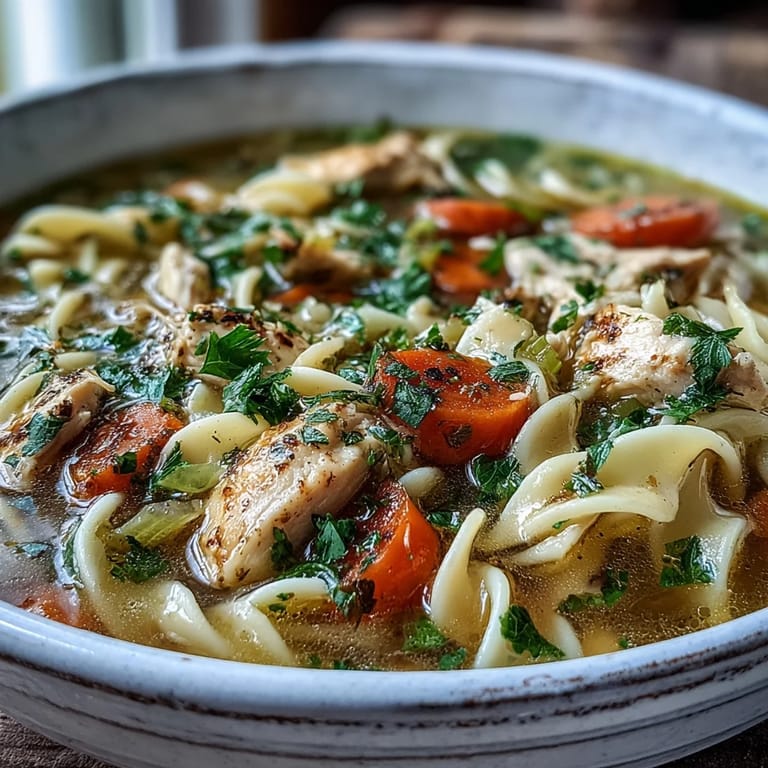 Save
Save Make this soup when you need to remember that the simplest meals often carry the most meaning. It's the kind of dish that asks nothing of you except attention, and in return offers warmth, nourishment, and a quiet moment of peace.
Recipe FAQs
- → How long does chicken noodle soup keep in the refrigerator?
Store cooled soup in an airtight container for up to 4 days. The noodles may absorb some broth, so add extra liquid when reheating if needed.
- → Can I freeze this soup?
Yes, freeze for up to 3 months. Consider cooking noodles separately and adding them when reheating to prevent them from becoming mushy.
- → What type of chicken works best?
Boneless, skinless breasts cook quickly and stay tender. For even richer flavor, use bone-in chicken pieces and shred the meat after simmering.
- → How can I make this gluten-free?
Substitute regular egg noodles with gluten-free pasta varieties like rice noodles or corn-based alternatives. Always verify your broth is certified gluten-free.
- → What can I serve with chicken noodle soup?
Crusty bread, crackers, or a simple side salad complement this soup perfectly. A light white wine like Sauvignon Blanc also pairs beautifully.
- → Why add lemon juice?
A splash of lemon juice brightens the overall flavor profile and cuts through the richness, adding a fresh note that enhances the savory elements.