 Save
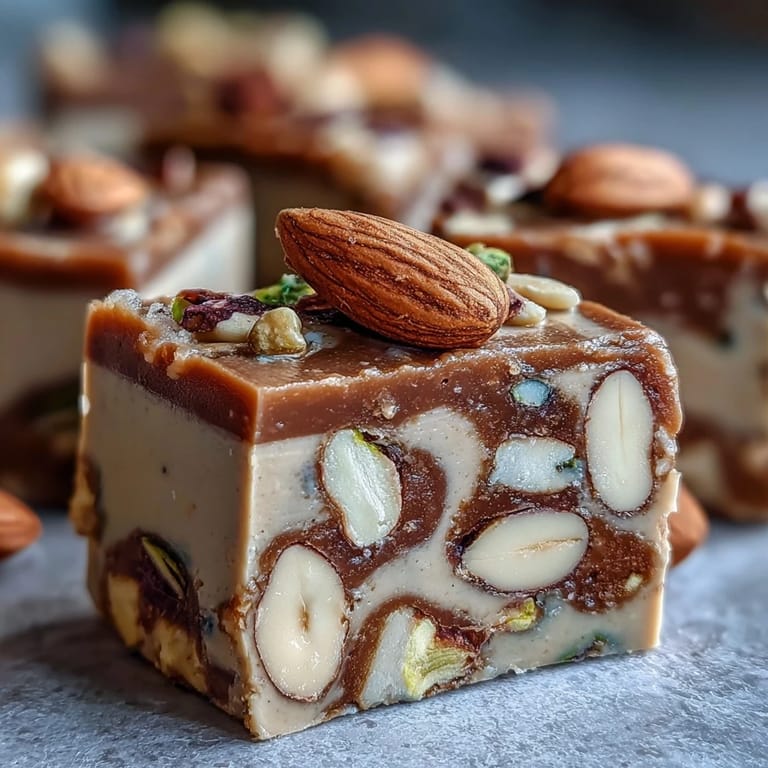
Save I discovered hojicha nougat by accident, honestly. A friend brought back a box from Tokyo with these elegant little squares wrapped in delicate paper, and I was struck by how the candy somehow tasted like a whisper of roasted tea leaves. The texture was impossibly light yet chewy, nothing like the dense nougats I'd grown up with. I spent weeks trying to reverse-engineer it in my kitchen, and when I finally nailed that balance between the hot sugar syrup and the whipped egg whites, the whole experience clicked. It's become my go-to gift for people who say they don't really like sweets, because this is barely sweet at all, just gently floral and toasty.
The first batch I made was for my coworker's birthday, and I remember wrapping each piece with this almost meditative focus, trying to get the parchment just right. When she opened the box the next morning and took one piece, she got this surprised look on her face, like she hadn't expected to actually enjoy it. She came back asking for the recipe, and suddenly I understood that food doesn't have to be flashy to matter to people, it just has to be made with a little intention.
Ingredients
- Roasted almonds and pistachios: These need to be toasted just before using so they're as fragrant as possible; raw nuts will make the nougat taste dull and flat, trust me on this one.
- Honey: Use real honey, not the squeeze bottle stuff, because it brings a subtle floral note that complements the hojicha beautifully.
- Granulated sugar: Don't substitute with brown sugar or coconut sugar here; the granulated kind gives you the clean, precise texture you need.
- Egg whites: Room temperature is non-negotiable because cold egg whites won't incorporate the hot syrup smoothly, and you'll end up with grainy nougat instead of silky.
- Cream of tartar: This stabilizes the egg whites and prevents them from deflating once the hot syrup hits; it's a small ingredient that makes an enormous difference.
- Hojicha powder: This is the soul of the recipe; look for it in Japanese grocery stores or online, and avoid matcha powder as a substitute because the flavor profile is completely different.
- Unsalted butter: The softness matters here because you need it to fold in without overworking the mixture, which would deflate all that airy goodness you've built up.
- Edible wafer paper: Optional but genuinely helpful; it keeps the nougat from sticking to the pan and creates this elegant presentation if you leave it on the finished candy.
Tired of Takeout? 🥡
Get 10 meals you can make faster than delivery arrives. Seriously.
One email. No spam. Unsubscribe anytime.
Instructions
- Set up your station:
- Line your square pan with parchment paper, letting the edges overhang so you can lift the whole thing out later. Have your thermometer within arm's reach and all your ingredients measured out, because once this process starts, you won't have time to hunt for anything.
- Toast the nuts:
- In a dry skillet, let the almonds and pistachios warm over medium heat for just 2 to 3 minutes until they smell toasty and alive. Spread them on a plate to cool while you work on everything else.
- Cook the syrup:
- Combine honey, sugar, water, and salt in a saucepan and stir gently over medium heat until the sugar dissolves completely. Once it looks clear, stop stirring and let it boil undisturbed until your thermometer reads 140°C (285°F), which should take about 8 to 10 minutes; the syrup will deepen to a light amber color.
- Whip the egg whites:
- In your stand mixer, beat the egg whites with cream of tartar until soft peaks form, which means the peaks will curl over slightly when you lift the beaters. This usually takes about 2 to 3 minutes on medium-high speed.
- Combine syrup and whites:
- With the mixer on low speed, pour the hot syrup in the thinnest stream you can manage into the egg whites, taking about 30 seconds to pour it all. Once it's in, crank the speed to high and beat for a full 5 minutes until the mixture is glossy, pale, and thick enough to hold shapes.
- Add flavor:
- Sprinkle in the hojicha powder and vanilla extract and beat just until the streaks disappear; over-beating here will knock out the air bubbles. The nougat should smell like toasted tea leaves now, earthy and slightly sweet.
- Fold in butter and nuts:
- Turn off the mixer and use a spatula to fold in the softened butter gently, about 10 folds, then fold in the toasted nuts the same way. Work quickly but carefully because you're trying to keep all that air you've beaten into it.
- Spread and set:
- Pour the mixture into your prepared pan and smooth it into an even layer with a spatula that you've lightly oiled or dampened. Top with another sheet of wafer paper if using, then let it sit undisturbed at room temperature for at least 30 minutes until it feels firm when you press it lightly.
- Cut and wrap:
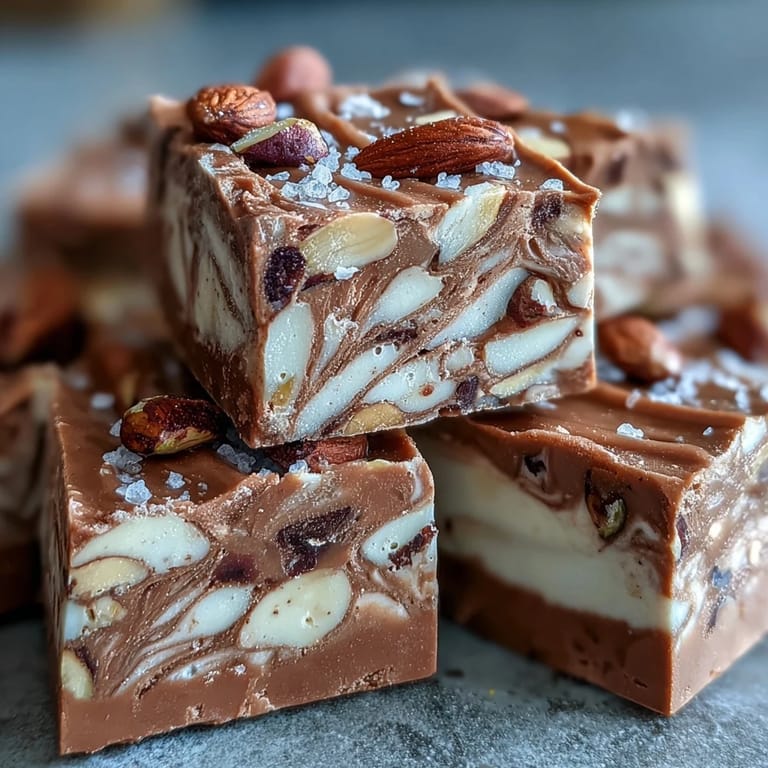
- Once set, lift the whole thing out using the parchment overhang and place it on a cutting board. With a sharp knife dipped in a little oil, cut it into roughly 24 pieces, wiping the blade between cuts so you get clean edges, then wrap each piece individually in parchment or cellophane to prevent them from sticking together.
 Save
Save My sister once asked me why I made candy when I could just buy it, and I realized in that moment that she was missing the point entirely. Watching someone's eyes light up when they taste something you made with your own hands, something that has this unexpected depth to it, that's when food becomes more than sustenance. With hojicha nougat, you're not just making candy, you're creating a small moment of joy that fits in your palm.
The Magic of Hojicha
Hojicha is just green tea that's been roasted over charcoal until it turns brown and loses that sharp, grassy quality that some people find off-putting. What you get instead is this warm, nutty, almost coffee-like flavor that feels comforting without being heavy. In nougat, it adds this subtle earthiness that makes people pause and ask what they're tasting, which is exactly what you want in a gift. I've found that a little goes a long way, so don't be tempted to add more than the recipe calls for or it'll overpower the delicate sweetness.
Storage and Gifting
Once you've made these, they'll keep in an airtight container at room temperature for up to a week, though they rarely last that long in my house. The parchment wrapping isn't just functional; it makes each piece feel special and precious, like you're giving someone something you actually cared about. If you're shipping them or giving them as gifts, nestle the wrapped pieces in a small box with parchment between layers so they don't knock against each other.
Variations and Pairings
Once you understand the basic technique, you can start experimenting with different add-ins or flavor combinations, and the nougat becomes your canvas. I've made versions with just almonds and sesame seeds, or with a hint of cardamom added to the hojicha, and each one tastes completely different. The original pairing is with a cup of hojicha tea or a gentle Japanese whisky, but honestly, these are delicate enough to stand on their own.
- Try swapping half the nuts for toasted coconut flakes or sesame seeds for entirely different textures.
- A pinch of ground cardamom or a hint of orange zest can add unexpected dimension without overwhelming the hojicha flavor.
- If you can't find hojicha powder, a strong hojicha tea steeped and reduced to a powder will work in a pinch, though it takes extra effort.
 Save
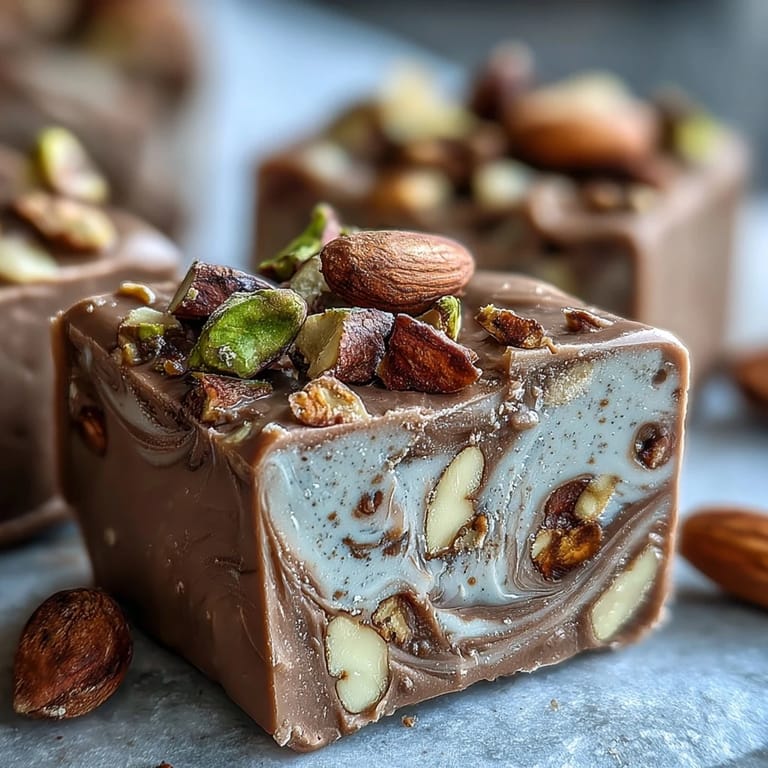
Save This recipe has become part of my seasonal rhythm now, something I make in autumn when the air gets crisp and I want to feel like I'm holding onto summer's sweetness just a little longer. There's something deeply satisfying about turning simple ingredients into something that tastes like it came from a fancy candy shop in Tokyo.
Recipe FAQs
- → What makes hojicha nougat different from traditional nougat?
Hojicha nougat incorporates roasted Japanese green tea powder, imparting earthy, caramel-like notes that distinguish it from classic honey-based nougat. The tea creates a more complex flavor profile with subtle roasted undertones.
- → Can I substitute hojicha powder with other teas?
Matcha powder works as a substitute but will produce a brighter, grassier flavor. For similar roasted notes, try genmaicha or Chinese roasted oolong. Keep in mind the color and taste profile will change accordingly.
- → Why is a candy thermometer essential?
Reaching exactly 140°C (285°F) is crucial for proper sugar crystallization. Too low results in sticky nougat that won't set, while too high creates hard, brittle candy. A thermometer ensures precision for perfect chewy texture.
- → How do I prevent the nougat from sticking to the knife?
Lightly oil your knife with neutral oil or spray. Wipe clean and re-oil between cuts. Cutting while slightly warm also helps, though the nougat should be firm enough to hold its shape.
- → Can I make this without a stand mixer?
A hand mixer can work, but requires significant effort and steady pouring. The hot syrup must be whipped continuously for 5 minutes to achieve proper glossy texture. A stand mixer is highly recommended for consistent results.
- → Why does my nougat turn out grainy?
Graininess usually occurs when sugar crystals form prematurely. Ensure sugar fully dissolves before boiling, and avoid stirring once the syrup reaches boiling point. Also, pour syrup in a thin, steady stream into the egg whites while beating.