 Save
Save My sister called me in a panic the night before Mother's Day, asking if I could bring a quiche to brunch at Mom's place. I'd never made one before, but something about the challenge excited me—the idea of transforming eggs and cream into something elegant felt oddly satisfying. That morning, as I assembled asparagus and Brie in the oven, the kitchen filled with a buttery, nutty warmth that made me realize this dish was going to be special. What started as a last-minute request became the dish everyone asked for at every brunch after.
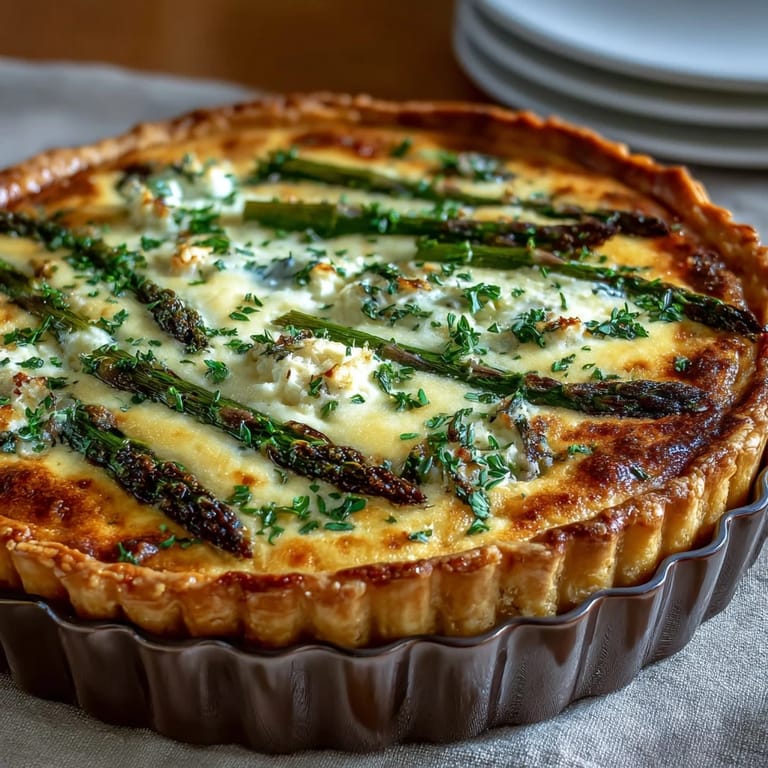
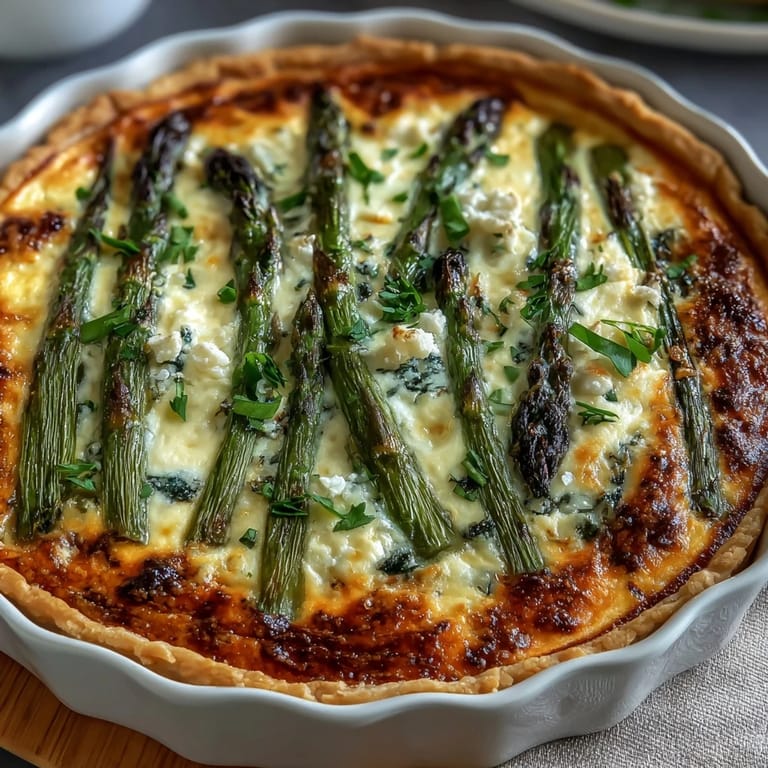
I'll never forget watching my mom's face when she cut into that first slice and saw the asparagus arranged just beneath the golden surface, the Brie creating little pools of creaminess. She served it with champagne and fresh berries, and suddenly it felt like we were at a Parisian café instead of her dining room. That quiche became our Mother's Day tradition, and now even my brother requests it for his birthday brunch.
Ingredients
- Ready-made 9-inch pie crust: Using store-bought saves you 30 minutes of stress and honestly tastes nearly identical to homemade—I've tested both and can barely tell the difference.
- Fresh asparagus, trimmed and cut into 1-inch pieces: Blanching the asparagus for just 2 minutes before adding it prevents that squeaky texture and keeps the spears bright green against the pale custard.
- Small shallot, finely diced: One shallot is all you need; it's milder than onion and dissolves into the eggs, adding a whisper of savory depth rather than overpowering the Brie.
- 5 large eggs: Room temperature eggs whisk more smoothly and create a silkier custard than cold ones straight from the fridge.
- Whole milk and heavy cream: The combination of both creates that perfect balance—milk keeps it light while cream adds the luxurious mouthfeel that makes people think you slaved over this.
- Brie cheese, rind removed and cubed: Removing the rind prevents a tough, chalky layer and lets the creamy interior distribute throughout the quiche; cutting it into small cubes rather than thin slices helps it melt evenly.
- Salt, black pepper, and nutmeg: The nutmeg is optional but honestly transforms the entire dish—just an eighth of a teaspoon adds an almost imperceptible warmth that makes people say "what is that subtle something?"
Tired of Takeout? 🥡
Get 10 meals you can make faster than delivery arrives. Seriously.
One email. No spam. Unsubscribe anytime.
Instructions
- Prepare your oven and crust:
- Preheat to 375°F and gently press the crust into your pan, pricking the base with a fork to prevent huge air bubbles. This small step is the difference between a perfectly baked bottom and a puffed-up center.
- Blind bake for the best texture:
- Line the crust with parchment and fill with pie weights or dried beans, baking for 10 minutes, then remove and bake another 5 minutes until just golden. You're essentially sealing the bottom so it doesn't absorb custard and turn soggy—this is worth the extra few minutes.
- Blanch the asparagus quickly:
- Drop the trimmed pieces into boiling salted water and fish them out after exactly 2 minutes; this sets their bright color and softens them just enough without turning them mushy. The ice bath isn't necessary since you're about to bake them anyway, so just drain and set aside.
- Whisk the custard until smooth:
- Combine eggs, milk, cream, salt, pepper, and nutmeg in a bowl, whisking until the mixture is pale and completely homogeneous. Take a moment to smell it—that's your signal that everything's balanced.
- Layer the fillings thoughtfully:
- Scatter shallot and half the asparagus across the blind-baked crust, pour in the custard, then arrange the remaining asparagus and Brie cubes on top so they're visible and distribute evenly. This creates visual appeal and ensures every slice gets both vegetables and cheese.
- Bake until just set:
- Bake for 30 to 35 minutes; the center should jiggle ever so slightly when you shake the pan, like it's barely holding together. Once it looks lightly golden on top, it's done—overbaking creates a rubbery, dry custard that's impossible to fix.
- Rest before serving:
- Let the quiche sit for 10 minutes; this allows the custard to firm up just enough that slices hold together but remain creamy inside. This pause also gives you time to brew coffee, pour juice, or simply catch your breath before bringing it to the table.
 Save
Save Years later, I realized that quiche had become my love language at brunches—the moment I slid it onto Mom's table was the moment I felt like I'd actually grown up in the kitchen. It taught me that elegance doesn't require complexity, just intention and ingredients that respect each other.
Why This Works for Any Occasion
This quiche is deceptively forgiving, which is what makes it perfect for beginners and busy people alike. You can make it on a Tuesday evening and reheat a slice for lunch, bring it to a potluck without apologies, or serve it warm at a fancy brunch—it tastes equally beautiful in all scenarios. The Brie never turns greasy, the asparagus holds its slight crunch, and the custard stays silky even after sitting out for an hour.
Customizing Without Losing the Magic
The bones of this recipe are so solid that you can swap vegetables without guilt—I've made it with roasted mushrooms and caramelized onions, with fresh dill mixed into the custard, even with a handful of smoked salmon scattered across the top. The key is respecting the ratio of eggs to milk and cream; that stays constant while everything else can bend. Brie also has a surprisingly generous flavor, so it plays nicely with almost anything you introduce.
The Simple Pairing That Elevates Everything
Serve this quiche with nothing more than a simple green salad dressed with lemon and olive oil, and suddenly you have a complete meal that feels restaurant-worthy. The cool, bright salad cuts through the richness of the custard and gives your guests something fresh to reset their palate between bites. Add a glass of sparkling wine or crisp white wine, and you've transported everyone from a regular brunch to a special occasion, even if you made the whole thing in your regular clothes while your coffee brewed.
- Slice the quiche while it's still slightly warm for the cleanest, most elegant presentation.
- Leftovers keep for three days in the fridge and reheat beautifully in a 325°F oven for 10 minutes, or even cold straight from the fridge if you're eating alone.
- If you're serving a crowd, bake two quiches side by side; they cook at the same rate and people will be so impressed by your generosity.
 Save
Save Every time I make this quiche now, I'm reminded that the most special dishes are often the simplest ones, and that cooking for people you love is its own kind of elegance. It's become my go-to for showing up with something meaningful, and somehow, that matters more than any restaurant review ever could.
Recipe FAQs
- → How do I prepare the asparagus for this dish?
Trim and cut asparagus into 1-inch pieces, then blanch in boiling salted water for 2 minutes before draining to maintain tenderness and vibrant color.
- → What type of cheese complements the asparagus best?
Brie cheese offers a creamy texture and mild flavor that balances nicely with the tender asparagus in this dish.
- → How is the pastry crust prepped before adding the filling?
The pie crust is blind baked by lining it with parchment paper and weights to prevent bubbling, then baked until lightly golden for a crisp base.
- → Can fresh herbs enhance the flavor?
Adding fresh herbs like chives or dill provides extra aroma and complexity, enhancing the overall flavor profile.
- → What is the best way to achieve a smooth filling texture?
Whisk eggs, milk, and cream thoroughly with seasoning until smooth before pouring over the asparagus and cheese layered in the crust.
- → How long should the dish rest after baking?
Letting the dish rest for 10 minutes after baking allows it to set properly, making slicing easier and preserving texture.