 Save
Save There's something magical about the moment when you crack open a perfectly seared piece of chicken and that golden crust shatters under your fork. I discovered this recipe on a Tuesday evening when I was standing in my kitchen with absolutely nothing planned for dinner, just some chicken breasts and the vague memory of a sauce my aunt used to make. The aroma that filled my apartment as garlic hit hot butter made my roommate emerge from their office asking what smelled so incredible, and I realized I'd stumbled onto something genuinely special.
I'll never forget cooking this for my partner's parents for the first time and watching them finish every single bite while barely stopping to breathe. Their surprise that I'd made something this polished from scratch, combined with how quickly the pan emptied, convinced me this recipe deserved a permanent spot in my regular rotation. There's real satisfaction in seeing someone's face light up when they taste something you've made.
Ingredients
- Boneless, skinless chicken breasts: Pound these to a consistent half-inch thickness so they cook evenly and actually taste juicy instead of dry. I learned this the hard way after my first attempt came out tough.
- Salt and black pepper: Season both the chicken itself and the flour mixture, because salt only on the meat won't penetrate the breading adequately.
- All-purpose flour: This is your base layer and helps the egg adhere properly, so don't skip it even though it seems redundant.
- Large eggs: Two eggs will coat your chicken perfectly if you let any excess drip back into the bowl before moving to the panko.
- Panko breadcrumbs: Regular breadcrumbs will work but panko truly delivers that distinctive crispy texture that makes this dish special.
- Grated Parmesan cheese: Half a cup mixed with panko adds a savory depth to the crust that doesn't disappear during cooking.
- Olive oil: Use enough that your pan shimmers visibly before adding the chicken, about a quarter cup for frying.
- Unsalted butter: This becomes the base of your sauce and should be real butter, not a substitute.
- Garlic cloves: Fresh and minced is non-negotiable here because garlic is honestly the star of the whole dish.
- Heavy cream: The fat content matters more than you'd think, so full-fat heavy cream is worth buying.
- Chicken broth: This cuts the richness slightly and adds savory depth that makes the sauce feel balanced rather than heavy.
- Fresh parsley: Chopped parsley at the end feels like a small luxury and genuinely brightens the whole plate.
Tired of Takeout? 🥡
Get 10 meals you can make faster than delivery arrives. Seriously.
One email. No spam. Unsubscribe anytime.
Instructions
- Pound the chicken to even thickness:
- Place each breast between plastic wrap and pound firmly with a meat mallet or rolling pin until they're all roughly the same half-inch thickness. This is genuinely important because uneven pieces will cook at different rates and ruin your carefully planned dinner.
- Season generously:
- Sprinkle salt and pepper on both sides of each flattened breast and let them sit for a minute while you set up your breading station. This resting period helps the seasoning stick better.
- Create your breading assembly line:
- Arrange three shallow bowls in a row: flour in the first, beaten eggs in the second, and the panko-Parmesan mixture in the third. Having everything prepped makes the actual breading feel quick and almost meditative.
- Bread each piece carefully:
- Dredge a chicken breast in flour, shake off excess, dip it in egg, then press it into the panko mixture on both sides with gentle but firm pressure. The gentle pressing makes all the difference between a coating that stays put and one that flakes away during cooking.
- Heat your oil properly:
- Pour olive oil into a large skillet and heat over medium-high until it shimmers and a tiny piece of breadcrumb sizzles immediately when it hits the pan. This temperature is crucial because too cool and you'll have greasy chicken, too hot and the outside burns before the inside cooks.
- Fry the chicken golden:
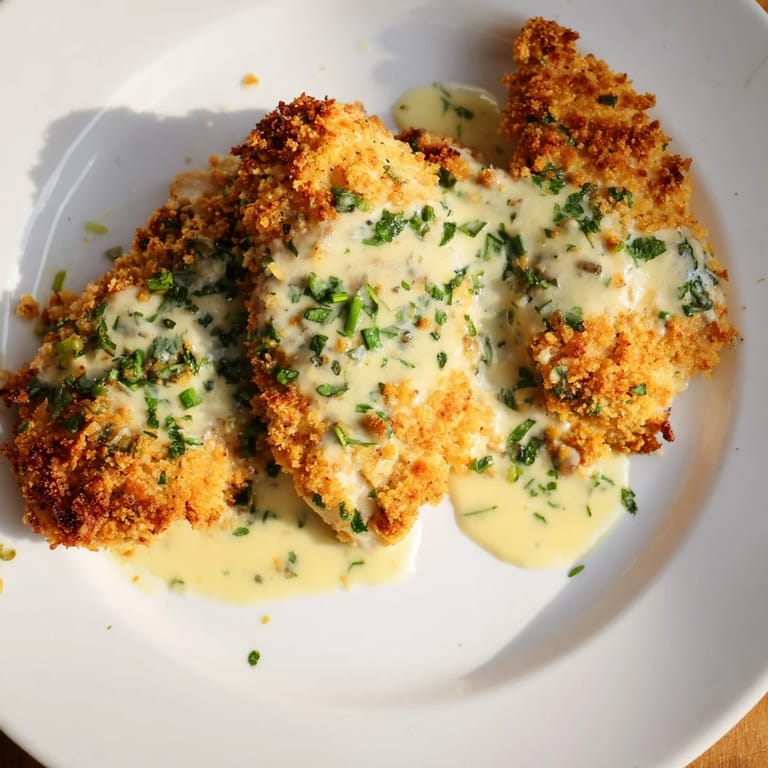
- Cook each piece for about four to five minutes per side until the crust turns a deep golden brown and the meat inside reaches 165 degrees on a meat thermometer. The timing might vary slightly depending on your actual heat source, so watch the color rather than just the clock.
- Rest the chicken briefly:
- Transfer the cooked pieces to a clean plate and loosely tent them with foil while you make the sauce. This rest period keeps them warm while the residual heat finishes cooking them through.
- Build your garlic cream sauce:
- In the same skillet with all those flavorful brown bits still clinging to the bottom, melt butter over medium heat and add minced garlic. You want to cook the garlic just until fragrant, maybe one minute, because burnt garlic will make you genuinely sad.
- Deglaze and combine liquids:
- Pour in the heavy cream and chicken broth while scraping the bottom of the pan with a wooden spoon to release all those browned bits that are pure flavor. You'll watch the liquid turn a beautiful pale tan color as it picks up all those golden deposits.
- Simmer and thicken:
- Let the sauce bubble gently for three to four minutes until it noticeably thickens and coats the back of a spoon when you drag your finger across it. You're looking for that perfect consistency where it clings to food without being a heavy paste.
- Season and finish the sauce:
- Stir in salt, pepper, Parmesan, and fresh parsley, then let it bubble for another minute or two to integrate all the flavors. The parsley brightens everything and makes the whole sauce taste fresher.
- Bring it all together:
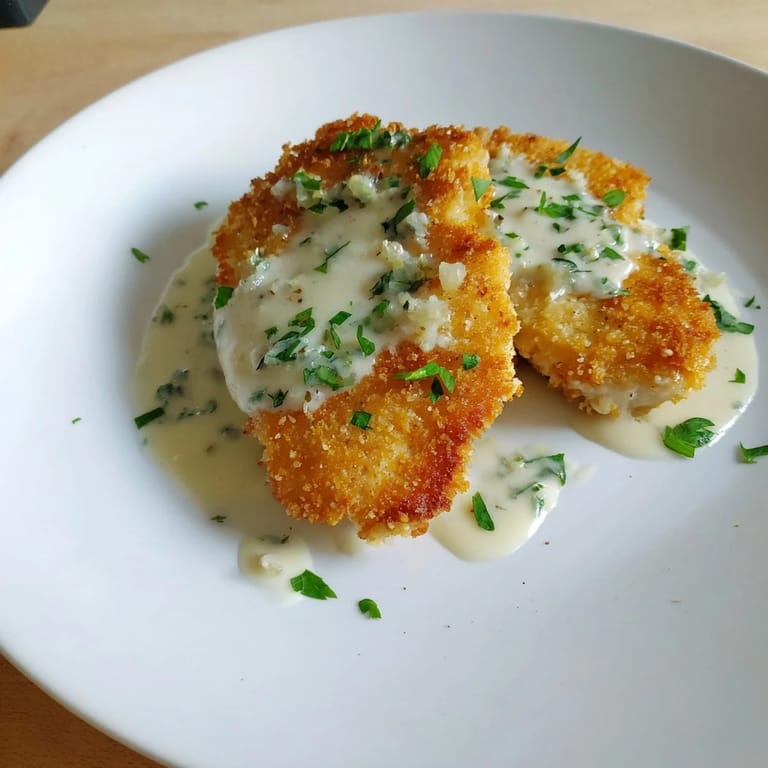
- Return the chicken breasts to the skillet, spoon that gorgeous sauce over and around them, and let everything warm through for a minute. Finish with a sprinkle of extra parsley and serve immediately while the contrast between crispy crust and creamy sauce is still at its peak.
 Save
Save What I love most about this dish is how it transformed from a random Tuesday dinner into something I make specifically when I want to feel like I'm taking care of people I care about. The combination of that satisfying crunch and velvety sauce somehow never gets old, even after I've made it dozens of times.
Serving Suggestions That Actually Work
I've learned through experimentation that this chicken plays beautifully with different sides depending on the season and my mood. In winter, creamy mashed potatoes catch all that sauce and make the plate feel substantial and warming, while buttered egg noodles turn the whole thing into something almost pasta-like that feels complete without additional vegetables. Fresh steamed green beans or roasted asparagus work wonderfully if you want something lighter, though honestly the dish is rich enough that it works as the main event with just a simple salad alongside.
Why the Crust Stays Crispy
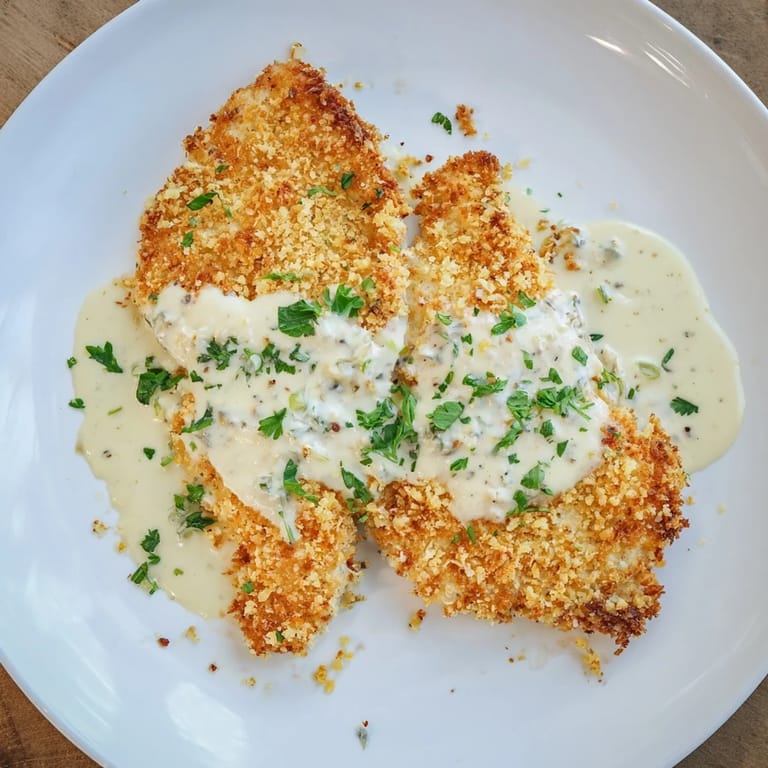
The secret that genuinely changed my results was understanding that panko breadcrumbs are larger and crunchier than regular ones, but more importantly, they stay crispy even when exposed to moisture if you don't drench everything in sauce immediately. The Parmesan mixed into the breading doesn't just add flavor, it also helps the crust stay structurally sound, almost like tiny flavor reinforcements holding everything together. I spent months being frustrated that my sauce made the crust soggy before I realized I was drowning the chicken and should instead spoon sauce more delicately around the pieces rather than completely submerging them.
Making This Recipe Your Own
Once you've made this a few times and understand how each component works, you'll start seeing endless variations that branch from the same foundation. Some nights I add a squeeze of fresh lemon juice to the sauce at the very end, which cuts through the richness in a way that feels sophisticated without being complicated. Other times I reduce the cream slightly and add a tablespoon of Dijon mustard for a different kind of depth, or I've even experimented with fresh herbs like thyme or tarragon mixed into the panko for variation.
- Double-dredging the chicken by repeating the egg and panko layers creates an even crunchier texture if that's your preference.
- Swapping half-and-half for some of the heavy cream makes a lighter sauce that still tastes luxurious without feeling as heavy.
- Always taste your sauce before serving and adjust salt and pepper, because the amount you actually need depends on your specific broth and your own preferences.
 Save
Save This recipe taught me that the most impressive meals often come from understanding a few simple techniques really well rather than juggling complicated ingredients. It's become one of those dishes I turn to when I want to cook something genuinely delicious without the stress, knowing exactly how it will turn out.
Recipe FAQs
- → How do I achieve a crispy coating on the chicken?
Ensure the chicken is evenly coated by following the flour, egg, and panko-Parmesan dredging steps. Using panko breadcrumbs and frying in hot olive oil results in a golden, crunchy crust.
- → Can I substitute ingredients in the cream sauce?
Yes, half-and-half can replace heavy cream for a lighter sauce, and adding a dash of lemon juice brightens the flavor without overpowering the garlic.
- → What side dishes complement this dish?
Mashed potatoes, pasta, or steamed green beans are excellent pairings that balance the rich cream sauce and crispy chicken.
- → How do I prevent the sauce from separating?
Simmer the sauce gently after adding cream and broth, stirring frequently until slightly thickened. Avoid boiling vigorously to maintain a smooth texture.
- → Is it possible to double-coat the chicken for extra crunch?
Absolutely. After the first panko-Parmesan coating, dip the chicken again in egg and panko-Parmesan mixture before frying to enhance crispiness.