 Save
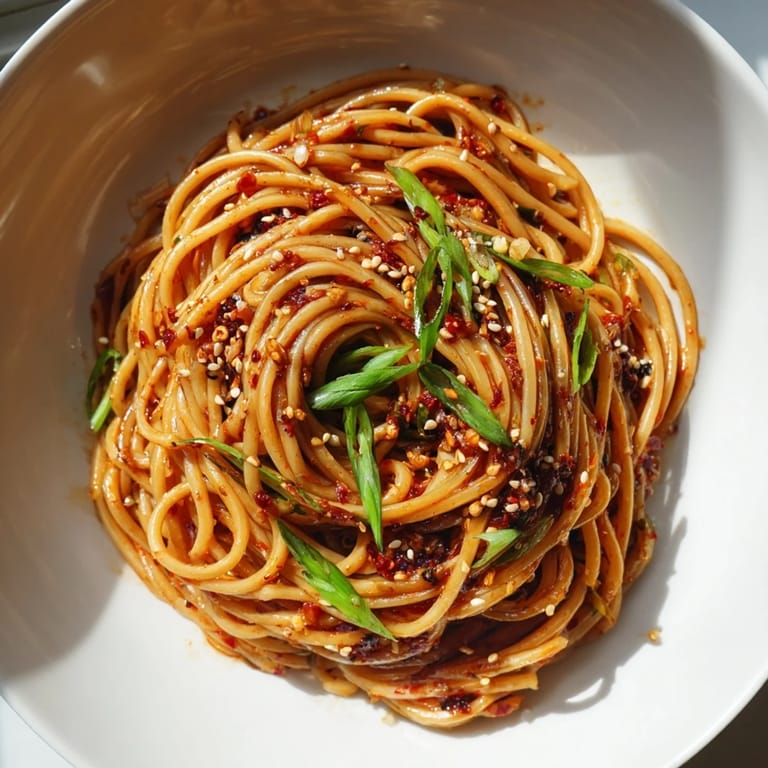
Save There's something about the smell of garlic hitting hot oil that makes you stop whatever you're doing. I discovered this noodle dish on a Tuesday night when I had nothing but pantry staples and about twenty minutes before hunger became unbearable. What started as desperation turned into the kind of meal that makes you forget you weren't planning to cook anything special. The heat builds gradually, the aroma fills your kitchen like an invitation, and suddenly you're standing over the bowl wondering why you don't make this every week.
I made this for my roommate on a cold evening when she came home exhausted, and I watched her face change the moment she took the first bite. She closed her eyes, and that's when I knew it had worked. Now whenever she's had a rough day, she asks me to make those noodles, and I realized it wasn't just about the food—it was about having something warming and bold waiting for her.
Ingredients
- Wheat noodles (200 g): Use fresh or dried Chinese wheat noodles for that perfect chew, though linguine works too if that's what you have.
- Garlic (4 cloves, finely minced): Don't skip the mincing step—you want tiny pieces that distribute throughout the oil, not chunks that surprise you.
- Scallions (2, white and green parts separated): The white parts go into the chili oil for flavor, the green tops go on at the end for freshness and color.
- Toasted sesame seeds (1 tablespoon): These add a nutty depth and a satisfying little texture contrast.
- Chili flakes (2½ tablespoons): Sichuan and Korean varieties have different personalities—Korean tends to be fruity and bright, Sichuan brings heat and a slight numb tingle.
- Sichuan peppercorns (½ teaspoon, optional): They create that ma-la effect, a tingling sensation that makes your mouth come alive.
- Ground white pepper (¼ teaspoon): Subtler than black pepper, it dissolves into the oil without visible specks.
- Sugar (½ teaspoon): A tiny pinch that rounds out the heat and balances the vinegar's sharpness.
- Salt (½ teaspoon): Start here and taste as you go—you can always add more.
- Neutral oil (3 tablespoons): The temperature of this oil is everything, so use a thermometer if you're nervous, or watch for that shimmer.
- Light soy sauce (1½ tablespoons): The backbone of the sauce, bringing savory depth.
- Chinese black vinegar (1 tablespoon): If you can't find Chinkiang vinegar, a good rice vinegar works, though the flavor will be slightly different.
- Dark soy sauce (1 teaspoon, optional): Adds color and a tiny bit of extra umami—optional but worth seeking out.
- Toasted sesame oil (½ teaspoon): Just a small amount—it's powerful and can overpower if you're not careful.
Tired of Takeout? 🥡
Get 10 meals you can make faster than delivery arrives. Seriously.
One email. No spam. Unsubscribe anytime.
Instructions
- Boil the noodles with intention:
- Fill a pot with water, bring it to a rolling boil, and add your noodles. Follow the package timing, but check them a minute before—you want them cooked through but still with a slight resistance when you bite. Drain them, but save that starchy water first; it's your secret weapon for making the sauce coat everything.
- Build your flavor base:
- While the noodles cook, combine the minced garlic, white scallion parts, chili flakes, peppercorns if using, white pepper, sugar, salt, and sesame seeds in a heatproof bowl. This mixture is going to bloom when the hot oil hits it, so make sure everything is mixed fairly evenly.
- Heat your oil to the right moment:
- Pour the neutral oil into a small saucepan and set it over medium-high heat. You're looking for that shimmer across the surface, maybe a slight haze, but not smoking—if it smokes, let it cool for a moment. The oil needs to be hot enough to open up all those flavors but not so hot that it burns anything.
- Make the magic happen:
- Slowly pour the hot oil over the chili-garlic mixture and listen for the sizzle—it should sound alive and smell incredible within seconds. Stir it all together gently, making sure every bit of chili flake is coated in that golden oil. You've just made chili oil from scratch, and this is the moment you'll be thinking about next Tuesday.
- Whisk together your sauce:
- In a large bowl, combine the light soy sauce, black vinegar, dark soy sauce if you're using it, and sesame oil. Add that reserved noodle water—it's not just water, it's liquid starch that helps everything cling to the noodles. Taste it and adjust; soy sauces vary by brand, so you might need a splash more vinegar or a pinch of salt.
- Bring it all together:
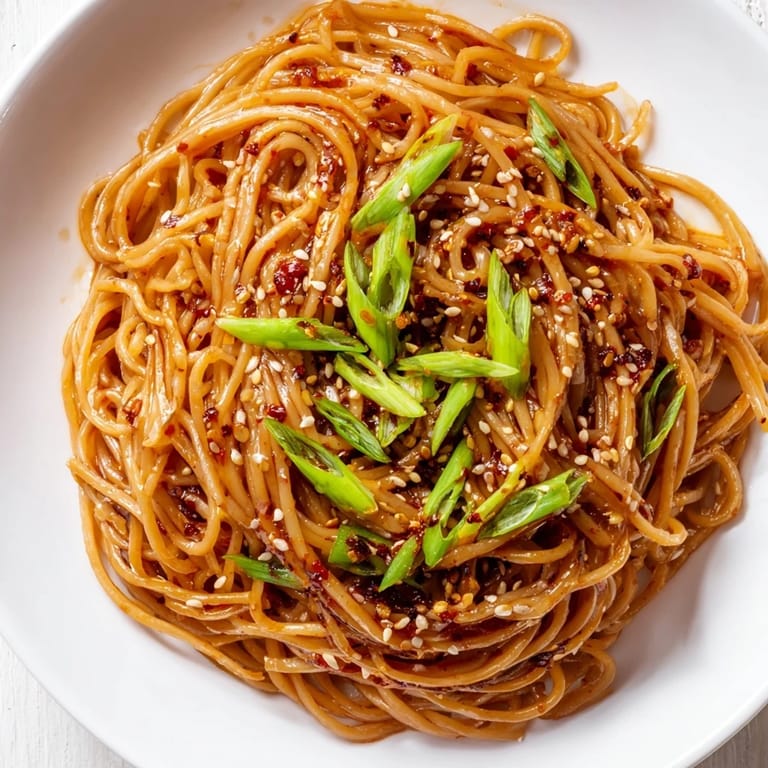
- Add your drained noodles to the bowl of sauce and pour the chili oil mixture over the top. This is where you need chopsticks or tongs to toss everything thoroughly, working from the bottom up so every strand gets coated in that glossy, fragrant oil. It should look almost shiny.
- Finish and serve right now:
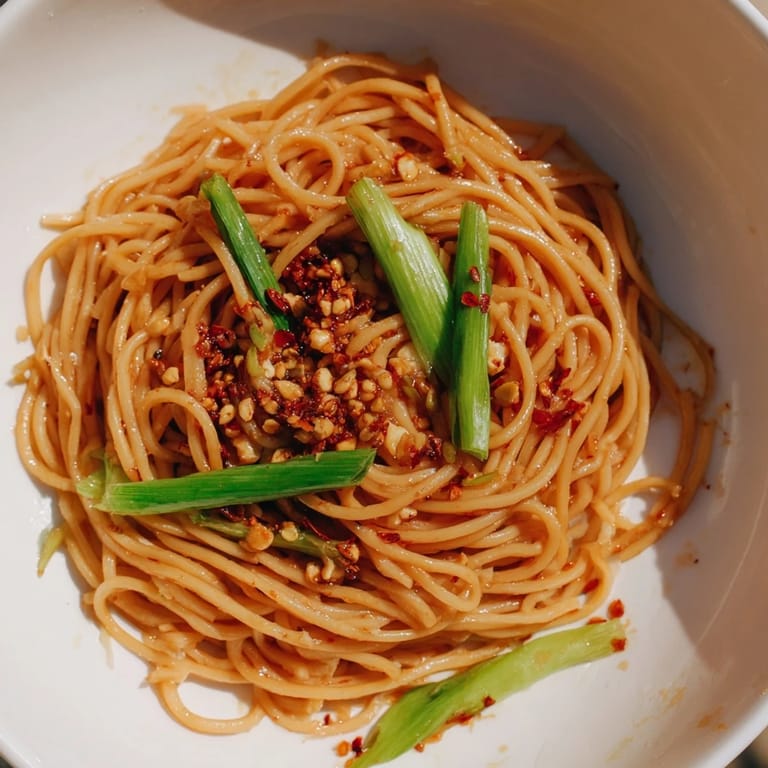
- Scatter the green parts of the scallions and any extra sesame seeds on top. Taste a bite—adjust heat, salt, or vinegar if needed. Serve it immediately while it's still warm and the oil is at its most aromatic, and encourage people to mix it one more time as they eat because those flavors keep developing.
 Save
Save There's a moment after you've tossed everything together when you pause before eating, and the steam rising from the bowl carries that unmistakable smell of garlic and chili hitting hot oil. That's when you know you've done something right. This dish stopped being just noodles and became the thing I reach for when I need something honest, bold, and made entirely by my own hands.
The Story Behind the Chili Oil
Chili oil is one of those kitchen foundations that seems fancy until you make it once and realize it's just heat meeting fat and time. I learned to respect it after making it too aggressively one evening and ending up coughing in my kitchen with watering eyes. Now I understand that the gentleness of the approach is what creates something you actually want to eat, not something that punishes you. The garlic does something surprising too—as it steeps in the warm oil, it loses its sharpness and becomes almost sweet, which is why this works as both a punch of flavor and something surprisingly balanced.
Why the Vinegar Matters
Chinese black vinegar is deeper and more complex than regular vinegar, bringing an almost fermented, slightly sweet undertone that regular vinegar can't touch. The first time I made this dish without it, I used regular rice vinegar out of necessity, and it was good, but it was thinner somehow—less rounded. That acidity is crucial because it cuts through the richness of the oil and balances all that heat, keeping the dish from feeling heavy or one-note. If you can't find the real thing, don't fret, but do make a note to seek it out because it truly does change the final result.
Customizing Your Heat Level and Toppings
This recipe is more of a starting point than a rule book, which is part of why it works. Some nights I add roasted peanuts for crunch, other times I'll toss in some sautéed mushrooms or shredded chicken because it feels right. You can dial the chili flakes down to 1½ tablespoons if you prefer something gentler, or go up to 3 if you like your food to challenge you. The Sichuan peppercorns are optional but worth experimenting with—they add a sensation more than a flavor, this slight numbing tingle that makes every bite feel alive.
- Add 100g of soft tofu, fried until golden, or some shredded cooked chicken if you want more substance and protein.
- Stir in some blanched vegetables like bok choy, snap peas, or baby spinach just before serving so they warm through without getting mushy.
- If you like it saucier, add a splash more reserved noodle water or a teaspoon of sesame oil to the mix—there's no punishment for tasting as you go.
 Save
Save There's something deeply satisfying about a meal that comes together quickly but tastes like you've been thinking about it all day. This is that meal, and once you make it, it becomes the kind of recipe you return to when you need something quick, bold, and entirely within your control.
Recipe FAQs
- → What type of noodles work best for this dish?
Use wheat-based noodles such as Chinese wheat noodles or linguine for the ideal chewy texture and good sauce absorption.
- → How can I adjust the spice level?
Modify the amount of chili flakes to increase or decrease heat. Omitting Sichuan peppercorns reduces numbing spiciness.
- → Can I add protein or vegetables?
Yes, sautéed vegetables, tofu, or shredded chicken mix well to enhance texture and nutrition.
- → What oils are recommended for the chili oil?
Neutral oils like canola, sunflower, or grapeseed work best to let the chili and garlic flavors shine without overpowering.
- → How should I serve this dish?
Serve immediately after tossing to enjoy a glossy coating. Garnish with scallion greens and sesame seeds for aroma and texture.
- → Are there common allergens to note?
This dish contains wheat and soy, so check ingredient labels for gluten or soy allergies prior to preparation.