 Save
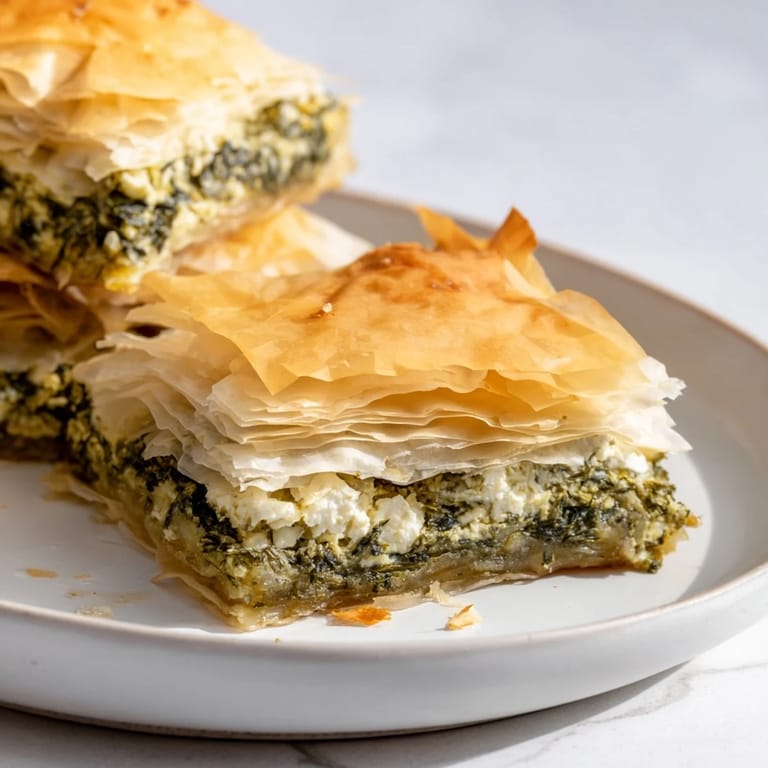
Save The first time I truly understood spanakopita wasn't from a recipe but from watching my neighbor Marie pull a golden, crackling pie from her oven on a quiet Sunday afternoon. Steam rose in delicate waves, carrying the scent of dill and feta through her kitchen, and I realized then that this wasn't just food—it was a way of saying welcome. Years later, I'd recreate that moment countless times, each batch teaching me something new about patience, layering, and the magic of phyllo.
I made this for my book club once, and someone asked if I'd bought it from a Greek bakery—the crispy, shattering phyllo was that convincing. What they didn't know was that I'd burned the first batch testing it, but the second one, coaxed gently with just the right amount of oil and patience, turned into something that made the whole evening feel special. That's when I learned that spanakopita isn't forgiving of rushing, but it rewards you generously if you give it time.
Ingredients
- Fresh spinach (2 lbs): Use fresh if you can—it has a brighter, cleaner taste than frozen, though frozen works beautifully if you squeeze out every drop of moisture (this is non-negotiable; soggy filling ruins the crisp phyllo).
- Yellow onion and scallions: These two soften together into a sweet, mellow base that keeps the filling from tasting one-note and herbaceous.
- Fresh dill and parsley: The dill is the soul of this dish; don't skip it or use dried unless you must, because fresh herbs transform the filling from good to transcendent.
- Feta cheese: Crumbly, salty feta is essential; creamy feta spreads unevenly and changes the texture entirely.
- Ricotta or cottage cheese (optional): I add this when I want a creamier filling that holds together better, especially if I'm serving it warm.
- Eggs: Just two, lightly beaten, act as a gentle binder that keeps everything cohesive without making the filling heavy.
- Ground nutmeg: A whisper of nutmeg—just a quarter teaspoon—rounds out the spices and adds a warmth you won't identify by name but will feel in every bite.
- Phyllo dough: Thaw it slowly in the fridge overnight; rushing it with heat makes it brittle and impossible to work with.
- Olive oil or butter for brushing: I use olive oil because it's more forgiving and keeps the phyllo golden rather than too dark, but either works.
Tired of Takeout? 🥡
Get 10 meals you can make faster than delivery arrives. Seriously.
One email. No spam. Unsubscribe anytime.
Instructions
- Set the stage:
- Preheat your oven to 350°F and grease a 9x13-inch baking dish with a light hand—you want it slick but not swimming in oil. This matters more than it sounds; too much and the phyllo bottom gets greasy, too little and it sticks.
- Soften the aromatics:
- Heat 2 tablespoons of olive oil in a large skillet over medium heat, then add your chopped onion and sliced scallions. Let them turn translucent and just barely golden at the edges, about 5 minutes—you're listening for them to stop sizzling quite so loudly, which means they've released their water and begun to caramelize.
- Wilt the spinach:
- Add your chopped spinach in batches if it's fresh (it will look like you're adding an impossible amount, but it shrinks dramatically). Cook until the bright green darkens and any liquid in the pan has evaporated—this takes longer than you'd think, maybe 8–10 minutes total, but it's worth the wait because moisture is the enemy of crispy phyllo.
- Build the filling:
- Let the spinach mixture cool slightly, then give it a good squeeze with your hands or press it against the side of the skillet to release any final moisture. Transfer it to a large bowl and fold in the dill, parsley, crumbled feta, ricotta if using, beaten eggs, black pepper, nutmeg, and salt to taste. Taste it—it should taste boldly seasoned because phyllo is neutral and won't add much flavor.
- Layer the phyllo base:
- Lay one sheet of phyllo in your prepared dish, letting the edges hang over the sides naturally. Brush it lightly and evenly with olive oil or melted butter using a pastry brush—you're aiming for coverage without saturation, which takes practice but becomes second nature. Repeat this process with 6–7 more sheets, brushing each one before adding the next.
- Spread the filling:
- Once your phyllo base is ready, spread the spinach-feta mixture evenly across it, smoothing the top gently. Don't press hard; you want the filling to stay in place without compacting.
- Seal it with phyllo:
- Layer the remaining phyllo sheets on top, brushing each with oil or butter the same way you did the base. When you reach the last sheet, fold those overhanging edges from the bottom inward toward the center, creating a sealed package that will bake golden and crisp.
- Score and bake:
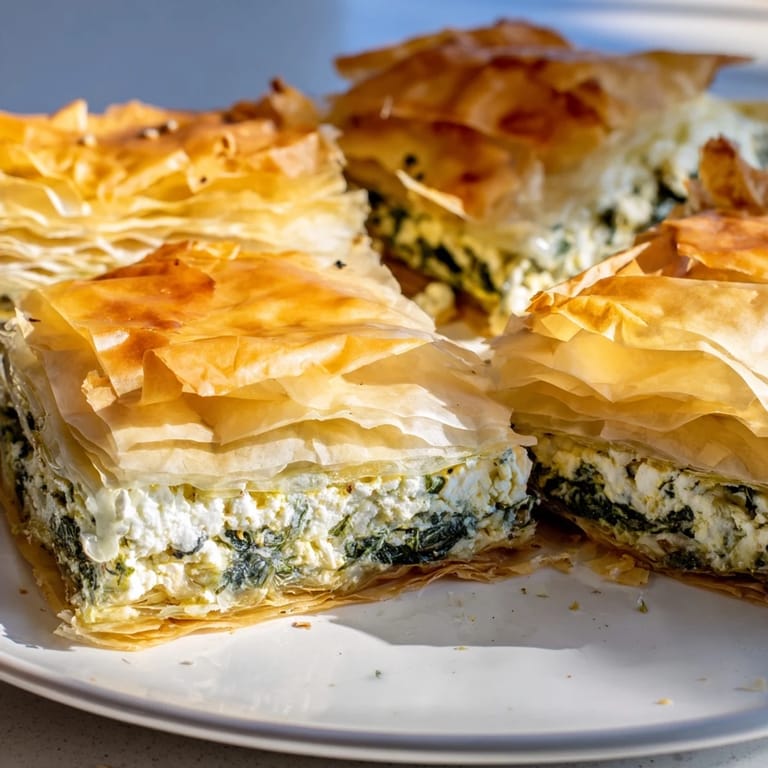
- Using a sharp knife (a dull one will shred the phyllo), score the top into squares or diamonds—you're not cutting all the way through, just marking where the portions will naturally break. Bake at 350°F for 35–40 minutes until the top is deep golden and you can hear it crackle slightly when you move the pan.
- Rest before serving:
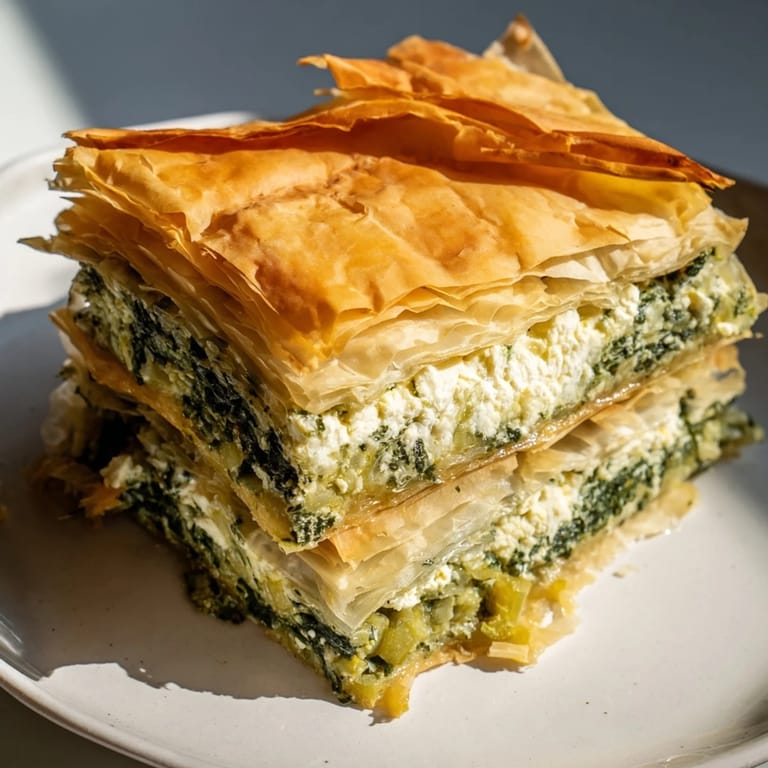
- Let it cool for at least 10 minutes, which allows the structure to set so it doesn't fall apart when you cut into it. This is when the kitchen will smell the most incredible.
 Save
Save I made spanakopita for my daughter's school potluck once, and a little boy came back for thirds, telling his mom it was the best thing he'd ever eaten. She looked at me with genuine gratitude, and I realized that this simple pie—which is just spinach, cheese, and pastry—somehow carries more warmth than its ingredients suggest. That's the real magic of it.
Why Phyllo Is Worth the Learning Curve
Phyllo dough feels fragile and temperamental at first, but it's actually forgiving in its own way. The key is understanding that it wants to be layered thin and brushed generously with fat, which creates those impossibly crispy, shattering sheets. Once you make spanakopita a few times, you'll understand how phyllo works, and you'll find yourself reaching for it in other dishes—apple pie, cheese pie, anything that benefits from a dramatic golden crust.
Make-Ahead and Storage Magic
This is one of those dishes that actually improves with planning. You can assemble the entire pie up to a day ahead, cover it with plastic wrap, and refrigerate it; bake it cold straight from the fridge, adding just 5–10 minutes to the cooking time. You can also freeze it after baking, wrapped well, and reheat it at 300°F until warmed through. I often make two and freeze one, which means I always have an impressive appetizer or light dinner hiding in my freezer.
Serving and Pairing Ideas
Spanakopita shines warm or at room temperature, which makes it perfect for potlucks, picnics, or a casual lunch. Cut it into smaller squares for appetizers or larger rectangles for a proper serving as a side or light main. A crisp white wine like Assyrtiko or Sauvignon Blanc complements it beautifully, as does a simple green salad with lemon vinaigrette to cut through the richness of the cheese and oil.
- Serve it with tzatziki or Greek yogurt mixed with lemon and dill if you want something cool and tangy alongside the warm pie.
- Leftovers taste wonderful cold the next day, straight from the fridge or gently warmed, and they pack beautifully for lunch.
- Double the recipe if you're feeding more than six, or make two pies—they freeze so well that having extras on hand feels like a gift to future you.
 Save
Save Every time I make spanakopita, I'm transported back to that Sunday afternoon in Marie's kitchen, and I understand why this humble pie has endured for centuries. It's simple, it's elegant, and it tastes like care.
Recipe FAQs
- → Can frozen spinach be used instead of fresh?
Yes, frozen spinach works well if thawed and thoroughly drained to remove excess moisture, ensuring the filling isn't soggy.
- → What is the best way to keep phyllo crisp?
Brush each phyllo sheet generously with olive oil or melted butter to separate layers and promote crispness during baking.
- → Can other greens replace spinach in this dish?
Chard or mixed leafy greens can be substituted to vary flavors while maintaining the characteristic texture.
- → How should the pie be scored before baking?
Score the top phyllo layers into squares or diamonds without cutting all the way through to ease serving after baking.
- → What wine pairs well with this savory pie?
Crisp white wines like Assyrtiko or Sauvignon Blanc complement the fresh, tangy flavors beautifully.