 Save
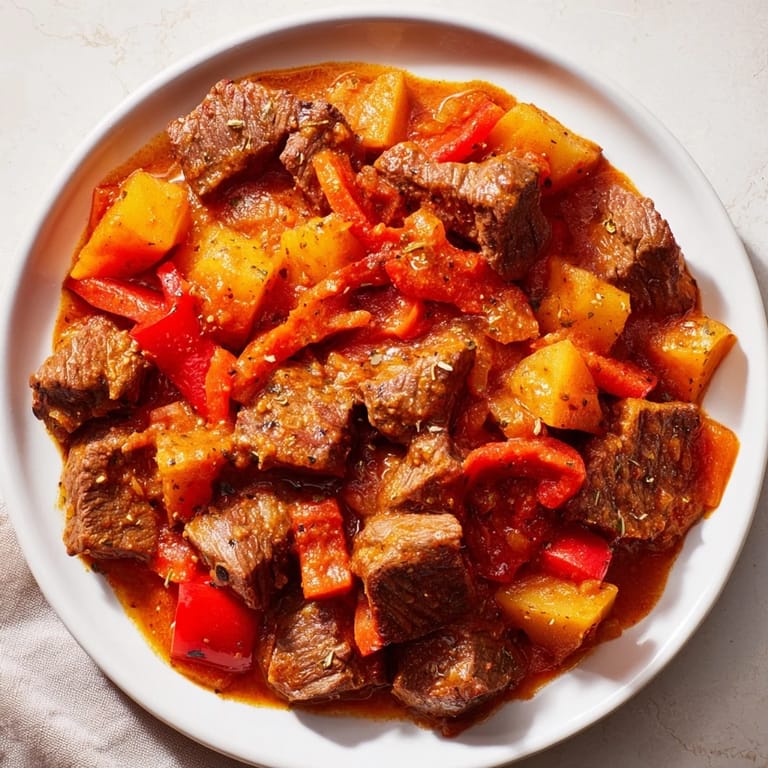
Save My neighbor Maria taught me to make goulash on a crisp October afternoon when she caught me standing outside her kitchen door, drawn by the most intoxicating smell of paprika and caramelizing onions. She didn't have a written recipe, just decades of muscle memory and the kind of confidence that comes from making something hundreds of times. What struck me most wasn't just how good it tasted, but how the stew seemed to grow richer and deeper as it simmered, like it was becoming something more than its ingredients. That afternoon changed how I thought about slow cooking entirely.
I made this for my partner's birthday dinner during a snowstorm, when we were both convinced the guests would cancel. They didn't, and somehow that stew became the whole evening, the way it steamed from the pot and filled every room with this impossible warmth and comfort. People came back for seconds without asking, which is the highest compliment a cook can receive.
Ingredients
- Beef chuck, 2 lbs cut into 1-inch cubes: This cut is patient meat, full of collagen that melts into silky richness as it braises, creating its own sauce.
- Large onions, 2, finely chopped: They're not just background here—they caramelize and thicken the stew, becoming almost sweet and essential to the flavor base.
- Carrots, 2 medium, sliced: These add gentle sweetness and body without needing cream.
- Red bell pepper, 1 large, diced: It softens into the stew and brings brightness that balances the deep paprika warmth.
- Garlic, 2 cloves, minced: Just enough to round out the aromatics without dominating.
- Potatoes, 2 medium, peeled and cubed: Optional but recommended—they absorb flavor and make the stew more substantial.
- Hungarian sweet paprika, 3 tablespoons: This is everything in goulash; cheap paprika will disappoint you, so spend a bit more on authentic Hungarian variety.
- Caraway seeds, 1 teaspoon: A whisper of earthiness that tastes distinctly Hungarian and slightly unexpected in the best way.
- Dried marjoram, 1 teaspoon: It bridges the gap between the savory beef and sweet paprika beautifully.
- Black pepper, 1/2 teaspoon, freshly ground: Freshly ground makes a real difference here; pre-ground tastes faint by comparison.
- Salt, 1 teaspoon, plus more to taste: Add it gradually since the broth already contains salt.
- Bay leaf, 1: It floats quietly through the pot, deepening everything it touches.
- Beef broth, 4 cups: The backbone of the stew; homemade is ideal but good quality store-bought works well.
- Tomato paste, 2 tablespoons: It adds depth and a subtle tang that prevents the stew from tasting flat.
- Vegetable oil or lard, 2 tablespoons: Lard creates better browning and a richer result, but oil works if that's what you have.
Tired of Takeout? 🥡
Get 10 meals you can make faster than delivery arrives. Seriously.
One email. No spam. Unsubscribe anytime.
Instructions
- Build your flavor foundation:
- Heat your oil in a heavy pot over medium heat and add the chopped onions. Listen for that gentle sizzle and watch them shift from white to pale gold over about 8 minutes—this is where the magic begins, as the sugars in the onions caramelize and create sweetness. Add the minced garlic and cook for just a minute until the kitchen smells like garlic bread.
- Sear the beef:
- Push the onions to the side and add your beef cubes, letting them sit undisturbed for a moment so they develop a golden crust on the bottom. Stir and cook for about 5 minutes total, browning as many surfaces as you can reach; you're building flavor, not cooking the meat through.
- Embrace the paprika:
- Sprinkle the paprika over the meat and onions and stir quickly for about 30 seconds. This is the most important moment—you want the paprika to coat everything evenly and toast slightly, but not burn into bitterness. It should smell warm and rich, like you've just opened a spice market.
- Deepen with paste and aromatics:
- Stir in the tomato paste, caraway seeds, marjoram, black pepper, and salt, mixing until everything is coated. Let it cook for a minute or two so the flavors start to meld.
- Add vegetables and liquid:
- Toss in the carrots, bell pepper, and bay leaf, then pour in the broth while scraping the bottom of the pot with your spoon to release all those stuck-on, flavorful bits. Bring it to a gentle simmer and cover the pot.
- First simmer:
- Let it bubble very gently for about 1 hour on low heat, stirring occasionally. The beef will gradually become tender, the broth will take on color, and the whole pot will fill with steam when you lift the lid.
- Final stretch:
- Add your potatoes if using and continue simmering uncovered for another 45 to 60 minutes. The stew will gradually thicken as liquid reduces and the vegetables release their moisture; the beef should be tender enough to cut with the edge of a spoon.
- Finish and taste:
- Remove from heat, discard the bay leaf, and taste. Adjust salt and pepper if needed, remembering that flavors will become even more pronounced as it cools and sits overnight.
 Save
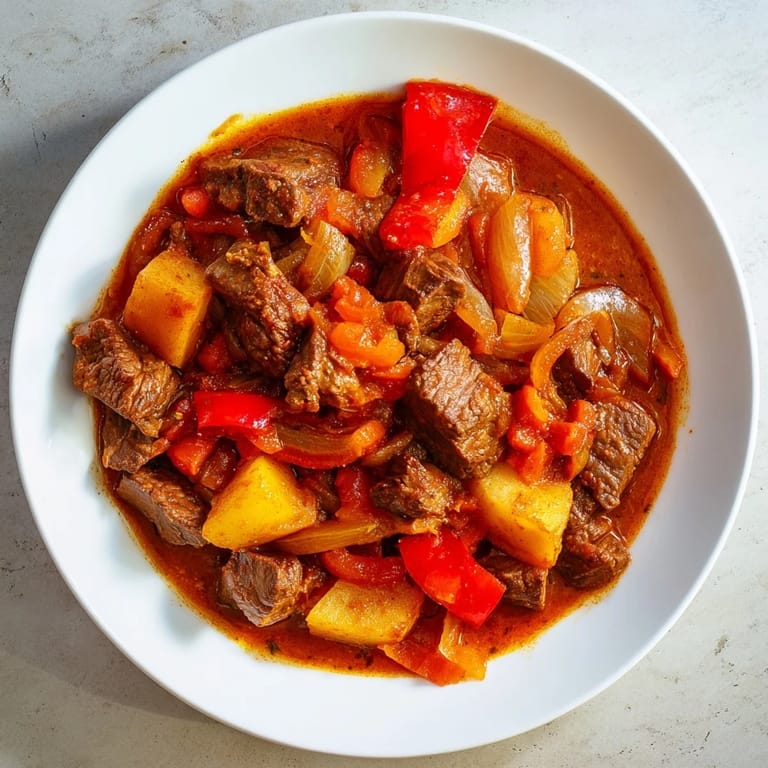
Save I learned the real power of this dish one winter when a friend went through something difficult and I made a batch without being asked, just left it at her door. She told me later that she heated it up at 11 pm when everything felt dark and ate it standing at her kitchen counter in her coat, and that simple act of care mattered more than the words I couldn't find. Food has a quiet strength sometimes.
Why This Stew Matters
Hungarian goulash exists for a reason—it's a dish born from necessity that became a triumph. In the mountains and plains, you had tough cuts of meat, hearty vegetables, and paprika, and somehow cooks figured out how to transform those limited ingredients into something so profoundly good that centuries later, we're still making it exactly the same way. There's a confidence in that, a kind of cooking that doesn't second-guess itself.
Serving and Pairing
Serve this stew in shallow bowls so the broth can pool around the edges and you get both the richness of the liquid and the tender pieces of meat and vegetables in every spoonful. The only real requirement is something starchy to soak up the sauce—crusty bread works beautifully, but egg noodles, csipetke dumplings, or even plain rice will cradle it perfectly. The stew itself should be thick enough to cling slightly to a spoon but still pour gently; if it looks too thick, thin it with a bit more broth.
The Beauty of Leftovers and Make-Ahead Cooking
This stew genuinely tastes better on the second day, which is rare and wonderful—the flavors have melded overnight, the broth has grown deeper, and everything tastes more integrated and alive. Make it ahead for a dinner party if you can, or make it on Sunday for the kind of weeknight dinner that requires nothing more than reheating and gratitude. You can refrigerate it for up to 4 days and it will keep getting better, or freeze it for up to 3 months in portions so you have comfort food waiting on days when cooking feels impossible.
- Gently reheat on the stovetop rather than the microwave so the beef doesn't toughen.
- If the stew has thickened too much in the refrigerator, warm it with an extra half cup of broth to restore the original consistency.
- A fresh sprinkle of fresh parsley and a dollop of sour cream, if you eat dairy, adds a moment of brightness right before serving.
 Save
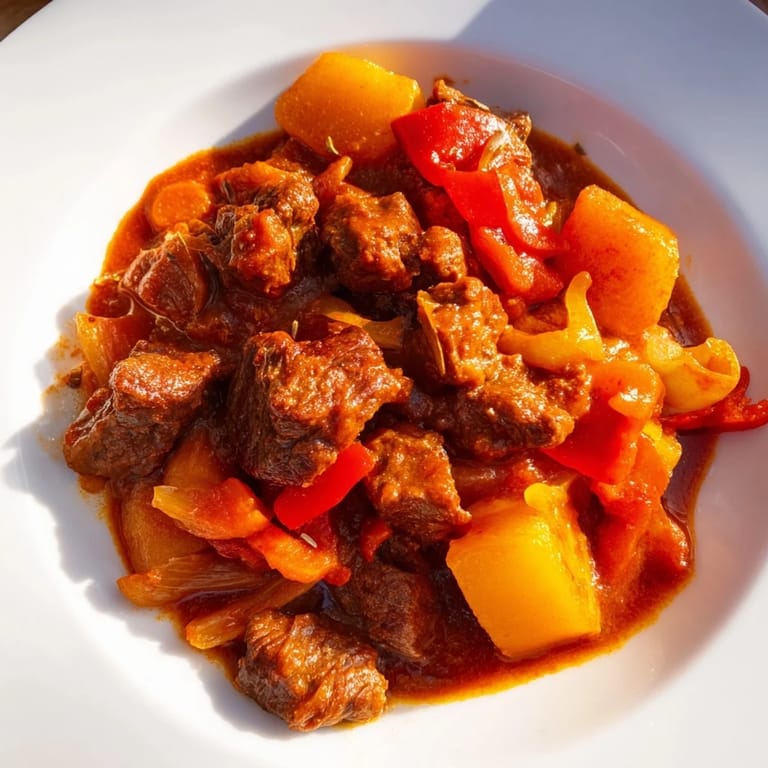
Save Goulash is the kind of food that wraps you in warmth and makes you feel looked after, whether you made it yourself or someone made it for you. Once you understand how it works, you'll find yourself returning to it again and again.