 Save
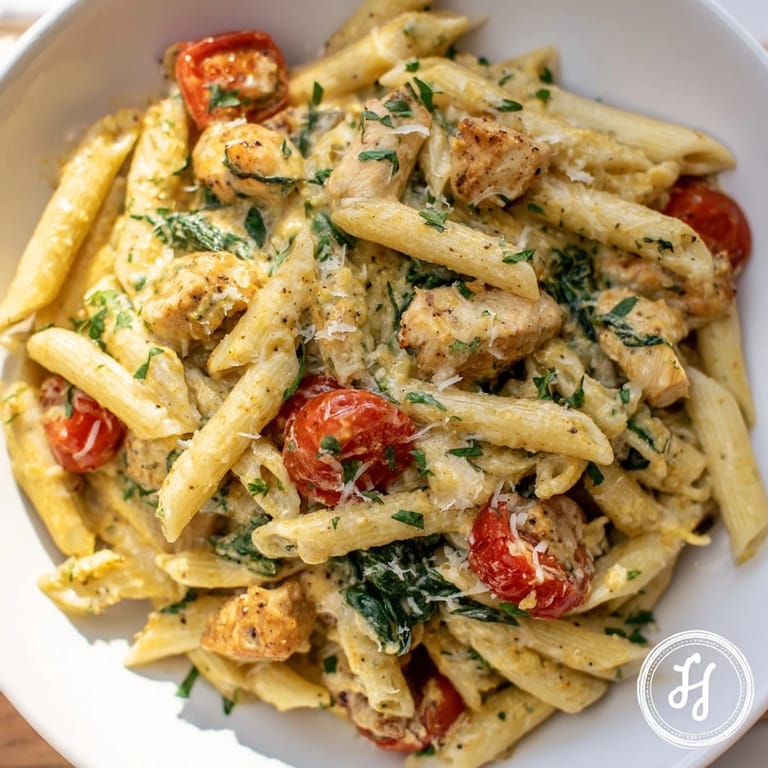
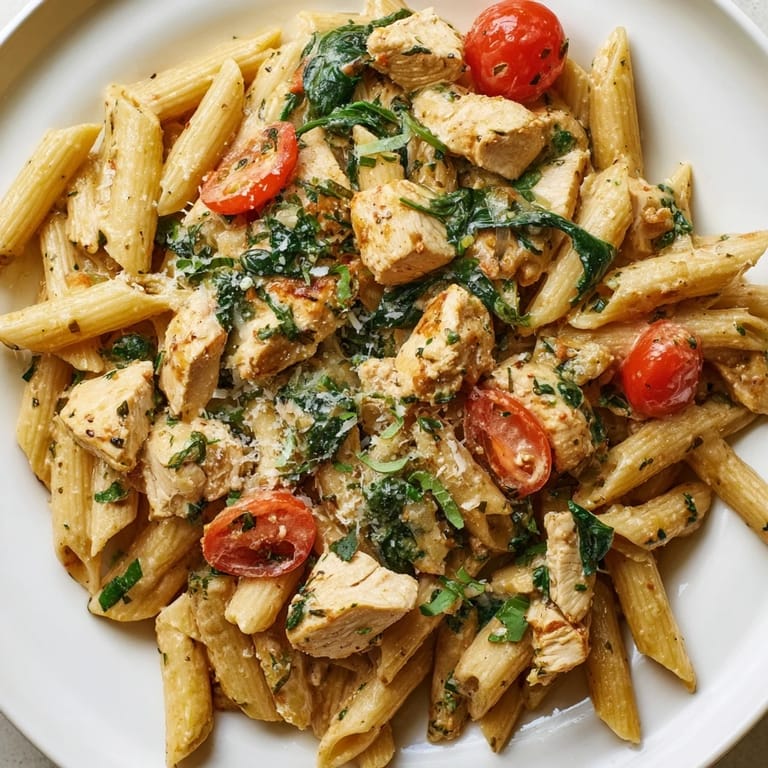
Save There's something about the smell of lemon and garlic hitting hot oil that makes me stop whatever I'm doing and pay attention. One Tuesday evening, I was staring at a nearly empty fridge—chicken, pasta, some sad spinach—and somehow ended up creating this one-pan miracle that's become my go-to when I need dinner on the table without the usual chaos of multiple pots. It's the kind of dish that tastes far more impressive than the minimal effort it actually requires.
I made this for my neighbor during the spring when her kitchen was under renovation, and she sat at my counter watching the whole thing unfold like it was dinner and a show combined. The way the spinach wilted into all those bright flavors right at the end, and how she immediately asked for the recipe—that's when I realized this wasn't just convenient, it was genuinely delicious.
Ingredients
- Boneless, skinless chicken breasts (2, about 400 g), cut into bite-sized pieces: Cutting them smaller ensures they cook through quickly without drying out, which is the whole point of this fast-moving dish.
- Penne or fusilli pasta (300 g): The tube or spiral shapes catch all that lemony, herby liquid beautifully—use whichever you have or prefer.
- Olive oil (2 tablespoons): Good quality matters here since you're not building layers of flavor, you're relying on each ingredient to shine.
- Garlic cloves (3), minced, and onion (1 small), finely chopped: These two together create the aromatic foundation that makes the whole dish feel intentional rather than thrown together.
- Lemon (1), zest and juice: The zest goes in early for subtle brightness, the juice at the end for punch—don't skip either one.
- Cherry tomatoes (150 g, halved): They burst slightly during cooking, releasing their sweetness into the broth and creating little pockets of concentrated flavor.
- Baby spinach (60 g): It wilts in the final minute, adding freshness and nutrition without overpowering anything.
- Fresh parsley (2 tablespoons, chopped) and fresh basil (1 tablespoon, chopped): Fresh herbs at the end are non-negotiable—they're the difference between good and memorable.
- Dried oregano (1 teaspoon) and dried thyme (1 teaspoon): These go in early with the broth so they can fully hydrate and infuse everything evenly.
- Low-sodium chicken broth (900 ml): This becomes your sauce, so taste it before using—some broths are saltier than others.
- Freshly grated Parmesan cheese (40 g, plus extra): Grate it yourself right before cooking; pre-grated cheese has anti-caking agents that prevent it from melting smoothly.
- Salt and black pepper: You'll taste and adjust at the end, so don't oversalt early.
Tired of Takeout? 🥡
Get 10 meals you can make faster than delivery arrives. Seriously.
One email. No spam. Unsubscribe anytime.
Instructions
- Get your pan hot and ready:
- Heat the olive oil in your large, deep skillet over medium-high heat until it shimmers—you want it hot enough that the chicken sizzles immediately when it hits the pan.
- Brown the chicken lightly:
- Add your chicken pieces and season generously with salt and pepper, cooking for 3-4 minutes until the edges turn golden but the inside stays slightly undercooked. This isn't about fully cooking the chicken yet; it's about building a little color and flavor.
- Build your aromatics:
- Remove the chicken to a plate, then add the onion and garlic to the same pan, stirring for about 2 minutes until everything turns soft and fragrant—this is when your kitchen starts smelling like something real is happening.
- Add the pasta and broth:
- Stir in the uncooked pasta, chicken broth, lemon zest, juice, oregano, and thyme, bringing everything to a boil. The pasta will absorb the broth as it cooks, becoming seasoned and tender.
- Simmer and let it work:
- Reduce heat to medium-low, cover the pan, and let it simmer for 8 minutes, stirring occasionally so nothing sticks to the bottom. You'll notice the pasta starting to soften and the liquid reducing.
- Bring the chicken back:
- Return your chicken to the pan along with the cherry tomatoes and cook uncovered for another 7-8 minutes, stirring gently, until the pasta is tender and most of the liquid has been absorbed. The chicken will finish cooking through in this time.
- Finish with freshness:
- Stir in the baby spinach, fresh parsley, basil, and grated Parmesan cheese, cooking just until the spinach wilts and the cheese melts through—about 1-2 minutes is all you need.
- Taste and adjust:
- Give it a final taste and adjust the seasoning with more salt, pepper, or a squeeze of fresh lemon juice depending on what you're craving in that moment.
- Serve immediately:
- Transfer to bowls or plates while it's hot, finishing each serving with a little extra Parmesan and maybe a small tear of fresh basil.
 Save
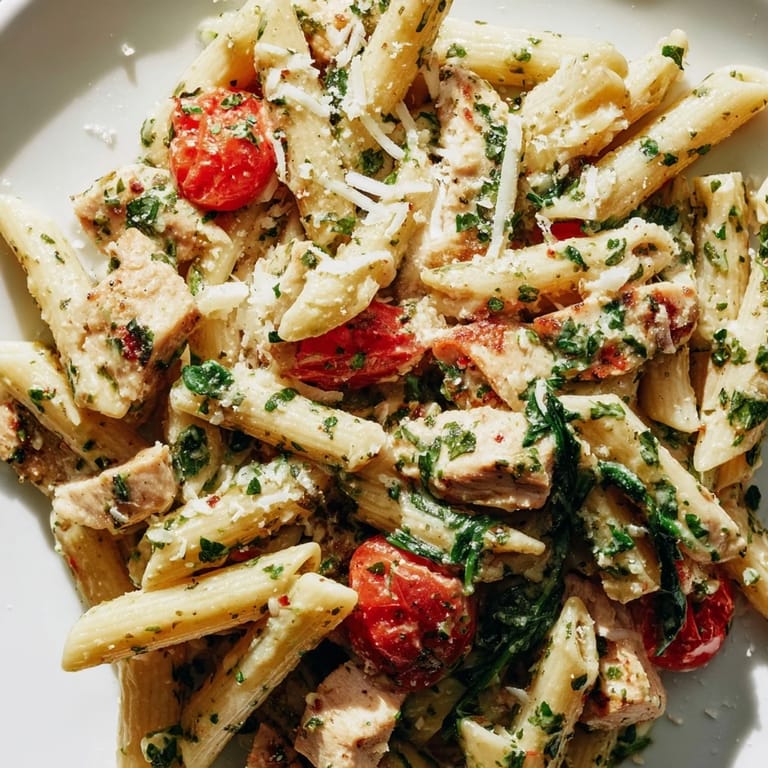
Save There's a moment near the end of cooking when the steam rises off the pan and the aroma hits you—lemon, herbs, and that toasted chicken—and suddenly you understand why simple dishes become the ones people actually crave. This one became that dish for me, the one I make when I want to feel like I've accomplished something without the usual kitchen drama.
Why This Works As a Weeknight Dinner
The genius of cooking pasta directly in the broth instead of boiling it separately is that it absorbs all the seasoning as it softens, so every bite tastes intentional. You're not making pasta and then scrambling to coat it with sauce—you're building the whole dish in one vessel, which means less thinking and more doing. By the time the pasta is done, the chicken is cooked through, the tomatoes have burst, and you've basically got a complete meal without any of the usual stress.
The Lemon Factor
Using both zest and juice might seem repetitive, but each plays a different role—the zest adds a subtle, sophisticated undertone that builds throughout cooking, while the juice at the end provides brightness and acidity that keeps the dish from tasting heavy. I learned this the hard way by making it with just juice once and feeling like something was missing. The combination of both creates complexity that makes people ask if you added something fancy, when really you just understood that lemon has more than one flavor to offer.
Making It Your Own
This recipe is genuinely flexible, which is part of why it became my standby dish. You can swap the chicken for turkey breast or even thick-cut tofu if you're feeding vegetarians, substitute any pasta shape you have on hand, and adjust the herbs based on what's growing in your garden or sitting in your produce drawer. The structure stays the same, so the technique you're learning works no matter what proteins or vegetables you decide to feature.
- If you want it spicier, add a pinch of red pepper flakes when you're sautéing the garlic.
- Roasted red peppers or artichoke hearts add dimension if you have them around.
- A splash of dry white wine in place of some of the broth creates a richer, slightly more complex sauce.
 Save
Save This one-pan meal has become my answer to those nights when I want something that feels nurturing and complete, but my energy for cooking is already running low. It reminds me that simple doesn't have to mean boring, and that sometimes the best meals are the ones that come together without any fuss at all.
Recipe FAQs
- → Can I use a different type of pasta?
Yes, any short pasta shape works well. Penne, fusilli, farfalle, or rigatoni are all excellent choices as they hold the sauce and cook evenly in the broth.
- → How do I prevent the pasta from sticking?
Stir the pasta occasionally during cooking, especially in the first few minutes. The broth should keep everything moving, but regular stirring ensures even cooking and prevents clumping.
- → Can I make this ahead of time?
This dish is best served fresh, but you can prep ingredients in advance. Cook just before serving, as pasta tends to absorb liquid and become mushy when reheated.
- → What can I substitute for chicken broth?
Vegetable broth works well, or use water with a bouillon cube. For richer flavor, try half broth and half white wine, adding the wine when you add the broth.
- → How do I know when the pasta is done?
The pasta should be al dente—tender but still slightly firm to the bite. Most of the liquid will be absorbed, creating a light, creamy sauce that coats the pasta and chicken.
- → Can I add other vegetables?
Absolutely! Bell peppers, zucchini, asparagus, or mushrooms work beautifully. Add heartier vegetables with the onions, and delicate ones like spinach at the end.