 Save
Save I still remember the first time I assembled a Mediterranean mezza platter—it was for a summer dinner party, and I was nervous about impressing guests with something so deceptively simple. My grandmother had always insisted that the best meals weren't about complicated techniques, but about bringing beautiful, honest ingredients together with care. As I arranged those creamy dips, vibrant vegetables, and golden-brown pita, something clicked. This wasn't just appetizers; it was an invitation to slow down, gather around, and share in something warm and convivial.
Years ago, I served this platter at a potluck where I didn't know many people. By the end of the night, strangers were clustered around it, dipping pita into hummus and swapping stories. That's when I realized this dish was more than food—it was a bridge between people, a reason to linger and connect.
Ingredients
- Classic hummus (1 cup): The creamy anchor of any mezza platter. Make it yourself if you have time, but a quality store-bought version saves precious minutes and tastes just as good
- Baba ganoush (1 cup): That smoky, silky eggplant dip is what makes people pause and ask for the recipe. It's worth seeking out or learning to make
- Tzatziki (1 cup): Cool, garlicky, and herbaceous—it balances the richer dips beautifully and feels refreshing alongside warm bread
- Feta cheese, cut into rustic cubes (150 g): Don't overthink the cutting; imperfect, chunky pieces look more inviting and authentic
- Cherry tomatoes, halved (1 cup): The jewels of your platter. Choose ones that smell sweet; they make a real difference in flavor
- Cucumber, sliced into rounds (1 cup): Cool and crisp, these are the palate cleanser guests reach for between richer bites
- Assorted olives—Kalamata, green, Castelvetrano (1 cup): The variety matters. Each type brings its own personality: briny, buttery, or nutty
- Roasted red bell pepper, sliced (1): Buy these jarred if you're short on time; they add color and natural sweetness
- Red onion, thinly sliced (1 small): Sharp and bright, a little goes a long way. The thin slices let its peppery heat shine without overwhelming
- Pita breads, cut into triangles (2 large): Toast them lightly if you want them crisp, or serve at room temperature for a softer bite. Gluten-free flatbread works beautifully too
- Fresh parsley, roughly chopped (1/4 cup): This final flourish is more than garnish—it adds a living, herbaceous brightness that pulls everything together
- Fresh mint leaves, torn (2 tbsp): Mint is what transforms this from good to transcendent. Tear by hand just before serving so the leaves stay vibrant
- Extra-virgin olive oil, for drizzling (2 tbsp): This is your finishing touch. Drizzle generously; olive oil isn't a luxury here, it's essential
- Sumac or zaatar, optional (1 tsp): If you have it, sprinkle it on—that tangy-citrusy flavor is the secret that makes guests ask questions
- Sea salt and freshly ground black pepper: Don't skip the fresh grinding; pre-ground pepper tastes tired compared to what you grind yourself
- Marinated artichoke hearts, optional (1/2 cup): These add complexity and a lovely tender bite
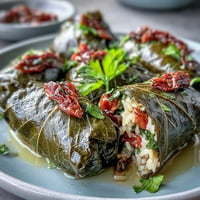
- Dolmas—stuffed grape leaves, optional (1/2 cup): If you find good ones, include them; they're unexpected and deeply satisfying
- Toasted pine nuts, optional (1/4 cup): A handful scattered across the platter adds texture and a buttery richness
Tired of Takeout? 🥡
Get 10 meals you can make faster than delivery arrives. Seriously.
One email. No spam. Unsubscribe anytime.
Instructions
- Start with your canvas:
- Find your largest, most beautiful serving platter—this is a dish meant to be admired before it's eaten. If you have a rustic wooden board, even better. Lay it out in front of you and take a moment to visualize where everything will go. You're not arranging food; you're creating an edible landscape
- Create your dip foundation:
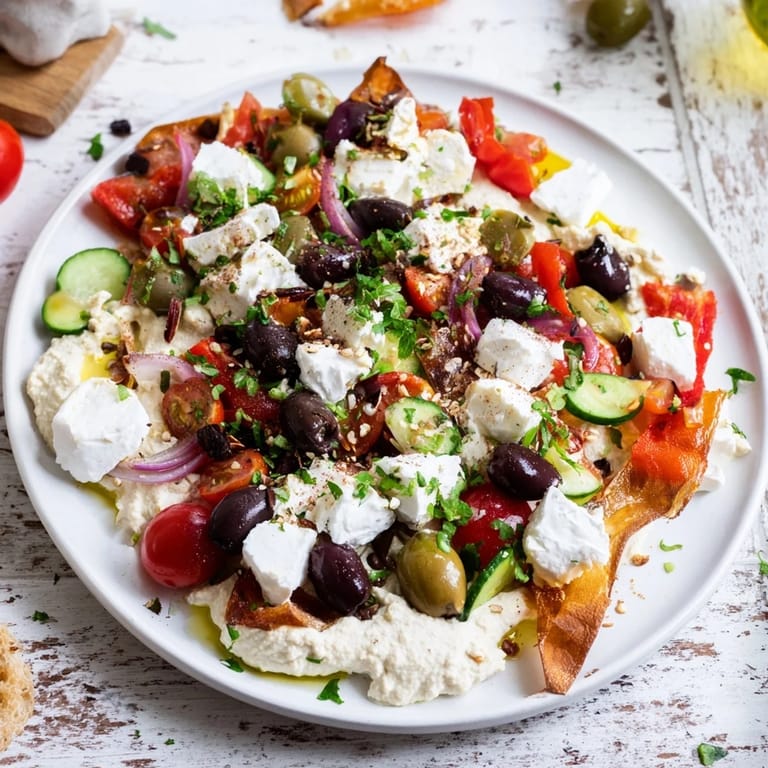
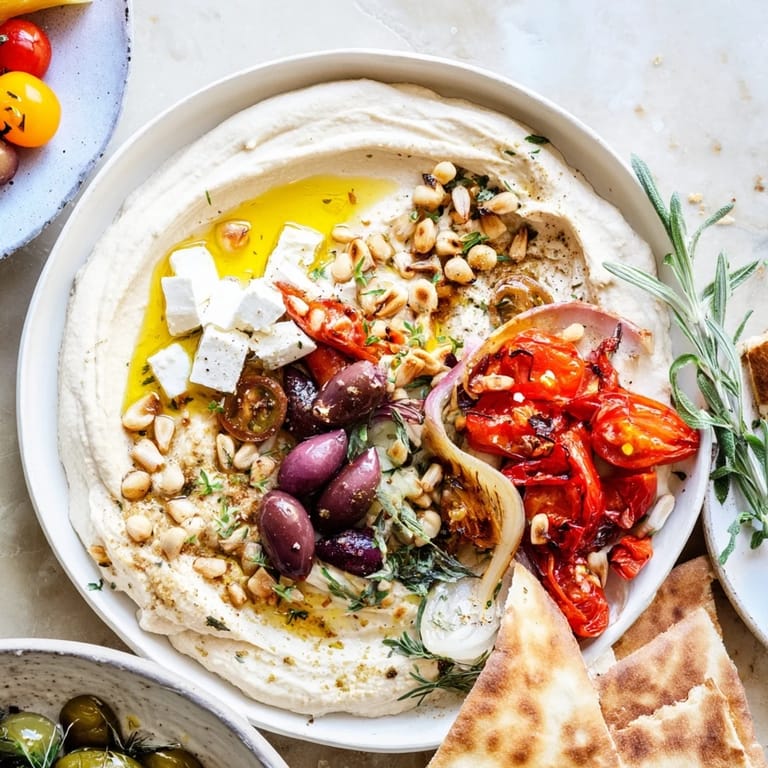
- Spoon the hummus, baba ganoush, and tzatziki into three separate small mounds, spacing them around the platter so guests can easily access all three without awkward reaching. Let each dip have its own breathing room. Watch how the colors start to tell a story—pale cream, deep purple, cool white
- Nestle in the cheese:
- Gather your feta cubes into a small cluster somewhere between the dips. The irregular, rustic shapes are part of the charm here. This cluster becomes a textural focal point—creamy, salty, substantial
- Build your vegetable mosaic:
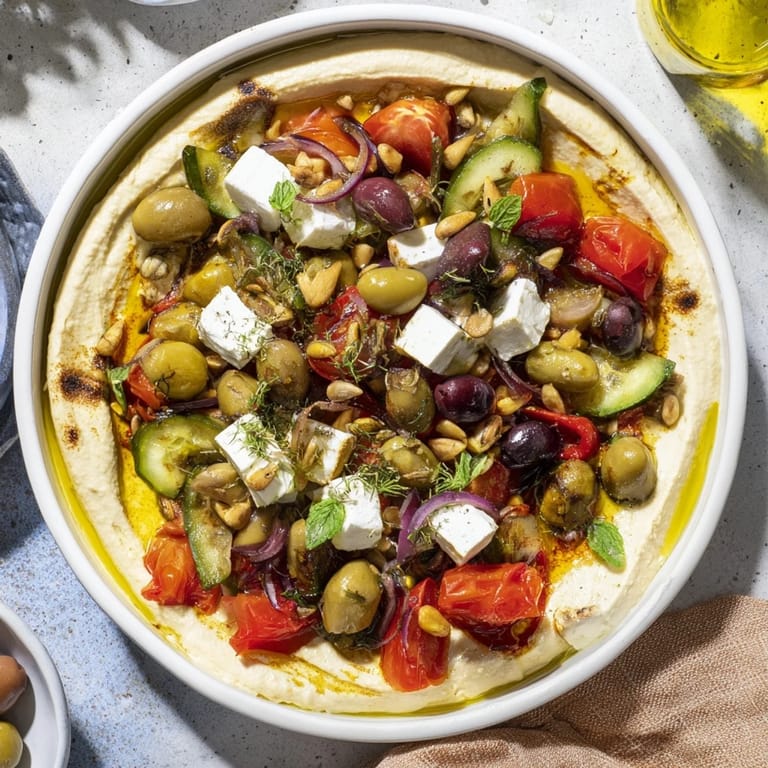
- Now comes the satisfying part. Arrange the cherry tomatoes, cucumber slices, olives, roasted pepper, and red onion in loose, organic mounds. Don't aim for perfect rows; think of how nature arranges things. Leave small gaps between clusters so the platter itself shows through. These negative spaces actually make the whole composition feel more generous
- Position your bread:
- Arrange pita triangles in a separate pile to one side, fanned if you have room, or stacked casually. These are the vehicles for your guests' enjoyment, so make them easily grabbable
- Fill the gaps:
- If you're using artichoke hearts, dolmas, and pine nuts, scatter them in small clusters throughout, filling any remaining spaces. This is where you can play and adjust based on what looks balanced to your eye
- Anoint with oil:
- Drizzle extra-virgin olive oil generously over the dips, cheese, and vegetables—don't be stingy. Oil catches the light and makes everything glisten. It's also flavor; this isn't decoration, it's essential
- The final flourish:
- Scatter your fresh parsley and torn mint across the platter. Sprinkle sumac or zaatar if you're using it. Finish with a light dusting of sea salt and a few grinds of black pepper. Step back and look at what you've created. There should be movement in the colors, variety in the textures, and an unmistakable sense of invitation
- Serve and watch the magic:
- Bring your platter to the table immediately. Watch as guests pause, smile, and begin to gather around. This is the moment when food becomes community
 Save
Save I once made this platter for my neighbor when she was going through a difficult time. She told me later that standing at that table, choosing what to eat, connecting with others—it had given her a moment of lightness when she needed it most. That's when I truly understood: this recipe isn't just about Mediterranean flavors. It's about creating a moment where people feel welcomed and cared for.
The Art of the Mezza Platter
Mezza means 'half' in Arabic, but a mezza platter is anything but incomplete. It's a philosophy—the idea that small, thoughtfully chosen bites shared among friends are more meaningful than any single main course. What makes this different from a simple appetizer spread is intention. Every ingredient is placed with care, not just tossed together. The textures matter: creamy dips next to crisp vegetables, soft bread beside salty cheese. The colors matter too; a well-arranged platter catches the eye before it even reaches your mouth. When people gather around it, something shifts. Conversations linger. Strangers become friends.
Customizing Your Platter for Your Crowd
The beauty of this recipe is that it bends to your needs without breaking. Vegan guests? Swap the tzatziki for cashew cream and skip the feta—nobody will miss it if your other flavors are strong. Want something heartier? Add warm falafel, grilled halloumi, or seasoned lamb meatballs tucked into small clusters. Have someone with gluten sensitivity? Gluten-free flatbread looks and tastes just as good as traditional pita. The core of the platter—the dips, the fresh vegetables, the herbs—these are your anchors. Everything else is a conversation with your guests and your pantry.
Pairing, Timing, and Hosting Tips
Serve this platter with a crisp white wine—a Sauvignon Blanc or Vermentino keeps things light and bright—or a chilled rosé if you want something with a bit more body. If wine isn't your style, sparkling water with fresh lemon feels equally Mediterranean and lets the food take center stage. As for timing, assemble the platter no more than 15 minutes before serving, and always add the herbs and final olive oil drizzle just as guests are arriving. The dips can be made hours ahead and stored in the refrigerator, but bring them to room temperature before serving so their flavors fully emerge. One last thought: don't feel pressured to make everything from scratch. High-quality store-bought hummus and baba ganoush are your friends, and buying them means you have more energy to focus on what truly matters—making your guests feel wanted and cherished.
- If time is tight, buy roasted red peppers and quality dips to save yourself an hour
- Arrange the platter on a slightly tilted board or platter so everything photographs beautifully
- Keep extra pita warming in the oven; guests always want more bread than you expect
 Save
Save Every time I make this platter, I'm reminded that the most generous meals aren't about effort or expense—they're about thoughtfulness. This is food that says, 'I see you, I made something beautiful for you, and I want you to stay and enjoy it.' That message matters more than any technique ever could.