 Save
Save My grandmother kept a worn recipe card for pierogi tucked between pages of her Polish cookbook, the edges darkened from years of flour dust and splattered filling. The first time she taught me to make them, I was twelve, standing on a stool to reach the counter, and she guided my clumsy fingers through folding each one as if I were handling something precious. There's something about the rhythm of it—rolling, filling, sealing—that made me feel like I belonged to something bigger than myself. Now whenever I make pierogi, that kitchen comes alive again in my memory, warm and filled with her patient voice.
Years later, I made these for a dinner party when I was trying to impress someone new, and I was so nervous about the timing that I almost burned the onions. But the slight caramelization that went a touch darker than planned turned out to be exactly what made them taste unforgettable—the slightly toasted, almost nutty sweetness balanced the creamy filling perfectly. My guest asked for the recipe before dessert, and I realized right then that feeding people something that came from your hands and your heart matters more than it being perfect.
Ingredients
- All-purpose flour: The foundation of tender dough; sour cream is the secret that keeps it soft and pliable even after boiling.
- Egg: Binds the dough without making it heavy, and gives the finished pierogi a subtle richness.
- Lukewarm water: Too hot and you'll toughen the dough; too cold and it won't hydrate properly—aim for the temperature you'd test bathwater with.
- Sour cream: This is non-negotiable; it's what makes the dough tender and forgiving to work with.
- Russet potatoes: They break down into a creamy filling without becoming gluey, unlike waxy varieties.
- Farmers cheese or ricotta: Farmers cheese has the perfect texture, but well-drained ricotta works if that's what you have—just squeeze it in a clean cloth to remove excess moisture.
- Sharp cheddar cheese: The sharpness cuts through the richness and prevents the filling from tasting one-dimensional.
- Onions for filling: Caramelizing them first adds depth that raw onion could never achieve.
- Butter: Use it generously; it's what transforms boiled pierogi into something crispy and golden.
- Onions for serving: These slowly cooked onions are the crown jewel—don't rush them or they'll taste sharp instead of sweet.
Tired of Takeout? 🥡
Get 10 meals you can make faster than delivery arrives. Seriously.
One email. No spam. Unsubscribe anytime.
Instructions
- Make the dough with your hands:
- Combine flour and salt in a large bowl, then create a well in the center like you're building a edible volcano. Add the egg, melted butter, sour cream, and water, and stir until shaggy. Once it comes together, turn it onto a floured surface and knead for five to seven minutes until it feels smooth and slightly elastic—you should be able to poke it and have it spring back slightly. Cover with a damp towel and let it rest for thirty minutes while you prepare everything else; this resting time is what makes the dough cooperative later.
- Prepare the creamy filling:
- Boil cubed potatoes in heavily salted water until they're completely tender, which takes about fifteen to eighteen minutes depending on how small you cut them. Drain them thoroughly in a colander, shaking well to remove excess water—wet potatoes make gluey filling. While they're still warm, mash them until smooth, then fold in the sautéed onions, both cheeses, salt, and pepper, tasting as you go to adjust seasoning.
- Shape each dumpling with care:
- Roll the dough thin—about an eighth of an inch, which is thinner than you probably think but crucial for tender pierogi. Cut circles using a three-inch round cutter or the rim of a glass, and place a heaping teaspoon of filling in the center of each round. Fold in half and press the edges firmly to seal, then lay them on a towel so they don't stick together.
- Cook them until they float:
- Bring a large pot of salted water to a gentle rolling boil and drop in pierogi in batches—don't overcrowd or they'll stick. They'll sink at first, then float to the surface after a minute or two; once they float, give them another minute or two in the water, then fish them out with a slotted spoon and lay them on a clean towel to cool slightly.
- Slow-cook the onions into gold:
- This is where patience becomes flavor. Melt butter over medium-low heat, add thinly sliced onions, and stir occasionally as they cook down and turn golden, which takes twenty to twenty-five minutes. Don't rush this step by turning up the heat; the low and slow method is what makes them sweet instead of caramelized in the bitter sense.
- Crisp them in the pan:
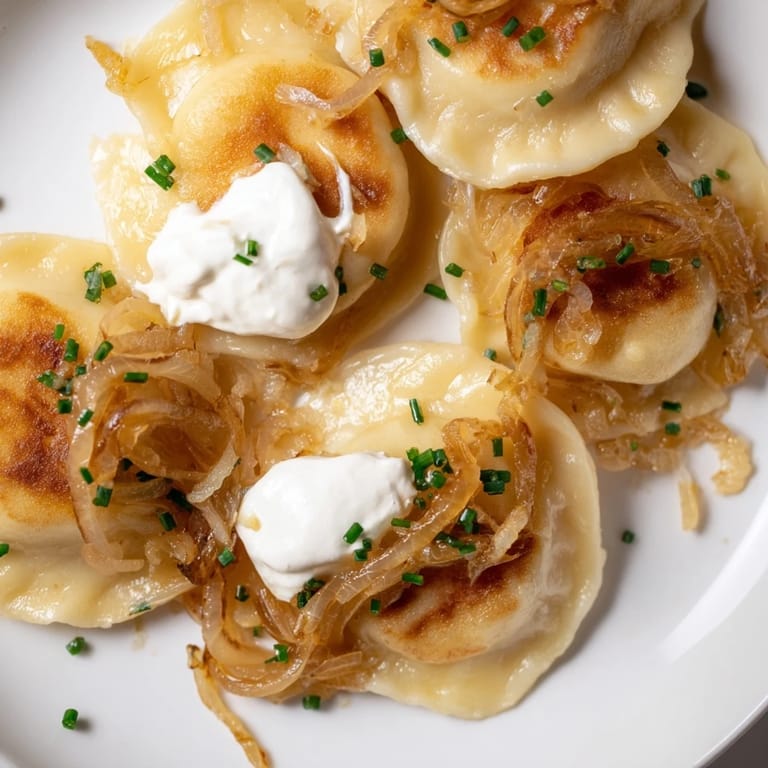
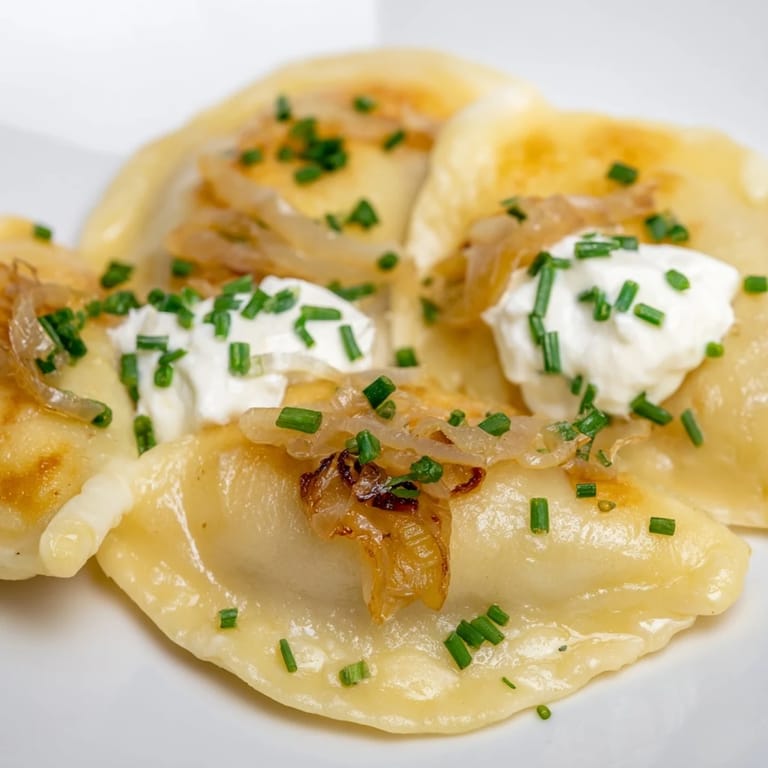
- In a skillet with a little butter, add the boiled pierogi in batches and fry on both sides until golden and slightly crispy, which takes about two to three minutes per side. They should look a little burnished and feel slightly crisp on the outside while staying tender within.
- Bring it all together:
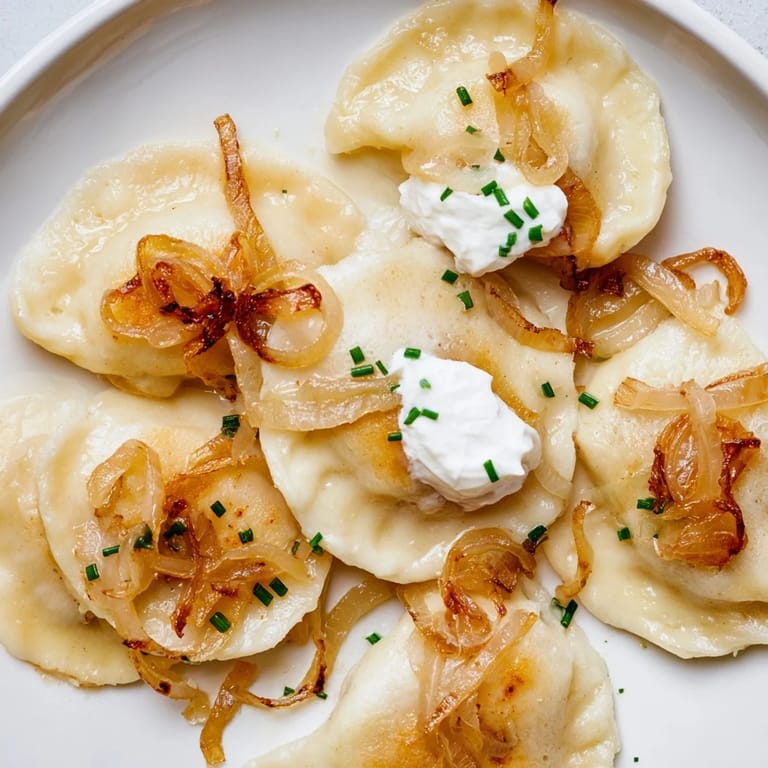
- Serve the pierogi hot, piled onto a plate and crowned with the golden onions, a generous dollop of cool sour cream, and fresh chives or parsley if you have them. The contrast of temperatures and textures is what makes this dish feel like a celebration.
 Save
Save There was a moment during a family gathering when my cousin took a bite and her eyes closed like she was remembering something too, and I understood then that food carries memory across generations. When you fold dough and fill it with your own hands, you're not just cooking dinner—you're building a connection that tastes like home.
Why Homemade Pierogi Changes Everything
The moment you bite into a pierogi you made yourself, you taste the difference between convenience and care. Store-bought versions are often thick and heavy, their fillings bland and sometimes grainy. When you control the dough and filling, you can make them delicate enough that they almost melt on your tongue, and season the filling until it tastes like the most comforting thing you've ever eaten. The act of making them is meditative in a way that ordering takeout could never be.
The Golden Onions Are Non-Negotiable
Every element of this dish matters, but the caramelized onions are where the magic happens. They transform sweet onions into something deeper and more complex through patience and time—the complete opposite of the sharp bite raw onion brings. When butter and onions cook slowly together for more than twenty minutes, the sugars concentrate and mellow, creating a sauce that makes even simple pierogi taste sophisticated. I've learned that the best dishes are often the ones where you do one thing slowly instead of many things quickly.
Make Ahead and Freeze Without Worry
One of the greatest gifts of pierogi is their forgiving nature—you can assemble them, freeze them uncooked on a tray, and then transfer them to bags for up to two months. When you're ready to eat, just add a minute or two to the boiling time and they cook directly from frozen, which means you can have homemade pierogi on the table faster than most takeout arrives. I keep a batch in my freezer for nights when I want to feel like I'm feeding people something made with intention but don't have time for the whole process.
- Farmers cheese is traditional, but cottage cheese works if you drain it well in a fine-mesh sieve.
- For a non-vegetarian version, fry some bacon lardons until crispy and stir them into the caramelized onions.
- A crisp Polish lager or dry white wine pairs beautifully and cuts through the richness.
 Save
Save These pierogi are more than a recipe—they're an invitation to slow down and create something that tastes like it was made by someone who cares. Make them for people you love, and watch how a simple dumpling becomes a memory they'll carry forward.
Recipe FAQs
- → How do I know when pierogi are boiled properly?
When pierogi float to the surface, it's an indication they are cooked through. Let them float for an additional 1–2 minutes before removing.
- → Can I use different cheeses for the filling?
Yes, substituting farmers cheese with well-drained cottage cheese is common, and sharp cheddar adds a flavorful touch.
- → What is the best way to prevent pierogi dough from drying?
Once filled and sealed, cover pierogi with a damp towel or place them under a cloth to keep moisture and prevent drying.
- → How do I achieve perfectly caramelized onions?
Cook sliced onions slowly over medium-low heat with butter, stirring often for 20–25 minutes until deeply golden and sweet.
- → Is it possible to freeze uncooked pierogi?
Yes, freeze uncooked dumplings on a tray before transferring to bags. They can be stored for up to two months without losing texture.