 Save
Save The kitchen smelled like damp earth and butter the night I figured out risotto wasn't the fussy monster I'd built up in my head. I'd bought mushrooms on a whim at the farmers market, the kind with dirt still clinging to their stems, and decided to just go for it. Standing at the stove with a wooden spoon and a glass of wine felt less like precision cooking and more like having a conversation with the pan. By the time I ladled the last bit of broth in, I realized I'd been stirring for half an hour without once checking my phone.
I made this for my sister once after she'd had a terrible week, the kind where nothing goes right and you just need someone to feed you. She sat at the counter while I stirred, and we didn't talk much, just existed in the same warm space. When I spooned it into bowls and topped it with extra Parmesan, she took one bite and her shoulders dropped two inches. That's when I learned that risotto isn't really about the rice, it's about the moment you create around it.
Ingredients
- Mixed mushrooms (400 g): Use a combination for complexity, cremini for earthiness, shiitake for umami, button for mild sweetness, and slice them thick so they hold their shape under heat.
- Olive oil (2 tbsp for mushrooms, 1 tbsp for risotto): The first batch coats the mushrooms for roasting, the second goes into the pan with butter to start building flavor without burning.
- Fresh thyme (2 tsp): This herb loves mushrooms, its tiny leaves cling to every crevice and perfume the whole kitchen as they roast.
- Vegetable broth (1.5 L): Keep it warm in a separate pot so each ladleful doesn't shock the rice and slow down the cooking.
- Unsalted butter (2 tbsp): Adds silkiness to the base and helps the onions soften without browning too fast.
- Yellow onion (1 medium): Dice it fine so it melts into the rice and becomes invisible, just a sweet backbone.
- Garlic (2 cloves): Minced small and added after the onion so it blooms without bitterness.
- Arborio rice (320 g): The starchy short grain is non negotiable here, it releases creaminess as you stir and never turns mushy if you treat it right.
- Dry white wine (120 ml): Something you'd actually drink, not cooking wine, it adds acidity that balances all the richness.
- Parmesan cheese (60 g plus extra): Grate it fresh, the stuff in the green can won't melt the same or give you that nutty finish.
- Fresh parsley (2 tbsp): Chopped at the last second for a bright green contrast against all that creamy beige.
- Sea salt and black pepper: Season in layers, taste as you go, the cheese adds salt too so hold back until the end.
Tired of Takeout? 🥡
Get 10 meals you can make faster than delivery arrives. Seriously.
One email. No spam. Unsubscribe anytime.
Instructions
- Roast the mushrooms:
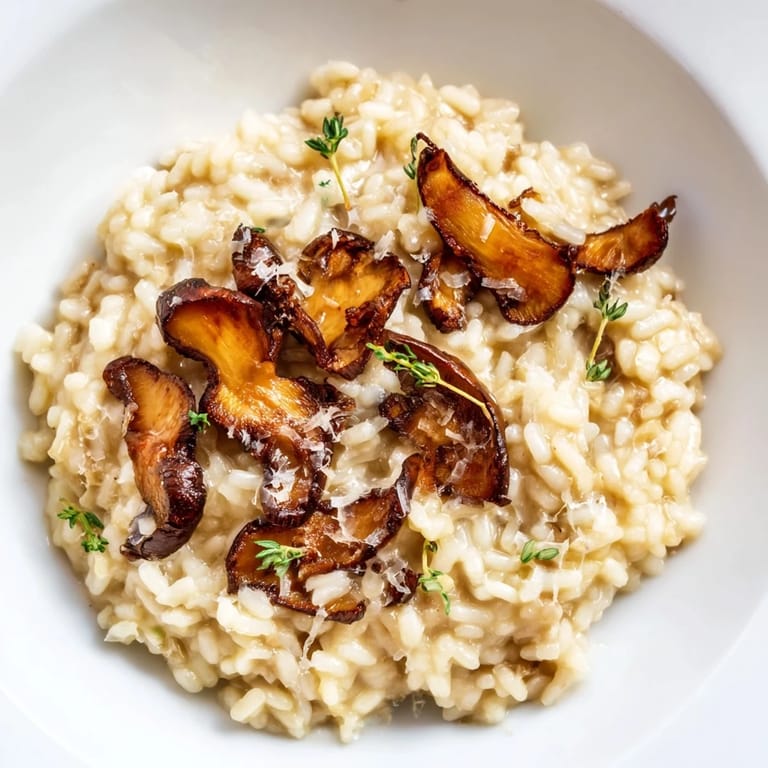
- Preheat your oven to 220°C (425°F) and toss the sliced mushrooms with olive oil, salt, pepper, and thyme on a baking sheet. Roast for 20 to 25 minutes, stirring halfway, until they're golden at the edges and smell like a forest floor in the best way.
- Start the risotto base:
- While the mushrooms roast, melt butter and olive oil in a large heavy bottomed saucepan over medium heat, then add the finely chopped onion and cook until it turns soft and translucent, about 5 minutes. Add the minced garlic and let it cook for just a minute until your kitchen smells like an Italian grandmother's house.
- Toast the rice:
- Stir in the arborio rice and keep stirring for 2 minutes so each grain gets coated and starts to smell faintly nutty. This step matters more than you think, it keeps the rice from turning gummy later.
- Deglaze with wine:
- Pour in the white wine and stir until it's almost completely absorbed, the rice will sizzle and the pan will release all those toasty bits stuck to the bottom. This is where the flavor starts to build in layers.
- Add broth gradually:
- Ladle in the warm vegetable broth one scoop at a time, stirring frequently and letting each addition absorb before adding the next. It takes about 25 to 30 minutes, and yes, you have to stay close, but the rhythm becomes almost hypnotic.
- Finish with mushrooms and cheese:
- When the rice is creamy and al dente, stir in the roasted mushrooms (save a few for the top if you want it to look nice), the grated Parmesan, and chopped parsley. Taste it, adjust the salt and pepper, and let it sit for a minute off the heat so everything melds together.
- Serve immediately:
- Spoon the risotto into warm bowls, top with extra Parmesan and any reserved mushrooms, and eat it right away while it's still glossy and steaming. Risotto waits for no one.
 Save
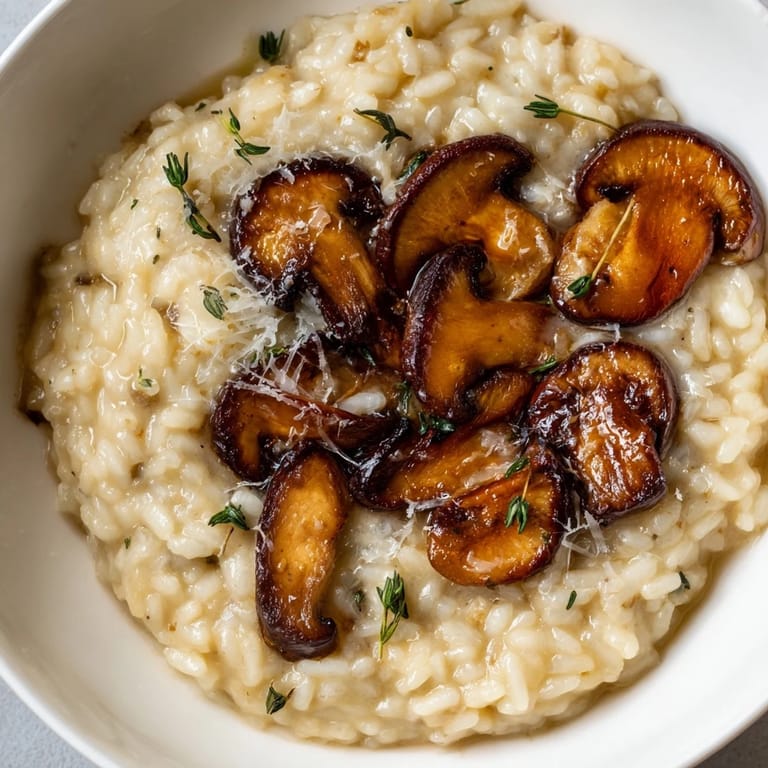
Save There's a moment when you stir in the Parmesan and the whole pot transforms, turning glossy and unified, and you realize you've just made something that tastes like it came from a restaurant with candles on the tables. I always pause there, wooden spoon in hand, and feel a little proud. It's the kind of dish that makes people put their forks down and ask how you did it, and you get to shrug and say it's just rice and patience.
How to Pick Your Mushrooms
I used to grab whatever mushrooms were on sale, but once I started mixing varieties, the flavor deepened in a way that surprised me. Cremini are the workhorses, earthy and reliable, shiitake bring that savory punch, and even plain button mushrooms add a mild sweetness when they caramelize. If you can find them, a handful of oyster or maitake mushrooms tears apart beautifully and almost melts into the rice. Don't stress about perfection, just avoid anything slimy or that smells like basement.
What to Do with Leftovers
Risotto doesn't reheat well in the microwave, it turns gluey and sad, but if you press it into patties and fry them in a hot pan with a little olive oil, you get crispy rice cakes with molten centers. I eat them with a fried egg on top for breakfast, or slice them thin and toss them into a salad for crunch. My friend once rolled cold risotto into balls, stuffed them with mozzarella, and fried them, which is basically arancini and tasted like a revelation. Leftovers are never a problem, they're just a different meal waiting to happen.
Pairing and Serving Ideas
This risotto is rich enough to stand alone, but a simple arugula salad with lemon juice cuts through the creaminess in a way that feels necessary. I've served it alongside roasted chicken thighs and it worked, but honestly it shines brightest as the main event with good bread and a cold glass of Pinot Grigio. If you want to make it feel fancier, drizzle a little truffle oil over the top just before serving, though I've also skipped that and nobody noticed.
- A handful of toasted walnuts or pine nuts on top adds crunch and a nutty echo to the Parmesan.
- Try a squeeze of lemon juice at the end if the richness feels too heavy, it wakes everything up.
- Serve it in shallow bowls so everyone can see the mushrooms piled on top, it makes the whole thing feel more intentional.
 Save
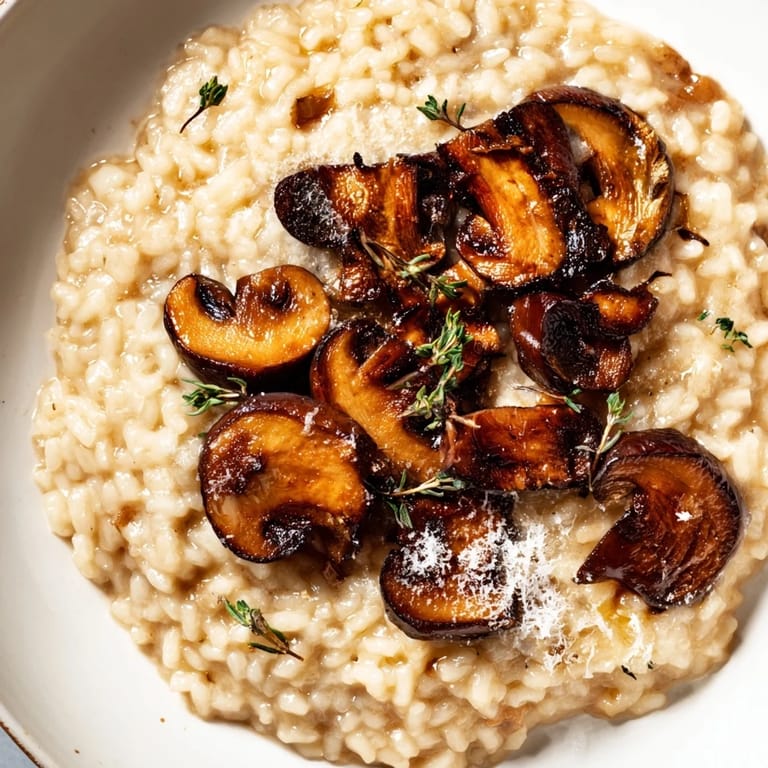
Save Risotto taught me that some things can't be rushed, and that's not a bad lesson to learn over a stove with a glass of wine in reach. Make this once and you'll understand why people keep coming back to it, even when there are faster dinners in the freezer.
Recipe FAQs
- → What type of mushrooms work best for roasting?
A mix of cremini, shiitake, and button mushrooms provides wonderful depth and complexity. Cremini offer earthy notes, shiitake brings umami richness, and button mushrooms add delicate flavor. You can adjust based on availability or preference.
- → How do I achieve perfectly creamy risotto?
The key is constant stirring and adding warm broth gradually, one ladleful at a time. Allow each addition to absorb before adding more. This patient technique releases starches from the rice, creating natural creaminess without excess cream.
- → Can I prepare this dish ahead of time?
Risotto is best served immediately after finishing. However, you can roast the mushrooms and prep ingredients several hours ahead. Once serving time approaches, make the risotto fresh to preserve its creamy texture.
- → What wine pairing complements this dish?
A crisp Pinot Grigio brightens the rich mushroom flavors beautifully. For a red option, a light Pinot Noir works wonderfully without overpowering the delicate risotto.
- → How can I add extra richness to the finish?
Stir in an extra tablespoon of butter just before serving, a technique called 'mantecatura.' This creates a silkier, more luxurious texture and enhances the overall depth of flavor.
- → Is this suitable for vegetarian diets?
Yes, this is naturally vegetarian. Verify that your Parmesan cheese and white wine meet strict vegetarian standards, as some may contain animal-derived additives or processing agents.