 Save
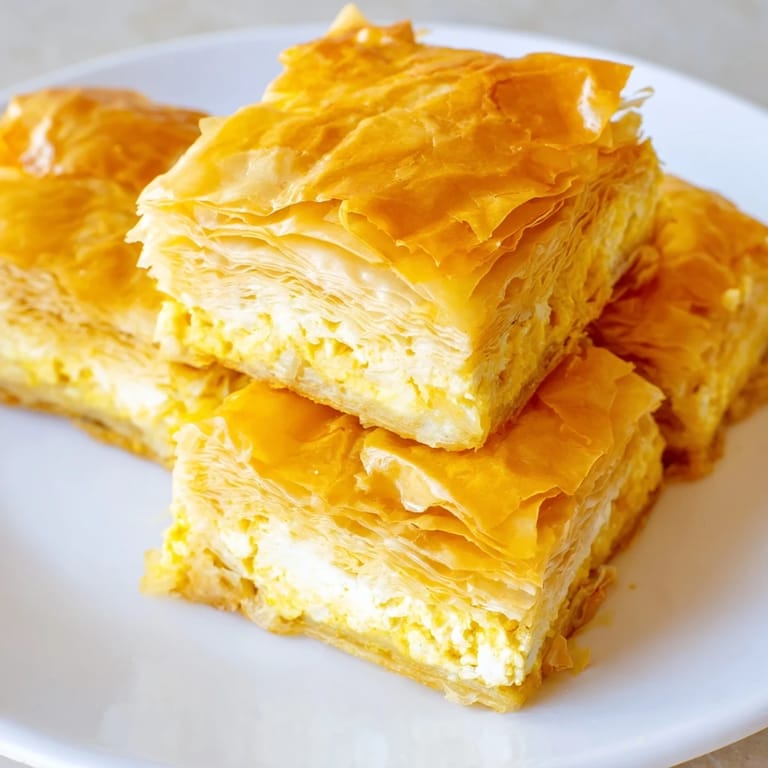
Save My first encounter with gibanica happened on a humid summer afternoon at my neighbor's kitchen, steam rising from her oven while she hummed along to the radio. She pulled out this golden, bubbling pastry and I watched her cut it into perfect squares, the layers shattering under her knife. The smell alone—buttery phyllo mixed with tangy feta and creamy cottage cheese—made me understand why this dish has fed Balkan families for generations. I asked for her recipe that day, but what I really wanted was to capture that moment of comfort in my own kitchen. Now, every time I make gibanica, I'm transported back to that warm afternoon and the simple joy of homemade food.
I once brought a warm pan of gibanica to a neighborhood potluck on a cold October evening, and it disappeared before anything else at the table. People came back asking if they could take leftovers home, which almost never happens. That's when I realized this wasn't just a recipe—it was a conversation starter, a bridge between my kitchen and everyone else's memories of their own versions of this dish.
Ingredients
- Cottage cheese: This is your creamy base, and using full-fat makes a noticeable difference in richness without drying out the filling.
- Feta cheese: Crumble it yourself if you have time; the texture is more interesting than pre-crumbled, and you control the saltiness.
- Eggs: They bind everything together and create lift as the pie bakes, so use large ones and don't skip them.
- Plain yogurt: It adds tang and keeps the filling moist, creating those little pockets of creaminess between layers.
- Sunflower oil: Traditional and neutral, it lets the cheese flavors shine without competing.
- Sparkling water: This is the secret that makes gibanica lighter and fluffier than you'd expect; still water just won't give you the same result.
- Salt and black pepper: Start light and taste as you go, since feta brings its own saltiness to the party.
- Phyllo dough: Thaw it gently in the fridge overnight if possible; rushing the thaw makes it crack and stick to itself.
Tired of Takeout? 🥡
Get 10 meals you can make faster than delivery arrives. Seriously.
One email. No spam. Unsubscribe anytime.
Instructions
- Prepare your workspace:
- Preheat your oven to 180°C and lightly oil your baking dish; cold pans lead to soggy bottoms.
- Mix the filling:
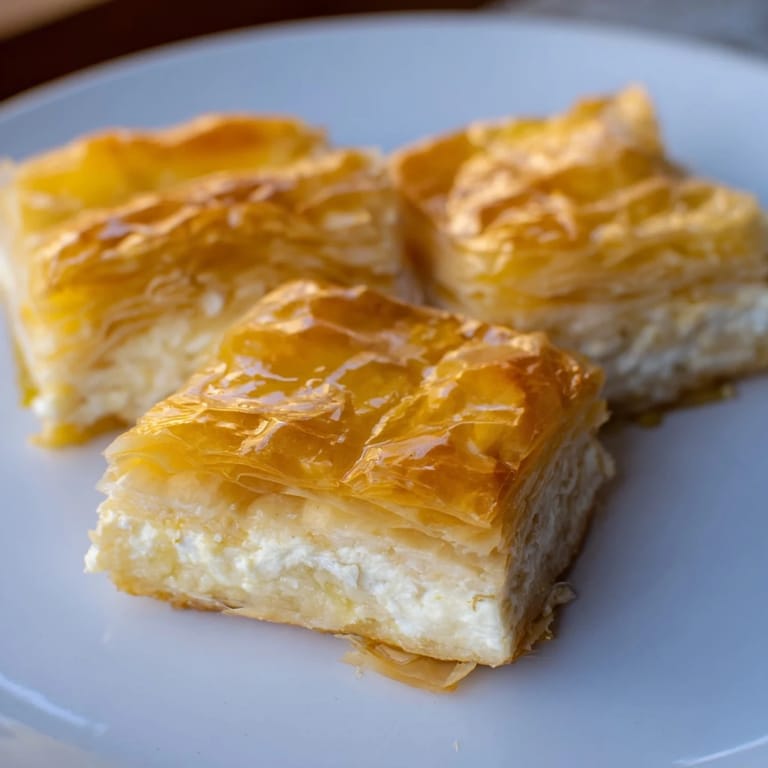
- Combine your cheeses, eggs, yogurt, oil, and sparkling water in a bowl, stirring until it looks creamy but still has personality—you want tiny feta crumbles visible, not a uniform paste. Season gently and taste; remember that baking brings out salt, so go easy at this stage.
- Layer the foundation:
- Start with a single phyllo sheet in your dish and brush it thin with oil, like you're painting instead of drenching. Add two more sheets the same way; this triple layer is your protective base so the bottom doesn't turn into a soggy disappointment.
- Build the layers:
- Spread a generous 3-4 tablespoons of filling over your phyllo base, then add 2-3 more oiled phyllo sheets on top. This isn't a science where precision matters; just keep alternating layers and brushing each phyllo sheet with just enough oil to give it color but not make it greasy.
- Keep layering:
- Continue this rhythm—phyllo sheets, oil brush, cheese filling—until your ingredients run out. The filling should look generous but not so thick that it bursts through the pastry.
- Crown your creation:
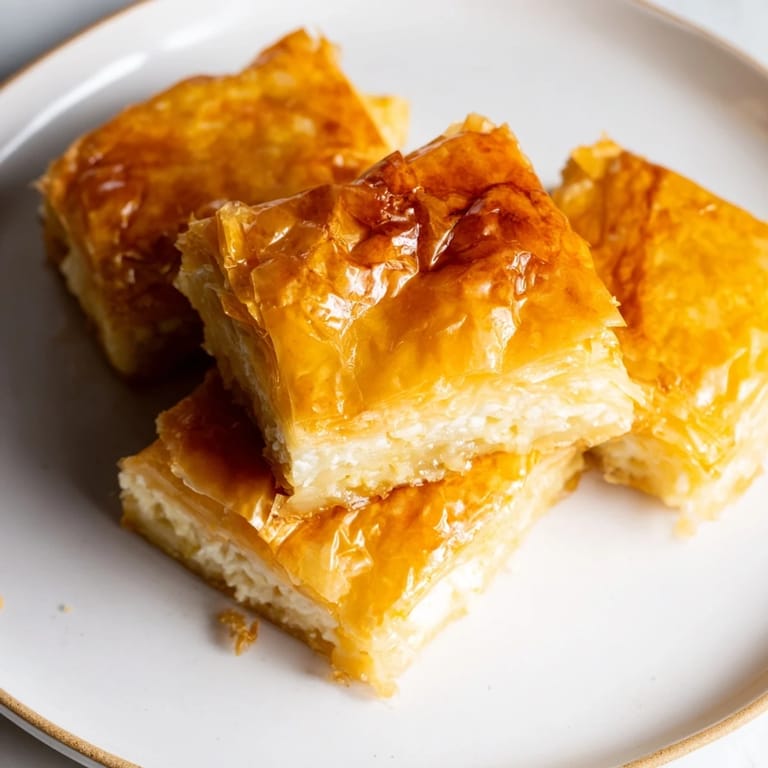
- Finish with 2 sheets of phyllo on top, brush generously with oil, and if you're feeling fancy, beat that egg yolk and brush it over for a shiny, mahogany finish when it comes out of the oven.
- Cut before baking:
- Using a sharp knife, cut your gibanica into squares or diamonds while it's still in the pan; this makes serving easier and helps heat penetrate during baking.
- Bake to golden:
- Slide it into your preheated oven and bake for 35–40 minutes until the top is deeply golden and sounds crispy when you tap it with a spoon. The filling should jiggle slightly when you gently shake the pan, but the pastry should be firm and shattered.
- Cool and serve:
- Let it rest for 10 minutes before eating; this helps it hold together and lets the filling set without becoming rubbery.
 Save
Save One evening, my daughter asked if she could help me make gibanica, and we spent an hour together brushing each phyllo sheet with oil, her small hands learning the rhythm of the kitchen. When it came out golden and fragrant, she beamed at her creation and served it to the family with such pride that everyone went back for seconds just to make her smile. That's when I understood that recipes are really about creating moments worth remembering.
Why This Dish Travels Well
Gibanica is the kind of food that actually tastes better at room temperature, which makes it perfect for picnics, potlucks, or lunchboxes the next day. Unlike many pastries that go stale, the layers stay crisp and the filling stays creamy for hours, making it a practical choice for anyone who wants their food to work as hard as they do.
Variations You Might Explore
Once you master the basic version, you can start experimenting with additions that feel personal to your kitchen. Some cooks add a tablespoon of sour cream for extra tang, others mix in fresh herbs like dill or parsley, and I once tried crumbled cooked spinach between layers just to see what would happen. The beauty of gibanica is that it welcomes gentle creativity without losing its soul.
Serving and Storage Wisdom
Serve this warm or at room temperature with a crisp salad of fresh tomatoes and cucumbers on the side; the acidity cuts through the richness in a way that feels intentional. Leftovers keep in the fridge for several days and reheat beautifully in a low oven, so this is a recipe that actually gets better as you get to know it throughout the week.
- Cut into smaller pieces and serve as an appetizer for parties, or larger squares for a main course paired with soup or salad.
- If making ahead, assemble the entire pan and refrigerate for a few hours before baking; it might need an extra 5 minutes in the oven when cold.
- For a gluten-free table, swap regular phyllo for gluten-free sheets, though the texture will be slightly different and requires the same gentle handling.
 Save
Save Gibanica is one of those recipes that whispers stories from the past while feeding real people in real kitchens right now. Make it once and it becomes yours forever.
Recipe FAQs
- → What cheeses are used in this layered pie?
The filling combines cottage cheese and crumbled feta for a creamy, tangy texture balanced with eggs and yogurt.
- → How do I keep the phyllo layers crisp?
Brushing each phyllo sheet generously with sunflower oil before layering ensures the pastry bakes to a golden, crisp finish.
- → Can I make this dish gluten-free?
Yes, substitute regular phyllo dough with gluten-free phyllo sheets to accommodate gluten-free diets without sacrificing texture.
- → Is the egg yolk glaze necessary?
The egg yolk glaze is optional and adds a shiny, golden top, but the pie will still bake well without it.
- → How should leftover pie be stored and reheated?
Store leftovers covered in the refrigerator and reheat gently in the oven to restore crispness and warmth.