 Save
Save I'll never forget the evening I first discovered that bourbon and barbecue weren't meant to be enjoyed separately. A friend invited me to a tasting dinner where a sommelier—or perhaps a bourbon enthusiast playing one—had arranged smoked meats alongside dark chocolate and aged cheeses. That night, I learned that the smokiness of brisket, the richness of bourbon, and the unexpected sweetness of dark chocolate could create something far more sophisticated than any of them alone. This board became my answer to every "what should we serve?" question since.
I made this board for my partner's birthday dinner last spring, and I watched their face light up when they bit into smoked brisket, then a piece of dark chocolate, then sipped bourbon. That moment—when someone realizes food can be an adventure—that's when I knew this arrangement was worth repeating forever.
Ingredients
- Smoked brisket, 150 g thinly sliced: Brisket's deep, smoky flavor is the backbone of this board. Slice it thin so it's tender and lets other flavors shine. I learned to keep it at room temperature before serving so it's not tough
- Barbecue pulled pork, 150 g: The pork brings sweetness and texture. If you're buying prepared, choose one with minimal sauce—you want the smoke, not the sugar
- Smoked sausage, 100 g sliced: This adds a different kind of smoke and a bit of spice. The casing snaps when you bite it, which matters
- Bourbon, 1 tbsp: Just a whisper to brush the meats. Real bourbon, not extract—the difference is everything
- Triple cream brie, 120 g sliced: This is the cushion that softens the smokiness. Its butter-like texture melts on the tongue and makes everything around it taste better
- Smoked gouda, 120 g sliced: Nutty and dense, it holds its own against the bold flavors without disappearing
- Creamy blue cheese, 100 g crumbled: Blue cheese is polarizing, but when crumbled fresh on a board, it becomes less aggressive and more intriguing. It's the question mark that makes people curious
- Dark chocolate, 60 g at 70% cocoa: Not too sweet, not too bitter. This percentage tastes sophisticated without being medicinal. Break it fresh, don't pre-slice
- Brown sugar bourbon rub, 2 tbsp: This is a simple mix of 2 tbsp brown sugar, 1 tsp smoked paprika, ½ tsp black pepper, and a pinch of chili powder. Make it fresh—it's never the same from a jar
- Candied pecans, 50 g: Sweet, crunchy, they bridge the gap between savory and the chocolate. If you make your own, you'll taste the difference immediately
- Seedless red grapes, 1 small bunch: Their tartness cuts through richness. The red color against the board is beautiful too, which matters more than people admit
- Apple, 1 small thinly sliced: Granny Smith or honeycrisp, something with snap. Slice it just before serving so it doesn't brown
- Fig or cherry preserves, 2 tbsp: This is your bridge flavor. It connects the meats to the cheese, and makes people understand why this all goes together
- Baguette, 1 small sliced and toasted: Toasting is non-negotiable. A soggy cracker defeats the purpose
- Assorted rustic crackers, 100 g: Choose ones with texture and character. They're the vehicle for everything else
- Fresh rosemary sprigs: Not just for looks. The aroma tells people what they're about to experience
- Pickled onions or gherkins, optional: These are your ace. When things feel too rich, a pickle resets everything
Tired of Takeout? 🥡
Get 10 meals you can make faster than delivery arrives. Seriously.
One email. No spam. Unsubscribe anytime.
Instructions
- Warm the meats (optional but recommended):
- If your smoked meats have been refrigerated, brush them lightly with bourbon—just enough that they glisten, not that they're wet. Warm them gently in a skillet or on a grill for 2 to 3 minutes. You want them just warm enough that you feel the temperature on your fingers. This wakes up their smoke and makes the flavors sing. Right before they come off heat, sprinkle the brown sugar bourbon rub over them so it caramelizes slightly in the residual warmth
- Build your foundation:
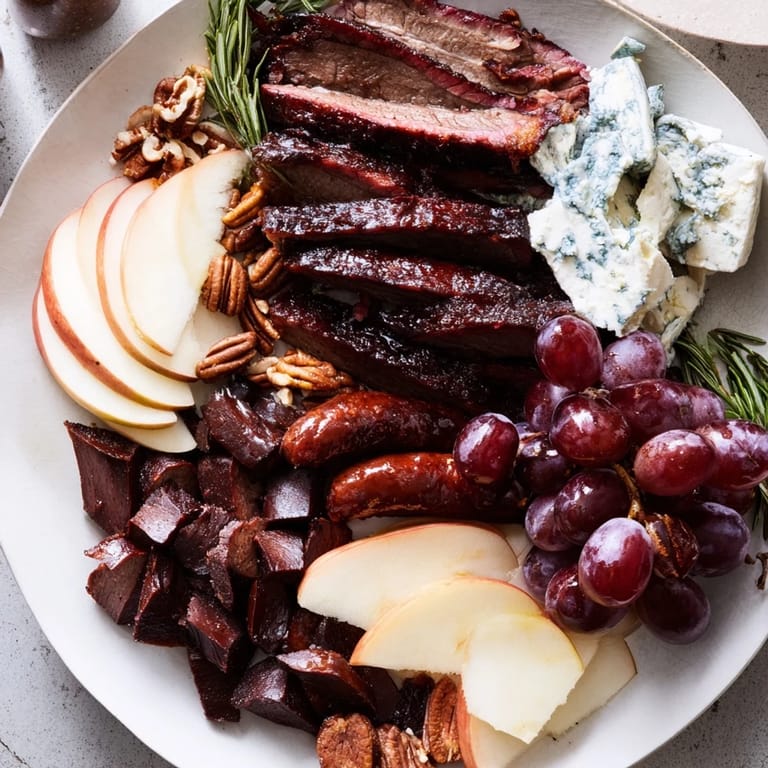
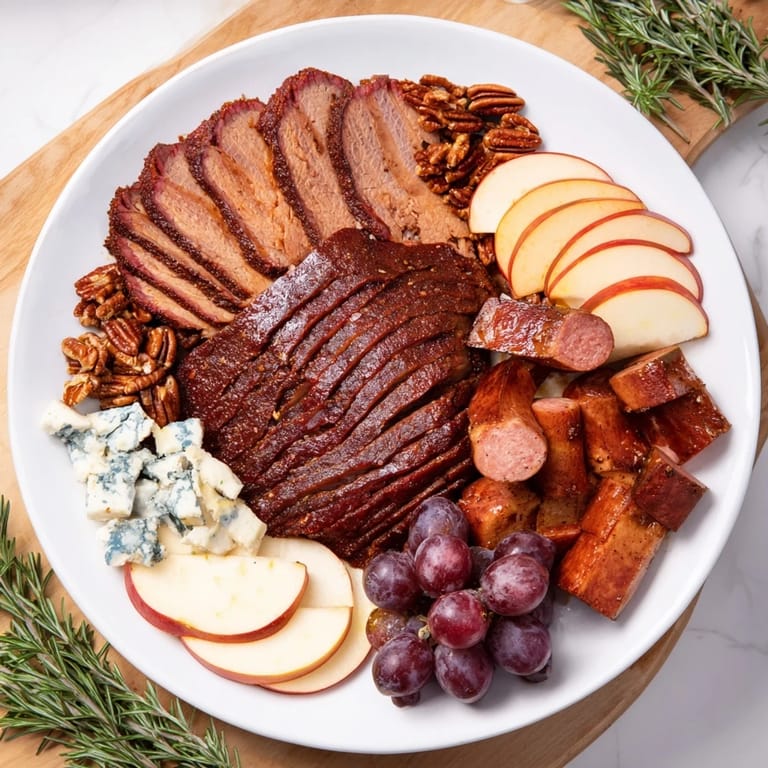
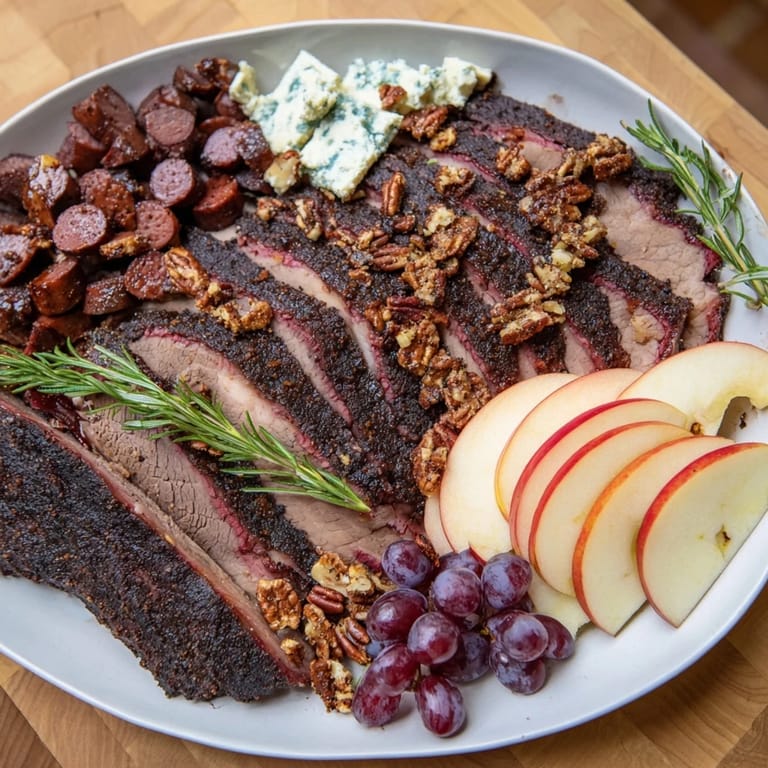
- Find your largest wooden board or serving platter—you want space to breathe and room for people's hands. Arrange the smoked meats in clusters across the board, leaving about a third of the space visible. This isn't a jigsaw puzzle; it's an invitation to explore
- Position the cheeses with intention:
- Place the sliced brie, gouda, and crumbled blue cheese in separate zones around the meats. The idea is that someone can travel a path from a piece of brisket to a cheese to chocolate without their journey feeling random. Space matters—crowded food looks less appetizing
- Scatter the sweet and unexpected elements:
- Break the dark chocolate into irregular pieces and scatter them between meats and cheeses. Add the candied pecans in small clusters. This is where the board starts to feel intentional rather than random. People see chocolate and crackers together and their minds start to understand what's happening
- Add the lighter flavors:
- Create small clusters of grapes and fan out the apple slices. Position small bowls of fig or cherry preserves where they'll catch light. These elements bring brightness and prevent the board from feeling heavy, which it can easily do with all this richness
- Fill the gaps with structure:
- Arrange your toasted baguette slices and crackers in the remaining spaces. They should look abundant but not haphazard. This is the scaffolding that holds everything together and gives people something to build on
- Finish with fragrance and garnish:
- Tuck fresh rosemary sprigs around the board—they should look alive, not like decoration. If using pickled onions or gherkins, place them in small bowls or scattered across the board. This is the final note that tells people this board has dimension and thought
- Serve with intention:
- Bring the board to the table with bourbon nearby—neat or in a smoky cocktail, depending on your guests' preferences. Sit back and watch people discover it. This is the part that matters most
 Save
Save My favorite moment with this board happened when my mother—a woman who usually sticks to traditional appetizers—took a piece of brisket, a sliver of brie, and a piece of dark chocolate in one bite. She closed her eyes, and when she opened them, she said, "This is how food should taste—surprising." That's when I realized this board wasn't just about ingredients. It was about giving people permission to be bold.
The Art of Balance on a Board
What makes this board work is the conversation between opposites. Smoke meets sweetness. Richness meets brightness. Familiar meets unexpected. When you're arranging it, think of it like composing music—you need high notes and low notes, fast and slow, loud and quiet. The dark chocolate seems like it doesn't belong until you taste it with the bourbon warmth of the meat. The grapes seem simple until they cut through the richness of the brie. Every element has a job, and when they're positioned thoughtfully, they create something greater than their individual parts.
Pairing with Bourbon
A classic Kentucky bourbon is the obvious choice, but don't stop there. A smoky rye brings another dimension entirely. If your guests prefer something other than spirits, the board stands up beautifully to a full-bodied red wine—something with earth and tannin that echoes the smoke. I've even served it with a barrel-aged beer and watched people light up discovering that combination. The secret is matching the boldness of the spirits to the boldness of the flavors on the board. Nothing timid, nothing subtle. This is food that demands to be tasted with intention.
Making It Your Own
This board is a framework, not a prescription. Substitute turkey or plant-based smoked meats if that's what your guests eat—the balance of flavors still works. Add pickled jalapeños if you want heat. Use honey instead of fig preserves if that's what you have. The magic isn't in the exact ingredients; it's in understanding why they're there. Once you understand that you need smoke, richness, sweetness, brightness, and crunch, you can build a board that feels entirely your own while honoring the spirit of what makes this work.
- Trust your instincts—if it sounds good to you, it probably will taste good
- Prep everything ahead except the apple slices; add those just before serving so they stay fresh and white
- Remember that a board this rich feeds more people than you'd think; people eat smaller portions when every bite is this intense
 Save
Save This board has become my way of saying to people: "I'm glad you're here, and I want you to taste something that matters." It's not fussy, but it feels generous. That's the whole point.