 Save
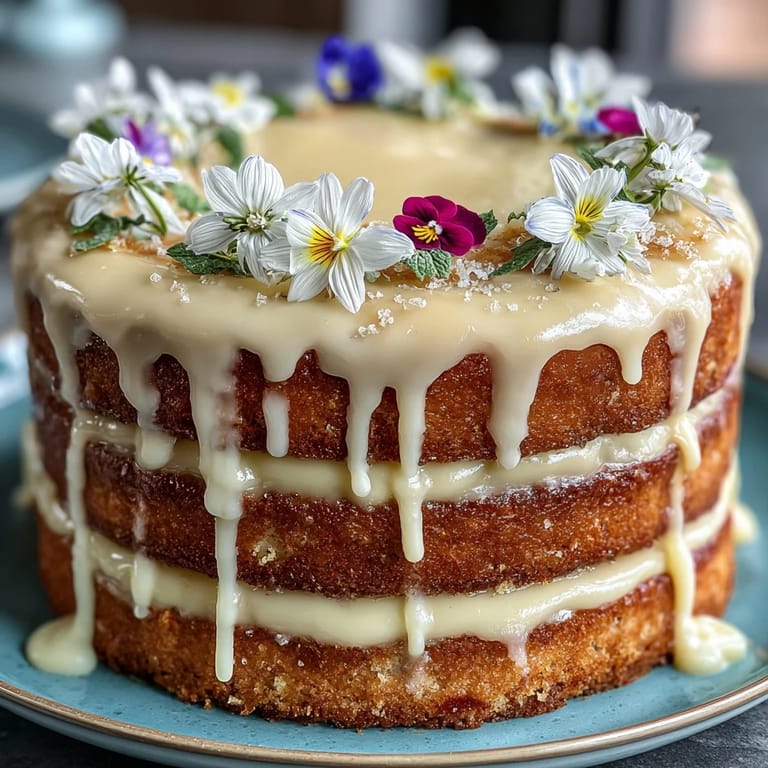
Save My sister called me in a panic three days before her spring garden party, asking if I could bring something that screamed celebration. I found myself standing in my kitchen at midnight, covered in flour, suddenly inspired by the idea of capturing spring itself on a cake—layers of soft vanilla sponge, bright lemon frosting, and that mesmerizing white chocolate drip cascading like melting snow. The moment I tasted it fresh from the cooling rack, I knew this was exactly what she needed. What started as a last-minute scramble became the cake everyone asked for at every gathering that followed.
I'll never forget watching my friend's face light up when she bit into a slice at her bridal shower—she literally closed her eyes for a moment, then said it tasted like spring felt. That's when I realized this cake wasn't just about flavor or looks; it was about the feeling it created. Everyone at that table wanted the recipe, but what they really wanted was to recreate that moment of joy. It became my go-to for celebrations because it never fails to make people feel special.
Ingredients
- All-purpose flour (2 ½ cups): This is your foundation, so don't skip sifting it with the baking powder and salt—it aerates everything and prevents dense pockets in your crumb.
- Baking powder (2 ½ tsp): The magic ingredient that gives you those tender, cloud-like layers that practically melt on your tongue.
- Unsalted butter (1 cup plus 1 cup): Room temperature is non-negotiable here; cold butter won't cream properly and you'll end up with a heavy cake instead of a fluffy one.
- Granulated sugar (1 ¾ cups): This sweetens the cake but also helps incorporate air when you cream it with butter, so don't rush that step.
- Large eggs (4), room temperature: Cold eggs refuse to blend smoothly into your batter and can cause lumps; pull them out 30 minutes before you start baking.
- Vanilla extract (1 tbsp): Use pure vanilla, not imitation, because you'll taste the difference in every bite.
- Whole milk (1 cup), room temperature: This keeps the cake moist without making it heavy, and cold milk can shock your warm batter.
- Powdered sugar (4 cups): Sift it before measuring because lumps hide in that powder and will ruin your smooth frosting.
- Fresh lemon juice and zest (2 tbsp juice, 2 tsp zest): The zest gives you those little bursts of flavor while the juice provides the tang that makes people close their eyes.
- White chocolate chips (1 cup): Choose quality chocolate because the drip is your star; cheap chocolate seizes up and turns grainy.
- Heavy cream (⅓ cup): This creates that silky, pourable ganache that drips like an artist's dream.
- Edible flowers: Your local farmer's market is often more reliable than ordering online; ask the vendor directly if they're pesticide-free.
Tired of Takeout? 🥡
Get 10 meals you can make faster than delivery arrives. Seriously.
One email. No spam. Unsubscribe anytime.
Instructions
- Prepare your stage:
- Preheat your oven to 350°F and line those three 8-inch pans with parchment paper—this step feels tedious until you're trying to remove a stuck cake and wishing you'd done it. Make sure you're using room temperature eggs and milk; I learned this the hard way when my batter broke and I had to start over.
- Build your dry mix:
- Whisk flour, baking powder, and salt together in a medium bowl, making sure to get air into it. This combination is what gives your cake that tender crumb everyone loves.
- Cream your butter and sugar:
- Beat softened butter with granulated sugar for 3 to 4 minutes until it's pale and fluffy—you're literally incorporating tiny air bubbles that will make your cake light. Stop and scrape down the bowl occasionally; bits of sugar hide in the corners.
- Add your eggs one at a time:
- Drop each egg in and beat well before adding the next one; this gradual approach keeps everything emulsified and smooth. If your mixture looks curdled, don't panic—it'll come together once you add the flour.
- Fold in the wet and dry:
- Alternate between adding the flour mixture and the milk, starting and ending with flour, stirring just until combined. Overmixing develops gluten and toughens your cake, so mix gently even though you'll want to keep going.
- Bake with confidence:
- Divide batter evenly among your three pans and bake for 25 to 30 minutes until a toothpick comes out clean. Let them cool in the pans for 10 minutes, then turn them out onto cooling racks—patience here prevents breakage.
- Make your lemon frosting:
- Beat softened butter until creamy, then gradually add sifted powdered sugar so you don't create a cloud of sugar in your kitchen. Add lemon juice, zest, and just enough milk to reach a spreadable consistency that's not too stiff.
- Stack your masterpiece:
- Level your cooled cakes if the tops are domed, then place one layer on your serving plate and spread frosting on top. Continue layering, then frost the sides and top smoothly, taking a moment to admire your work.
- Create the white chocolate drip:
- Heat heavy cream until it steams but doesn't boil, pour it over chopped white chocolate, and let it sit for 2 minutes before stirring—this gentle approach prevents the chocolate from seizing. Cool it until it's thick enough to drip but still pourable, about 5 minutes of patience.
- Drip like an artist:
- Use a spoon or squeeze bottle to let the white chocolate cascade down the sides of your cake, working slowly so gravity does the work. Spread any remaining ganache over the top, creating a marbled effect that looks intentional even if it's not.
- Crown it with flowers:
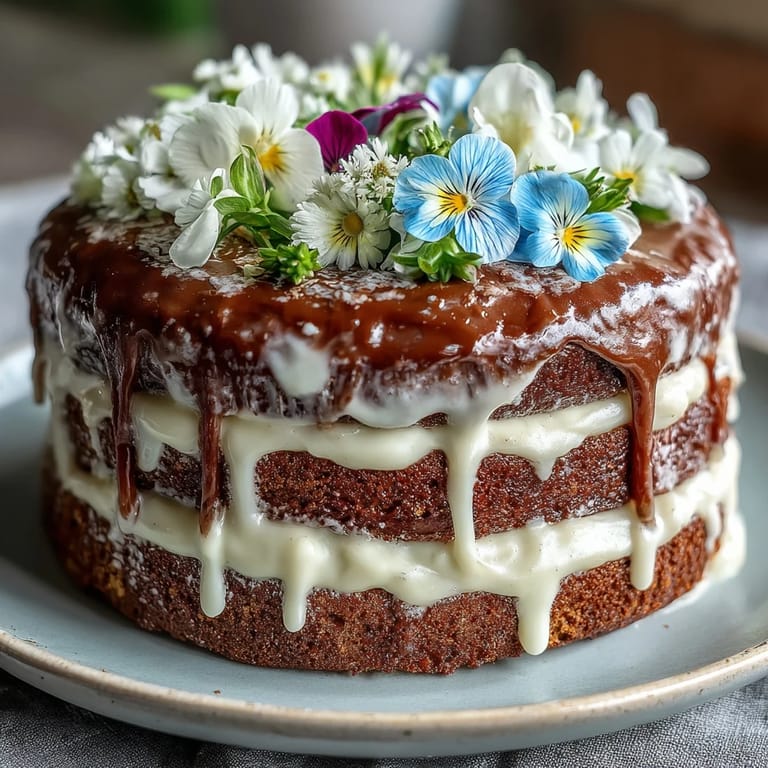
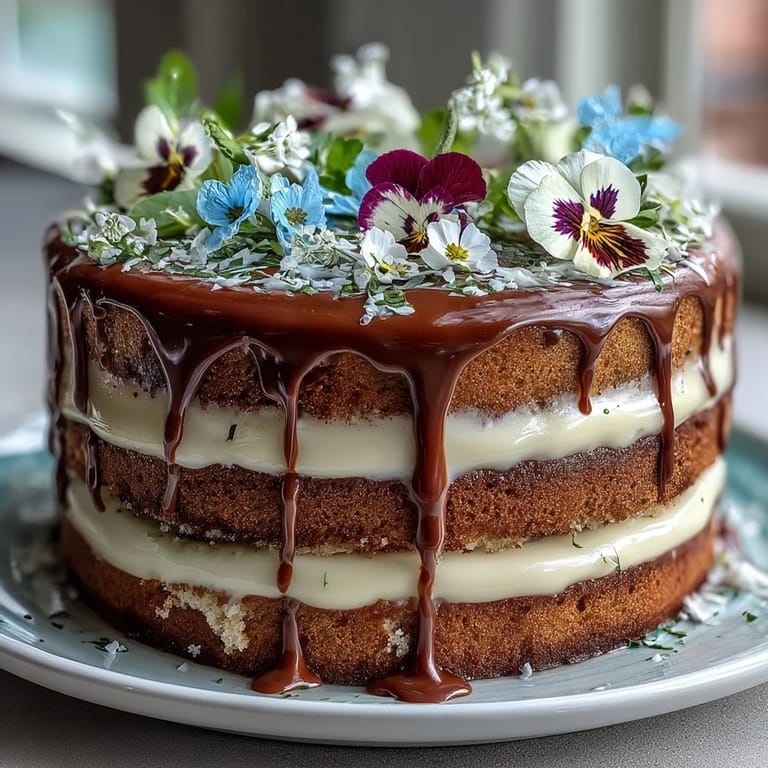
- Scatter your edible flowers across the top of the cake just before serving so they stay fresh and vibrant. A sprinkle of lemon zest and maybe a few delicate sprinkles complete the springtime magic.
 Save
Save There's something almost sacred about watching someone take that first bite, seeing them pause as the lemon hits their taste buds and then noticing how they immediately reach for another slice. This cake somehow makes ordinary moments feel like celebrations, and isn't that what great food should do?
The Secret Behind That Perfect Crumb
Years of baking taught me that the texture of your cake depends entirely on how well you cream your butter and sugar together. I used to rush this step, figuring it didn't matter much, but then I made two cakes side by side—one where I creamed for exactly 4 minutes and one where I skipped ahead after 2 minutes. The difference was stunning; the fully creamed version had this delicate, almost velvety crumb while the rushed version was dense and tight. Now I set a timer and watch the mixture transform from pale yellow to nearly white, knowing that those tiny air bubbles are what make people gasp when they bite into a slice.
When Spring Ingredients Meet the Kitchen
Lemon frosting is one of those rare things that tastes better when you use fresh ingredients because the difference is immediate and undeniable. I once tried making it with bottled lemon juice at 11 p.m. when I'd run out of fresh lemons, and the frosting tasted like someone had sanitized the brightness right out of it. Now I keep fresh lemons on hand for spring baking, and I zest them directly over the frosting so those tiny oils from the peel add this amazing aromatic quality that bottled zest never quite captures. The tartness also means you can use slightly less sugar, creating this perfect balance that doesn't cloy.
Decorating with Confidence and Edible Flowers
The first time I attempted edible flower decorating, I panicked halfway through because the flowers wilted the moment they touched the warm frosting. I learned quickly that decoration is the very last step, done just before serving or immediately before photos, and that you need to verify with absolute certainty that your flowers are pesticide-free. A quick call to your local farmer or a visit to a specialty grocery store will connect you with someone who can promise you safe flowers. I now think of flower decoration as the final flourish that transforms your cake from homemade into something that looks like it came from a fancy patisserie, and honestly, that moment when everyone walks in and sees it is worth every careful moment.
- Always ask the grower directly whether flowers have been treated with pesticides; visual inspection isn't reliable.
- Keep edible flowers in a cool, dry place before decorating, and handle them gently to avoid bruising the petals.
- If you're nervous about sourcing edible flowers, beautiful sprinkles and extra lemon zest create an equally elegant look.
 Save
Save This cake has become my go-to celebration cake because it delivers beauty, flavor, and that special feeling all at once. Every time I make it, I remember why I fell in love with baking in the first place.
Recipe FAQs
- → How do I ensure the flowers are safe to use?
Use only edible flowers that are pesticide-free. Consult trusted sources or purchase from specialty food suppliers to ensure safety.
- → Can I make this cake gluten-free?
Yes, substitute the all-purpose flour with a 1:1 gluten-free flour blend for a similar texture and taste.
- → What is the best way to achieve the white chocolate drip consistency?
Heat the heavy cream until just simmering, pour over white chocolate, and stir gently until smooth. Cool until slightly thickened but still pourable before dripping.
- → How should I store the finished cake?
Refrigerate the cake for up to 3 days. Allow it to come to room temperature before serving for optimal flavor and texture.
- → Can I customize the colors of the white chocolate drip?
Yes, add gel food coloring to the ganache to create pastel shades or colors that match your celebration theme.