 Save
Save I discovered this salmon recipe on a Tuesday evening when my kitchen smelled like desperation and a half-empty jar of gochujang. I'd promised dinner to friends, had salmon thawing on the counter, and was scrolling through flavor combinations when orange juice caught my eye. The moment I whisked that tangy-sweet glaze together, something clicked—the way the gochujang deepened the citrus notes felt like finding the missing piece to a puzzle I didn't know I was solving.
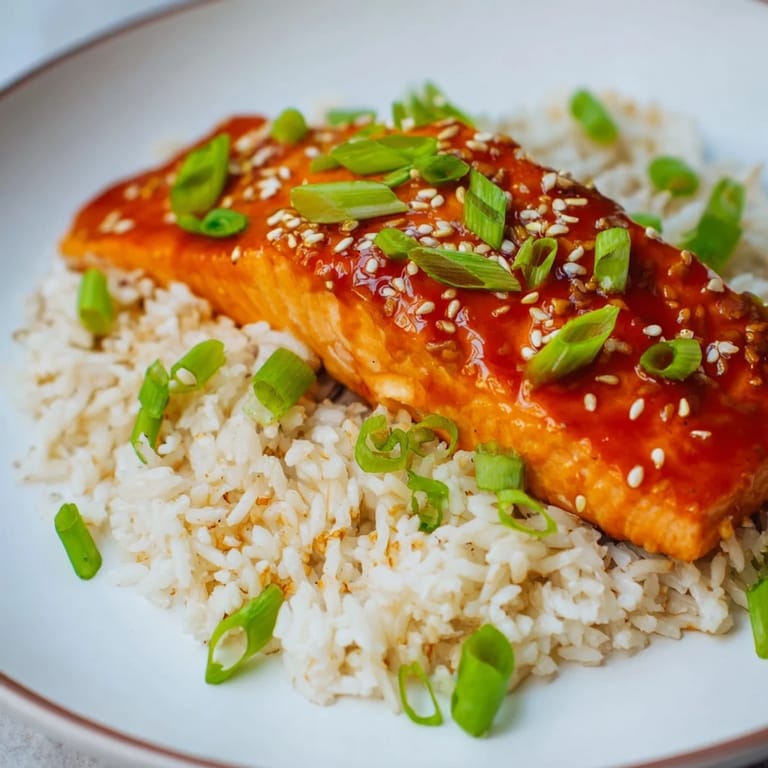
That first dinner was chaos in the best way—one friend arrived early and caught me frantically fluffing rice while the glaze bubbled on the stove, and somehow that honesty made the meal feel more special. When we sat down and they tasted that first bite, the silence that fell over the table told me everything. The sticky-sweet sauce clung to each flake of salmon, and the rice soaked up every precious drop, turning what could've been just dinner into something they brought up for months afterward.
Ingredients
- Salmon fillets (4, 150g each, skin-on): The skin crisps up under the broiler and shields the delicate flesh, keeping it moist while the glaze caramelizes into something magical.
- Gochujang (2 tablespoons): This Korean chili paste brings umami depth and a subtle heat that orange juice somehow makes approachable, transforming the whole sauce.
- Freshly squeezed orange juice (1/4 cup): Fresh matters here—bottled juice tastes flat by comparison, and you'll taste the difference in every glossy spoonful.
- Soy sauce (2 tablespoons): Use good soy sauce if you have it; this isn't the place to cut corners since it's tasting directly in the glaze.
- Honey (2 tablespoons): This rounds out the heat and acidity while helping the glaze caramelize into that coveted sticky coating.
- Rice vinegar (1 tablespoon): A small amount brightens everything without making it sour, balancing the sweet and spicy notes.
- Fresh ginger (1 teaspoon, grated): Minced ginger gets lost in the sauce, but grated adds tiny bursts of warmth throughout.
- Garlic clove (1, minced): Just one clove keeps this subtle enough that salmon stays the star.
- Sesame oil (1 teaspoon): Its nutty aroma lifts the whole glaze at the last second, so resist the urge to add more.
- Jasmine rice (1 1/2 cups): Jasmine's natural perfume pairs beautifully with the bold sauce, though any good rice will work.
- Water (3 cups) and butter (2 tablespoons): Butter makes the rice luxurious enough to stand beside the salmon without disappearing.
- Salt (1/2 teaspoon): A modest amount goes into the rice; you'll adjust to taste if needed.
- Scallions (3, thinly sliced): They add bite and color, cutting through the richness at the end.
- Sesame seeds and orange zest (optional): These finish the plate like a chef's signature, adding visual appeal and subtle flavor layers.
Tired of Takeout? 🥡
Get 10 meals you can make faster than delivery arrives. Seriously.
One email. No spam. Unsubscribe anytime.
Instructions
- Build your glaze:
- Whisk together gochujang, orange juice, soy sauce, honey, rice vinegar, ginger, garlic, and sesame oil in a medium bowl until smooth. Taste it—that tangy-sweet balance should make you smile.
- Prepare the salmon:
- Pat your salmon fillets completely dry with paper towels; moisture is the enemy of crispy skin. Lay them skin-side up in a shallow dish and spoon 2 tablespoons of glaze over each, turning gently to coat, then set aside for 10 minutes while the rice takes your attention.
- Cook the rice:
- Rinse jasmine rice under cold running water, stirring gently with your fingers until the water runs nearly clear. Combine rice, water, butter, and salt in a saucepan and bring to a rolling boil, then immediately reduce heat to the lowest setting, cover tightly, and simmer untouched for 15 minutes—resist peeking.
- Prep for broiling:
- Line a baking sheet with foil and lightly oil it so the salmon releases cleanly. Position your oven rack about 6 inches from the broiler element and crank it to high.
- Broil the salmon:
- Place marinated salmon skin-side down on the prepared sheet and brush with additional glaze. Broil for 3–4 minutes, then brush again with glaze and return to the broiler for another 3–4 minutes until the top caramelizes and the flesh flakes easily when tested (aim for 52–54°C/125–130°F internally for that buttery, medium-rare texture).
- Reduce the remaining glaze:
- While salmon cooks, pour what's left of the glaze into a small saucepan and simmer over medium heat for 2–3 minutes, stirring occasionally, until it thickens enough to coat a spoon lightly.
- Bring it together:
- Fluff the rested rice with a fork and divide among bowls. Top each portion with a salmon fillet, drizzle generously with the thickened sauce, and scatter scallions, sesame seeds, and orange zest across the top if you have them.
 Save
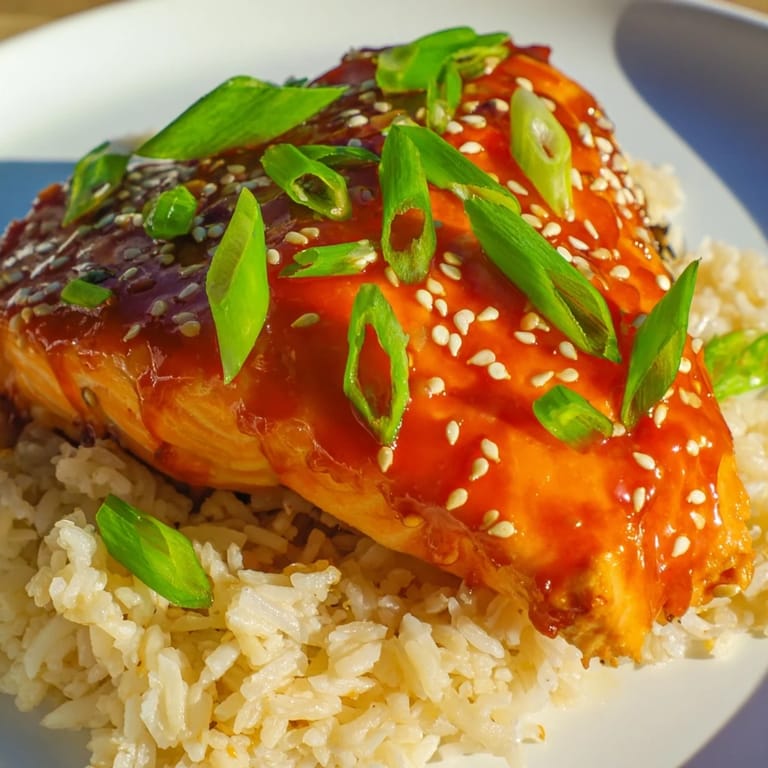
Save I've made this salmon dozens of times now, and what strikes me most is how it turned into the recipe I serve when I want to impress people without sweating it. There's something about feeding someone food that tastes this sophisticated yet comes together so easily that changes the dynamic of an evening—suddenly you're relaxed, present, and the salmon becomes the excuse for good company.
Why This Combination Works
The genius of gochujang and orange juice lies in how they complement each other—gochujang brings funk, umami, and gentle heat while orange juice adds brightness and natural sweetness that softens the chili without masking it. Together they create a sauce complex enough that no one expects it came from your weeknight pantry, yet balanced enough that it never overpowers the salmon's delicate flavor. The rice underneath catches every drop, and by the end of the bowl you're scraping up the last glossy bits of glaze like you're alone in your kitchen.
Rice Matters More Than You Think
I learned the hard way that jasmine rice isn't just a preference—it's essential here because its subtle floral notes create a quiet base that lets the bold sauce shine. Cooking it with butter transforms it from side dish to supporting player, something soft and luxurious that anchors the plate. When you taste rice cooked this way next to rice made with just water and salt, you'll understand why those 2 tablespoons of butter aren't optional.
Timing and Temperature Secrets
The broiler is your fastest path to caramelized salmon skin and juicy interior, but it demands attention—preheat it fully, position your rack correctly, and check doneness with a thermometer if you can. The glaze reduction matters just as much; a couple minutes of simmering transforms it from thin coating to glossy layer that clings to every grain of rice and flake of salmon. These small moves separate a good meal from one people remember.
- A meat thermometer reading 52–54°C (125–130°F) guarantees medium-rare salmon every time without guessing.
- If you don't have fresh orange juice, this dish becomes ordinary, so make that trip to the produce section non-negotiable.
- Cook the glaze reduction just long enough to thicken slightly—too long and it becomes a syrup, too short and it slides off the rice.
 Save
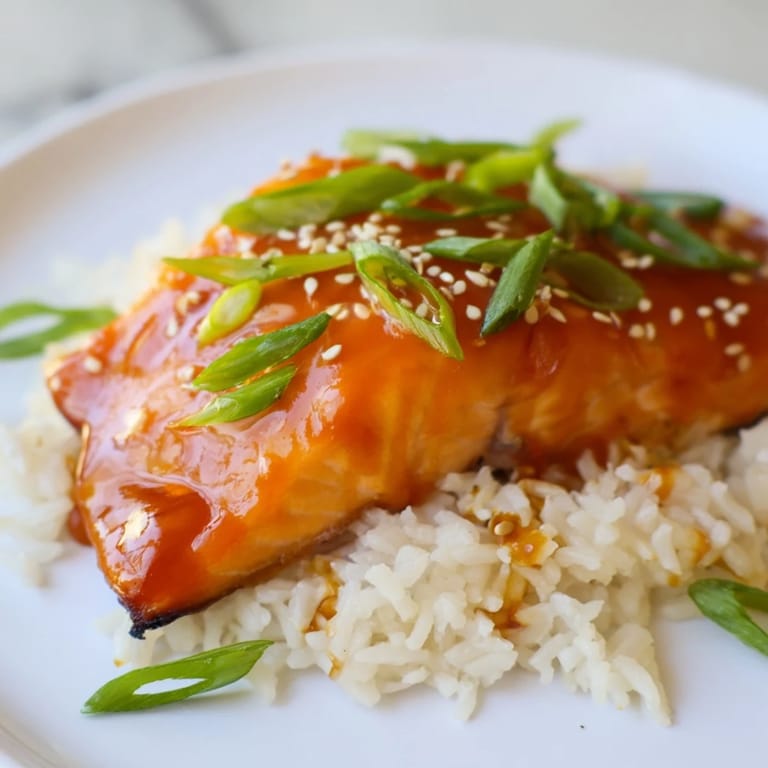
Save This recipe proved to me that the best dinners aren't complicated; they're just thoughtful about flavor and honest about technique. Make it once and it becomes yours to refine, perfect, and share.
Recipe FAQs
- → What type of rice complements the salmon best?
Jasmine rice provides a fragrant and fluffy base that pairs well with the rich glaze and buttery texture of the salmon.
- → How can I make the glaze spicier?
Add a pinch of chili flakes to the gochujang orange glaze for extra heat without overpowering the balanced flavors.
- → Is it better to broil or bake the salmon for this dish?
Broiling caramelizes the glaze quickly, creating a sticky finish while keeping the salmon moist and tender.
- → Can I substitute the butter in the rice for a healthier option?
Yes, swapping butter for olive oil or omitting it altogether still yields tasty rice, though butter adds a rich mouthfeel.
- → What garnishes enhance the flavor and presentation?
Fresh scallions add freshness and color, while toasted sesame seeds and orange zest provide complementary nutty and citrus notes.