 Save
Save I discovered this salad on a late summer afternoon when my farmer's market haul was overflowing with tomatoes in every shade—bright red, deep crimson, even some that were still blushing pink at the edges. Standing in my kitchen with three different types of tomatoes staring back at me, I realized they each deserved their moment instead of competing on the same plate. That's when it clicked: what if I treated them like a flight of wine, each one prepared differently to highlight what made it special? The result was this vibrant salad that tastes like every good decision I made that day.
I made this for my sister's book club gathering last July, and watching everyone pause mid-conversation to ask about it told me everything I needed to know. One friend actually asked if I'd ordered it from somewhere fancy, which felt like the highest compliment. It became the recipe I got asked for repeatedly all season long.
Ingredients
- Cherry or grape tomatoes (fresh): One cup halved for raw eating—their natural sweetness and juiciness are the salad's backbone, so pick ones that smell like tomatoes, not like the supermarket shelf.
- Cherry or grape tomatoes (for roasting): One cup whole tomatoes concentrate into something almost jam-like when blistered in the oven, becoming the sweet and tangy heart of the dish.
- Sun-dried tomatoes: Half a cup gives you that deep, almost wine-like intensity that bridges the fresh and roasted elements with umami punch.
- Mixed salad greens: Four cups of arugula, baby spinach, or mesclun provide the delicate foundation—they should be tender enough to not compete with the tomatoes.
- Burrata cheese: Two balls (about 200g) are the luxurious secret; their creamy centers melt slightly when they meet the warm roasted tomatoes, creating pockets of richness.
- Extra virgin olive oil: Three tablespoons of good oil is non-negotiable here; taste it first and use the one that makes you happy because you'll taste it clearly.
- Balsamic glaze or vinegar: One tablespoon adds sweetness and acidity without drowning anything out.
- Honey: Just one teaspoon rounds out the dressing's edges so nothing feels sharp or one-dimensional.
- Garlic clove: One small minced clove whispers rather than shouts, adding complexity to the background.
- Salt and pepper: Use freshly ground pepper and taste constantly; this is where balance happens.
- Fresh basil leaves: A quarter cup torn by hand (not cut) releases the oils gently and looks intentional on the plate.
- Flaky sea salt: Optional but recommended for that final textural contrast that catches your tongue.
Tired of Takeout? 🥡
Get 10 meals you can make faster than delivery arrives. Seriously.
One email. No spam. Unsubscribe anytime.
Instructions
- Heat your oven and prep the tomatoes:
- Set your oven to 400°F and while it's warming, scatter your whole tomatoes on a baking sheet. The smell when they start to blister is the first sign you're doing this right—it's sweet and slightly caramelized.
- Roast until blistered:
- Drizzle those tomatoes with a tablespoon of olive oil, season generously, and roast for 12 to 15 minutes until their skins split and the edges char slightly. Pull them out and let them cool for a moment—they'll still be warm when you eat them, which matters.
- Build your dressing:
- While the tomatoes roast, whisk together the remaining oil, balsamic, honey, minced garlic, salt, and pepper in a small bowl until it tastes balanced—not too vinegary, not too sweet, just right.
- Create your base:
- Spread your mixed greens across a large platter or divide among individual plates. This becomes the stage for everything else.
- Layer the tomatoes:
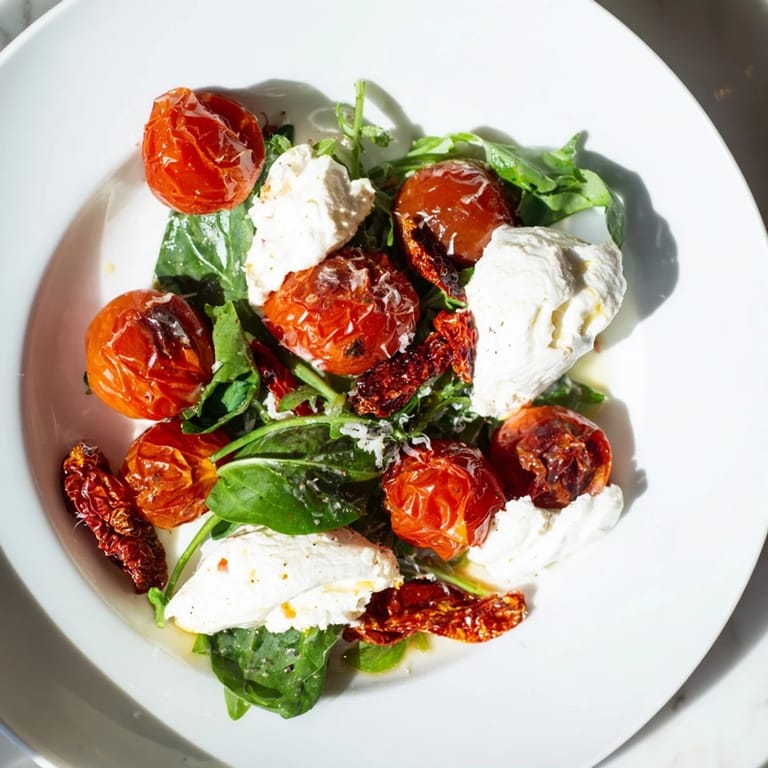
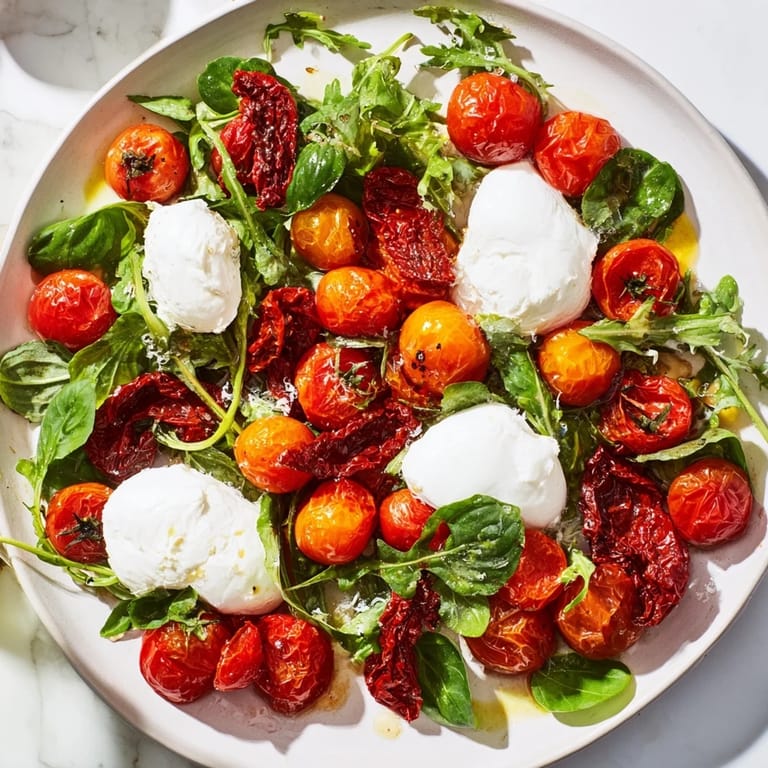
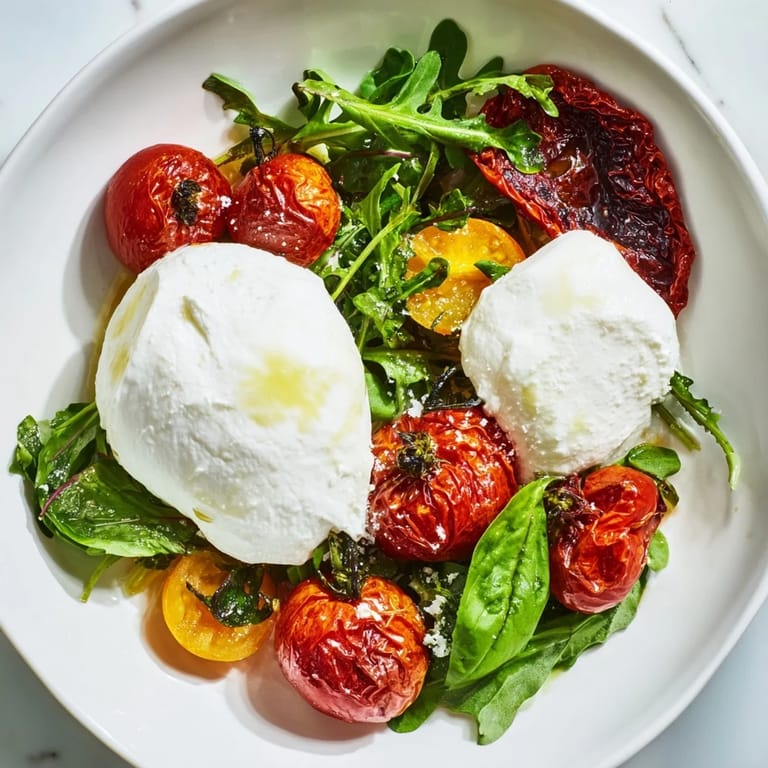
- Scatter your fresh halved tomatoes first, then the warm roasted ones, then the sun-dried slices, spreading them so each type is visible. This is where the "flight" idea comes through visually.
- Add the burrata:
- Tear the burrata into generous pieces and nestle them among the tomatoes and greens. Don't be precious about it; let some cream spill out.
- Dress and finish:
- Drizzle everything with your dressing, scatter basil leaves (torn, not chopped), and finish with a pinch of flaky salt if you have it. Serve right away while the roasted tomatoes still have warmth.
 Save
Save I remember my nephew asking why this salad tasted "fancy" when it was just tomatoes and cheese, and I realized he'd put his finger on something true—it's fancy because you treated ordinary ingredients with intention. That's when cooking stops being a chore and becomes a small act of care.
The Tomato Difference
The magic of this salad lives in respecting each tomato's nature rather than forcing them all to behave the same way. Fresh tomatoes shine raw because their brightness and juice matter most. Roasting concentrates the natural sugars and creates a different kind of sweetness—almost jammy and deep. Sun-dried tomatoes have already surrendered their water content, so they bring intense, almost wine-like flavor that acts like a seasoning. Understanding this makes you a better cook because you stop treating ingredients as interchangeable and start seeing what each one uniquely offers. When you shop for tomatoes, squeeze them gently—they should yield slightly to pressure but still feel alive, not mushy.
Burrata Moments
Burrata is the ingredient that transforms this from a nice salad into something people remember. Its creamy center is pure indulgence, but it's delicate and needs respect. Let it sit at room temperature for about 10 minutes before serving so it's soft enough to tear easily but hasn't started sweating or separating. If you can't find burrata, fresh mozzarella di bufala works beautifully, though you'll lose that luscious cream center—fresh ricotta dolloped on top is another worthy substitute. The cheese should be one of the last things you add, positioned where your guests will immediately see and appreciate its creamy interior.
Serving Suggestions and Variations
This salad is perfect as a first course that doesn't overwhelm before a main dish, but it's substantial enough to be lunch or a light dinner on warm evenings. I've added toasted pine nuts for crunch and texture, croutons for substance, or even grilled chicken if we needed more protein. The dressing is forgiving—you can swap balsamic for red wine vinegar if that's what you have, adjust the honey based on your greens' bitterness level, and even add a tiny pinch of red pepper flakes if you want warmth. Pairs beautifully with crisp white wines like Sauvignon Blanc or a light Italian rosé that won't compete with the tomatoes' flavor.
- For extra substance, add a handful of toasted pine nuts or homemade croutons scattered over the top just before serving.
- If burrata isn't available or you want something different, fresh mozzarella di bufala, burrata's more delicate cousin, works wonderfully.
- This salad can sit for about 30 minutes before serving, but any longer and the greens will start to wilt—so plan accordingly if you're making it ahead.
 Save
Save This salad became my answer to the question "what's for dinner?" during tomato season, and I hope it becomes one of yours too. There's something deeply satisfying about turning a handful of good ingredients into something that feels both easy and special.
Recipe FAQs
- → What types of tomatoes are used?
Fresh cherry or grape tomatoes are halved, whole tomatoes are roasted, and sun-dried tomatoes sliced, creating a mix of textures and flavors.
- → Can I use different cheeses?
Yes, mozzarella di bufala or fresh ricotta can be substituted if burrata is unavailable, maintaining a creamy texture.
- → How is the dressing made?
The dressing combines extra virgin olive oil, balsamic glaze or vinegar, honey, minced garlic, salt, and pepper for a balanced, sweet-savory finish.
- → Is this dish suitable for special diets?
It is vegetarian and gluten-free as prepared, but check sun-dried tomatoes for potential additives if sensitive to gluten.
- → What serving suggestions enhance this dish?
Adding toasted pine nuts or croutons adds crunch, and pairing with crisp Sauvignon Blanc or light Italian rosé complements the flavors.