 Save
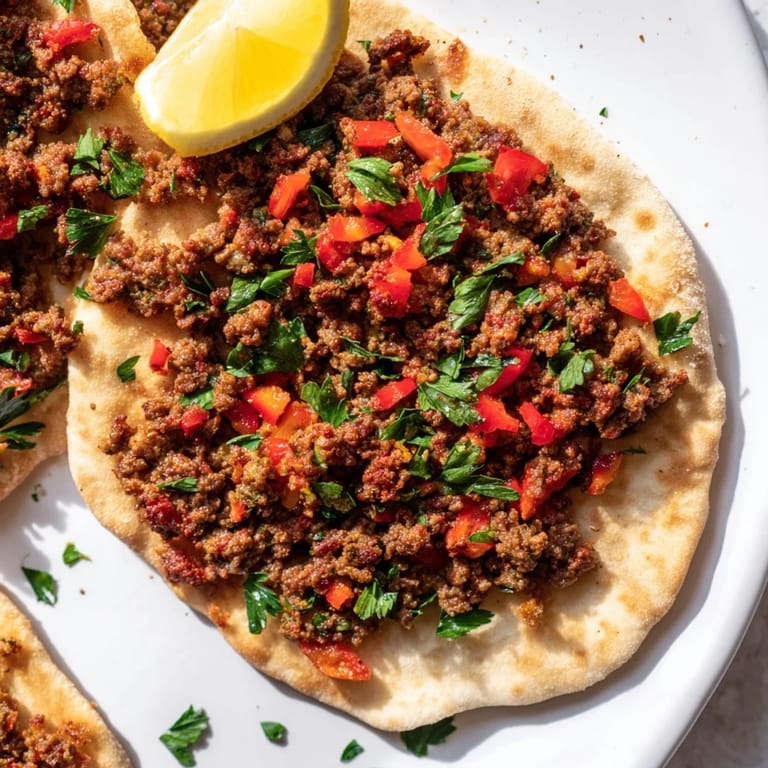
Save The first time I tasted lahmacun, it was from a street vendor in Istanbul on a crisp autumn morning, and I bit into something that changed how I thought about flatbread forever. The dough was impossibly thin and crispy, almost shattering between my teeth, while the spiced meat topping was warm and fragrant with cumin and paprika. I stood there on that cobblestone street, lemon juice dripping down my wrist, completely mesmerized. Years later, I decided I needed to recreate that moment in my own kitchen, and what started as a curious experiment became something I make constantly.
I remember making lahmacun for a dinner party and realizing halfway through that my oven couldn't get hot enough, so I borrowed my neighbor's broiler and ended up with eight perfect little Turkish flatbreads that somehow impressed people way more than the elaborate main course I'd planned. My friend Sarah still texts me about those lahmacuns, asking when I'm making them again. That's when I knew this recipe was worth perfecting.
Ingredients
- All-purpose flour: Three hundred grams gives you enough structure without being heavy; some people swap in a tiny bit of whole wheat, but honestly, the traditional version is crispy-thin for a reason.
- Warm water: One hundred eighty milliliters, and this temperature matters more than you'd think because it wakes up the yeast without shocking it.
- Instant yeast: Just one teaspoon does the job; this isn't a long fermentation situation, so you need reliable, quick action.
- Sugar and salt: A teaspoon each; the sugar feeds the yeast while the salt strengthens the dough's structure.
- Olive oil: Two tablespoons in the dough and two more in the topping; this is where you taste the Mediterranean.
- Ground lamb or beef: Three hundred grams is the soul of this dish; lamb gives you deeper, almost floral notes, while beef is more straightforward and forgiving.
- Fresh onion and garlic: Minced finely so they distribute evenly and cook through without dominating the topping.
- Tomato and red bell pepper: Dice them small so they add brightness and sweetness without creating soggy spots.
- Tomato paste: Two tablespoons concentrate the tomato flavor into something almost meaty and rich.
- Fresh parsley: Chopped fresh, not dried; it should taste like an herb, not a memory of one.
- Spices—cumin, paprika, black pepper, chili flakes: These are your flavor backbone; measure them seriously because they're what makes this Turkish rather than generic.
- Lemon and fresh herbs for serving: The acid and brightness that wake up every bite you take.
Tired of Takeout? 🥡
Get 10 meals you can make faster than delivery arrives. Seriously.
One email. No spam. Unsubscribe anytime.
Instructions
- Mix your dough like you mean it:
- Combine flour, sugar, and salt in a bowl, then dissolve the yeast in warm water and let it sit for a moment until it looks alive and foamy. Pour that into your dry ingredients along with the olive oil and mix until everything comes together into a shaggy dough. Now knead it for five to seven minutes until it's smooth and elastic; you'll feel the exact moment it transforms.
- Let it rise while you prep:
- Cover the dough and let it sit at room temperature for thirty minutes or until it's visibly puffy. This isn't about patience; it's about the yeast doing the heavy lifting.
- Build your meat mixture with care:
- Combine ground meat with the finely chopped onion, garlic, tomato, bell pepper, tomato paste, parsley, and all your spices in a bowl. Mix it with your hands until everything is evenly distributed and the mixture looks cohesive; this should feel intentional, not rushed.
- Get your oven screaming hot:
- Preheat to the highest setting your oven reaches, ideally two hundred fifty degrees Celsius, and put a baking tray or pizza stone inside to get seriously hot. This heat is what gives you those crispy, blistered edges.
- Divide and roll with confidence:
- Divide and roll with intention:
- Split your risen dough into eight equal balls and roll each one on a lightly floured surface until it's thin enough to almost see through, about twenty centimeters across. The dough might fight you a little; let it rest for a moment if it springs back, then try again.
- Top each one generously but evenly:
- Spread a thin layer of the meat mixture over each dough round, leaving a small border around the edge. You want enough topping to taste it on every bite but thin enough that it cooks through.
- Bake until the edges char:
- Transfer each lahmacun to your screaming hot tray or stone and bake for six to eight minutes until the edges are crispy and slightly charred and the meat topping is cooked through. Work in batches if you need to; rushing this step wastes the whole thing.
- Serve immediately with joy:
- Pull them from the oven and top with fresh parsley, a squeeze of lemon, and sliced onions or a sprinkle of sumac if you have it. Eat them while they're still warm enough to burn your mouth slightly, which somehow makes them taste better.
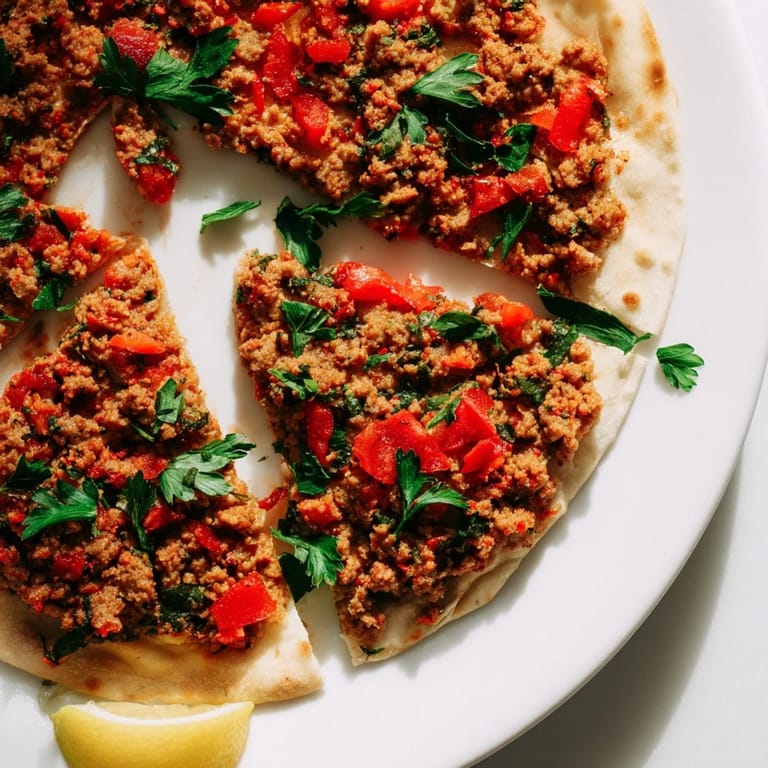 Save
Save I've served these to people who claimed they didn't like flatbread and watched their faces change on the first bite. There's something about the contrast between crispy and tender, spiced and bright, that makes these feel less like food and more like a small, delicious moment worth savoring.
Why Lahmacun Matters
Lahmacun is street food that somehow feels sophisticated, the kind of thing you eat standing up while wandering through a bazaar but also serve at dinner parties without apology. It's been made in Turkey for centuries, and every household has slight variations based on what spices they favor and how thin they're willing to roll the dough. Making it at home connects you to that tradition in a way that ordering takeout never quite does.
The Perfect Serving Ritual
The Turkish way to eat lahmacun involves wrapping it around fresh herbs, sliced onions, and cucumber with a squeeze of lemon, almost like a savory crepe. Some people roll it tightly, others fold it loosely and eat it with their hands. There's no wrong way, just your way. Serve it with ayran, that tangy yogurt drink that cuts through the richness perfectly, or a light wine if that's more your style.
Small Details That Matter
The difference between good lahmacun and transcendent lahmacun often comes down to details that seem small but add up. Using fresh parsley instead of dried, grating your garlic instead of mincing it roughly, letting your dough rest between rolling attempts. These aren't complications; they're gifts you give your future self when you're eating at the table.
- If your meat mixture seems dry, add a splash more olive oil; the dough will absorb it and keep everything moist.
- Make your lahmacun assembly line-style if you're cooking for people; it's faster and somehow more fun.
- Leftover lahmacun reheats beautifully in a hot oven for about three minutes, though honestly, they rarely last that long.
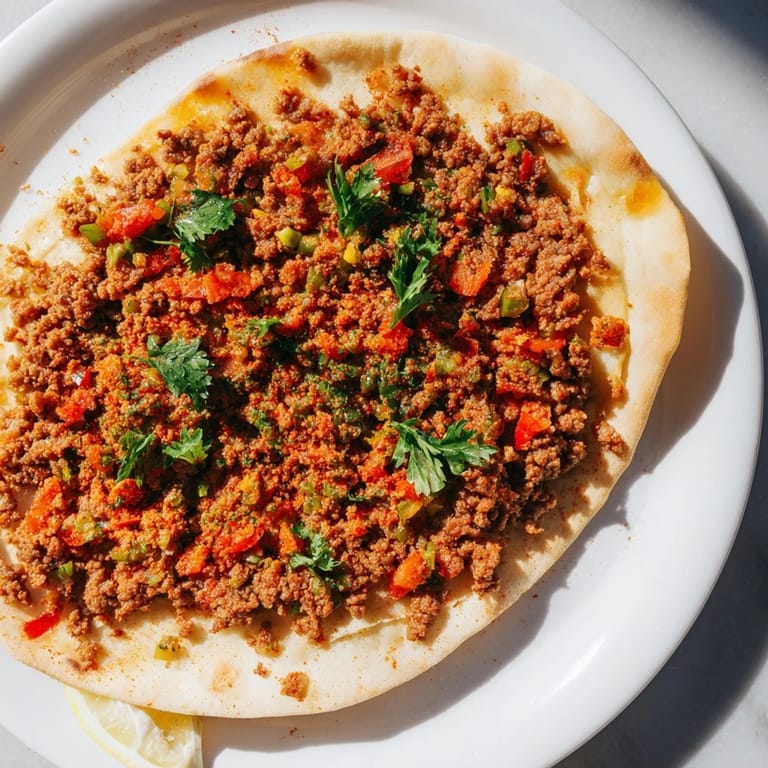 Save
Save Making lahmacun is a small joy that takes forty minutes from start to finish and delivers something that feels far more impressive than the time investment suggests. Once you nail this, you'll find yourself making it constantly, perfecting your own versions, and wondering why you didn't discover it sooner.
Recipe FAQs
- → What type of meat is best for lahmacun topping?
Ground lamb or beef works well, offering a rich and savory flavor that complements the spices and fresh vegetables.
- → How thin should the dough be rolled?
Roll the dough into thin rounds about 20 cm in diameter to ensure a crispy base and even cooking.
- → Can I bake lahmacun without a pizza stone?
Yes, a baking tray can be used, but preheating it thoroughly helps achieve a crisp crust similar to a pizza stone.
- → What spices enhance the meat topping flavor?
Common spices include ground cumin, paprika, black pepper, and optional chili flakes for a subtle heat.
- → How can lahmacun be served for a complete meal?
Serve warm with lemon wedges, fresh herbs like parsley or mint, and optional sliced onions or sumac for added freshness and tang.
- → Is there a vegetarian alternative for the topping?
A mixture of minced mushrooms and walnuts can replace meat, maintaining a similar texture and savory depth.