 Save
Save My friend threw a dinner party last spring, and I showed up with the usual wine bottle, feeling unprepared. She was stressing about appetizers when I noticed her kitchen window overlooking her small balcony garden, bursting with fresh herbs and vegetables. That moment sparked an idea: what if we made the appetizer itself look like a garden? We started stacking things on mismatched coffee mugs and small bowls, letting vegetables cascade like they'd been picked moments before. What began as improvisation became the star of the night, and honestly, her guests spent half the evening just admiring it before eating.
I made this for my sister's baby shower, and something magical happened. A picky eater who usually refuses vegetables ended up trying three different ones just because they were arranged beautifully on these little stands. It wasn't about tricking her—it was about making vegetables feel like they mattered, like each one had been chosen with thought. That's when I realized this dish does something beyond feeding people; it makes them feel seen.
Ingredients
- Cherry tomatoes: Look for ones still attached to the vine if possible—they taste better and remind people this is fresh.
- Baby carrots: The small, tender ones are sweeter and more delicate than standard carrots.
- Cucumber slices: Use a vegetable peeler to create ribbons for more visual interest, or slice thin on a mandoline if you're confident with it.
- Radishes: Thinly sliced, they add a peppery bite that balances the sweetness of grapes and strawberries.
- Snap peas: Leave a few whole for contrast, and they're naturally fun to pick up and eat.
- Endive leaves: These act like tiny spoons and hold dips beautifully without falling apart.
- Seedless grapes: Red and green mixed together create visual rhythm and add unexpected sweetness.
- Strawberries: Halved to show off their gorgeous insides and give people bite-sized portions.
- Goat cheese: Shaped into balls the night before, it stays fresh and looks intentional.
- Feta: Cubed roughly so it catches light and looks rustic rather than uniform.
- Hummus: Creamy and grounding, it balances the brightness of everything else.
- Tzatziki: Cool and herby, it's the refreshing dip everyone reaches for first.
- Pesto: Rich and bold, it ties the greens together and adds depth.
- Toasted pistachios: Chopped and scattered, they add crunch and earthiness that people don't expect.
- Fresh basil: A handful scattered across the top makes it feel garden-fresh and smells incredible.
- Edible flowers: Optional, but they transform this from a snack board into something you'd frame.
- Extra virgin olive oil: Drizzle it like you mean it—it's not just flavoring, it's shine.
- Sea salt and pepper: Season as people eat, not all at once, so flavors stay distinct.
Tired of Takeout? 🥡
Get 10 meals you can make faster than delivery arrives. Seriously.
One email. No spam. Unsubscribe anytime.
Instructions
- Prep everything ahead:
- Wash and slice all vegetables and fruits the morning of, storing them in airtight containers so they stay crisp. This takes 15 minutes tops and removes stress right before guests arrive.
- Shape your cheeses:
- Form goat cheese into golf ball–sized spheres using two spoons or your hands, and cube the feta into chunky bites. Refrigerate these until you're ready to arrange.
- Build your landscape:
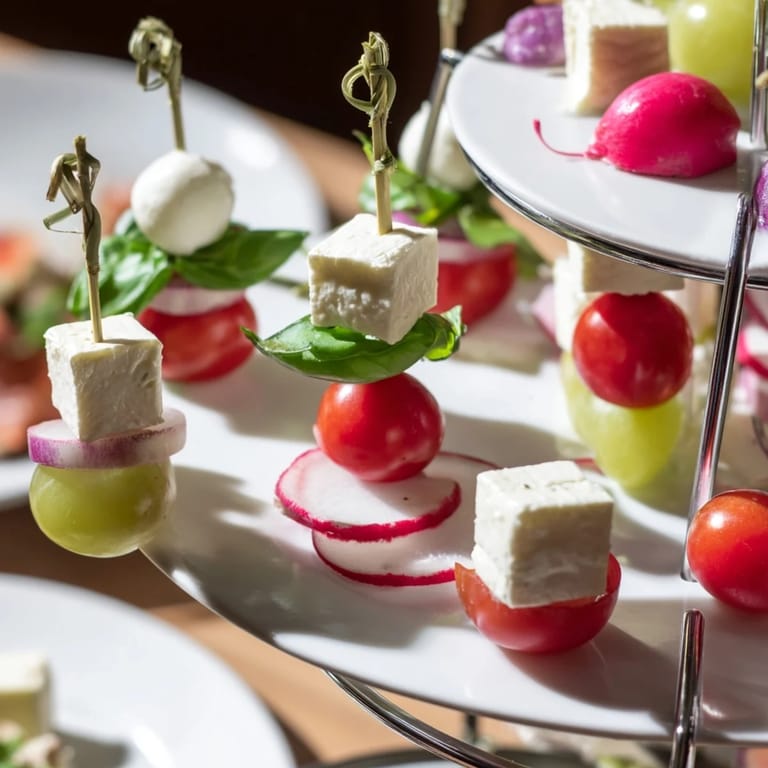
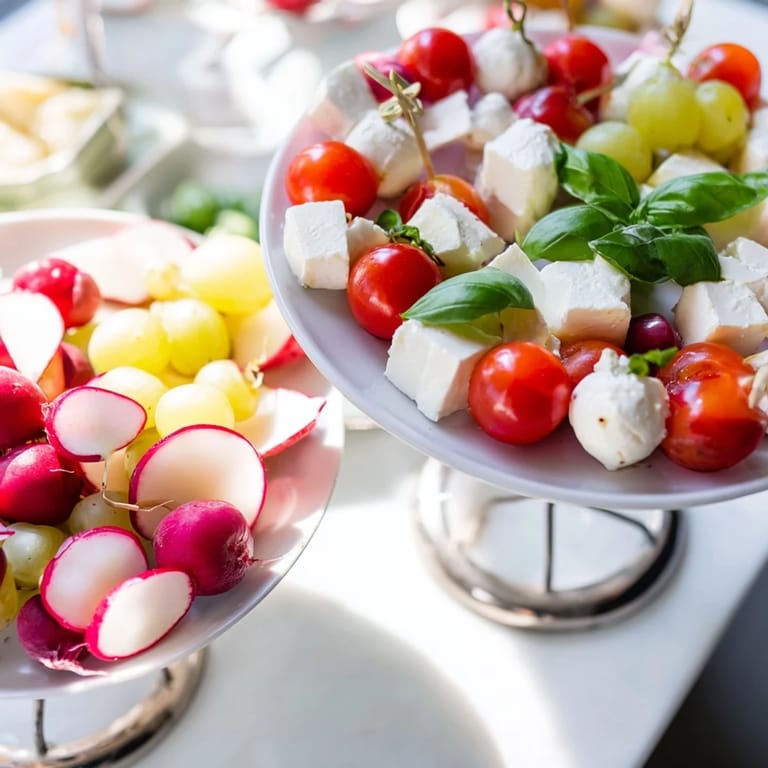
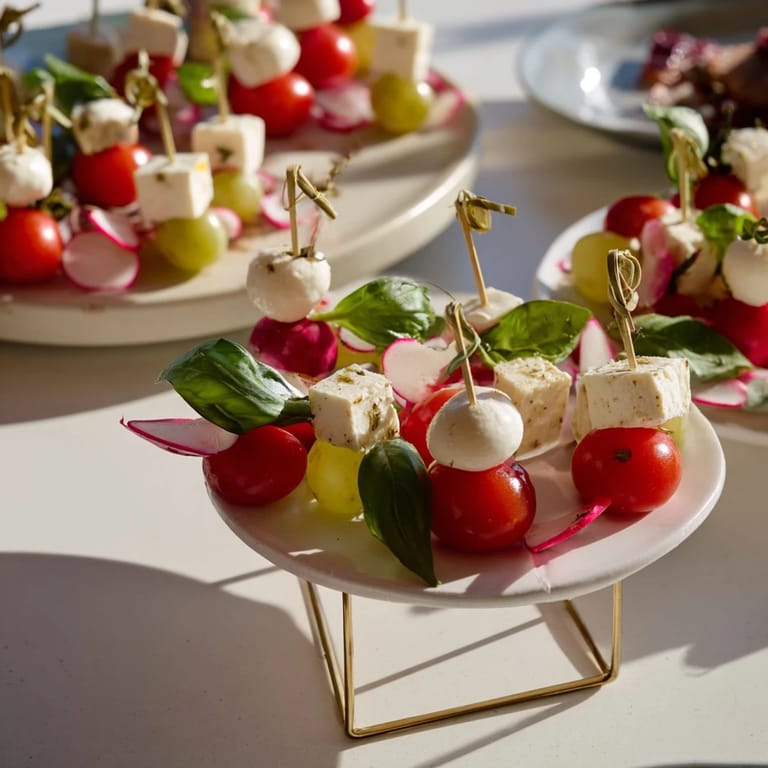
- Arrange mini-stands and small bowls at different heights on your largest board or platter, imagining you're creating a hillside. Step back often—the negative space matters as much as what you're placing.
- Let it overflow:
- Distribute vegetables, fruits, and cheeses across the stands, deliberately letting things spill over the edges like they've naturally tumbled down. Asymmetry is your friend here.
- Nestle the dips:
- Place small bowls of hummus, tzatziki, and pesto among the taller elements, leaving them accessible but not taking up prime real estate. A tiny spoon in each makes it obvious what to do.
- Crown it with flavor:
- Scatter pistachios, basil leaves, and edible flowers across the display, thinking of them as confetti that happens to taste good. This is where it stops looking like a platter and starts looking like an event.
- Finish and taste:
- Drizzle olive oil lightly over everything, then sprinkle sea salt and pepper where you see it catch light. Taste one of each element to make sure nothing's been forgotten.
- Serve with intention:
- Place this where it can be admired before it's demolished, and let your guests pick and dip as they please. The beauty of this dish is that people eat it slowly, enjoying it twice—once with their eyes.
 Save
Save I served this at a work event once, and afterward, someone asked for my recipe. Not because they wanted to copy it exactly, but because watching people enjoy something beautiful and simple had shifted something for them. That's when I understood this dish isn't really about vegetables and cheese—it's about slowing people down and making them notice what they're eating.
Seasonal Swaps That Actually Matter
Spring calls for asparagus spears and fresh peas, summer begs for heirloom tomatoes and peaches, fall brings roasted beets and apple slices, and winter is your moment for pomegranate seeds and citrus segments. The point isn't to follow a rule—it's to use what's alive at the market right now. When produce is in season, it tastes better, costs less, and the colors feel natural rather than forced. I learned this by stubbornly using winter tomatoes in December and wondering why they tasted like sadness. Now I shop seasonally first, then decide what to make.
Making It Work for Your Crowd
This recipe is vegetarian as written, but it adapts beautifully to what people actually want to eat. Add prosciutto or smoked salmon if your crowd leans that way, include cured olives and cornichons for the vinegar lovers, or throw in roasted nuts if you want earthiness. I've made versions for keto crowds (skip the grapes, add more cheese and nuts), for people avoiding tree nuts (use seeds instead), and once for someone who only eats things that are orange or red for reasons I decided not to question. The skeleton of this dish is flexible enough to hold whatever story you want to tell about the people you're feeding.
The Real Secret Is the Dips
I've watched people ignore perfect vegetables to dip an endive leaf in tzatziki, and I've learned not to take it personally. The dips are where the real flavor lives, so don't skimp on them. Make them the day before if you can—flavors deepen—and taste them an hour before serving to adjust salt and pepper. If you're serving store-bought versions, transfer them to beautiful small bowls and add a pinch of something fresh on top (sumac, a basil leaf, crushed pistachios) so they look intentional. Here's my final thought: the most stunning arrangement means nothing if the food tastes forgettable.
- Mix a pinch of lemon zest into tzatziki for brightness.
- Stir a handful of fresh herbs into hummus so it looks alive.
- Add an extra drizzle of olive oil to pesto right before serving so it catches light.
 Save
Save This is the appetizer that proved to me that simple food, arranged with thought and served with joy, is the one people remember. Make it, let people admire it, and watch what happens when beautiful food gives people permission to slow down.
Recipe FAQs
- → What fresh vegetables are included in the Hanging Gardens?
Fresh vegetables like cherry tomatoes, baby carrots, cucumber slices, radishes, snap peas, and endive leaves form the base of this vibrant display.
- → Which cheeses are used to complement the vegetables and fruits?
Goat cheese shaped into small balls and cubed feta provide creamy, tangy notes that balance the fresh produce.
- → How are the dips incorporated into the presentation?
Small bowls filled with hummus, tzatziki, and pesto are placed among the stands and bowls, inviting dipping and flavor variety.
- → What garnishes enhance the flavor and appearance?
Toasted pistachios, fresh basil leaves, and optional edible flowers add texture, aroma, and colorful accents to the arrangement.
- → Are there suggestions for making this suitable for non-vegetarian guests?
Adding cured meats or swapping in seasonal produce can tailor the arrangement to different dietary preferences.
- → What serving tools are recommended for this arrangement?
Mini-stands or tiered trays, small serving bowls, a large platter or board, sharp knives, and small spoons for dips ensure easy assembly and serving.