 Save
Save I'll never forget the autumn afternoon I got lost on a hiking trail near Mount Rainier, stumbling upon a clearing scattered with wild mushrooms in shades of gold and deep brown. A local forager I met explained how the Pacific Northwest's damp forest floor creates magic for those who know where to look. That moment inspired me to recreate that woodland feeling on a plate, capturing the earthy richness of the forest in a dish that tastes like discovering nature's own pantry.
I served this to my sister during her visit last fall, and she kept saying it tasted like the forest smelled after rain. Watching her arrange the berries and herbs on her own plate, making it her own creation, reminded me that the best recipes are the ones that invite people to play and create alongside you.
Ingredients
- Mixed wild mushrooms (chanterelle, shiitake, oyster), 200 g: These three varieties give you different textures and earthy depths. Chanterelles bring a peppery sweetness, shiitake offers umami, and oyster mushrooms stay tender. If you can't find all three, any combination of wild or cremini mushrooms works beautifully.
- Olive oil, 1 tbsp (plus 1 tbsp more for herb moss): Use a good quality extra virgin for the herb moss where you taste it directly, and save a lighter variety for cooking the mushrooms so the heat doesn't destroy its delicate flavor.
- Unsalted butter, 1 tbsp: This creates that golden, nutty crust on the mushrooms. The water content in butter helps them release their moisture first, then brown beautifully.
- Garlic clove, minced: Just one clove keeps the focus on the mushrooms without overpowering. Mince it finely so it disperses evenly and doesn't burn in the pan.
- Salt and freshly ground black pepper: Season as you go, tasting after the mushrooms release their liquid so you don't over-salt.
- Toasted hazelnuts, 50 g, coarsely chopped: Hazelnuts have this buttery, almost chocolatey undertone that anchors the earthiness. Toasting them yourself makes all the difference in flavor depth.
- Toasted walnuts, 30 g, coarsely chopped: Walnuts bring a slight bitterness that balances the sweetness of the berries. Don't chop them too fine or they'll disappear into the other components.
- Fresh blackberries, 80 g: Their tartness cuts through the richness of the nuts and mushrooms. Choose plump ones that feel heavy, not mushy.
- Fresh blueberries, 60 g: These add sweetness and beautiful color contrast. They're sturdier than blackberries, so they won't crush under the weight of the other ingredients.
- Fresh flat-leaf parsley, 20 g: This is your green base for the herb moss. Its clean, peppery flavor grounds the whole dish and prevents it from feeling too heavy.
- Fresh dill, 10 g: Dill whispers a hint of anise and brightness. It's the secret that makes this feel like a forest memory rather than just a pretty salad.
- Fresh chervil or tarragon, 10 g: Chervil is delicate and slightly sweet, while tarragon is more assertive. Pick whichever feels right to you or use equal parts of both.
- Fresh chives, 1 tbsp, finely snipped: Chives add onion's promise without its sharpness. Snip them with scissors right before serving so they stay vibrant.
- Lemon zest, from 1 small lemon: This brightens everything and ties the herb moss together. Use a microplane so you get only the yellow part, never the bitter white pith.
- Flaky sea salt: Sea salt tastes cleaner than table salt and its larger crystals give you textural contrast. Use it as your final flourish on the herb moss.
- Edible flowers (optional): Pansies, nasturtiums, or borage flowers add visual wonder and delicate flavors. Only use if you're certain they're grown without pesticides.
- Microgreens or baby sorrel (optional): These add a peppery freshness and sophistication. Baby sorrel especially echoes the woodland theme.
Tired of Takeout? 🥡
Get 10 meals you can make faster than delivery arrives. Seriously.
One email. No spam. Unsubscribe anytime.
Instructions
- Clean and prepare your mushrooms:
- Wipe them gently with a damp paper towel rather than washing them, since mushrooms absorb water like little sponges. Slice them into pieces about the size of a quarter, trying to keep them relatively uniform so they cook evenly. Pat them dry before cooking so they'll brown instead of steam.
- Sauté the mushrooms until golden:
- Place a large skillet over medium heat and let it warm for a minute. Add the olive oil and butter together, waiting until the butter foams and smells nutty. Add your minced garlic and let it perfume the oil for just 30 seconds, then add the mushrooms all at once. Don't stir them constantly. Let them sit in the pan for a minute or two so they develop a golden crust, then toss gently. Season with salt and pepper. After 6 to 8 minutes, they should be tender and caramelized at the edges. Taste one and if it feels firm but not crunchy, you're done. Transfer them to a plate and let them cool to room temperature.
- Create your herb moss:
- Finely chop all your fresh herbs together on a cutting board until they're almost a paste. This is meditative work, and it matters because you want the herbs to stay together in little clumps rather than scattering as dust. Toss them in a bowl with olive oil, lemon zest, and a pinch of flaky sea salt. The oil helps bind everything and the salt brings out the herbs' brightness. Taste it and adjust seasoning. The moss should taste vibrant and alive, almost like eating a compressed garden.
- Toast your nuts if starting from raw:
- Spread them on a baking tray and place in a preheated 180°C (350°F) oven for 8 to 10 minutes, until they smell incredibly fragrant and look golden. Set a timer because nuts go from toasted to burnt quickly. Let them cool completely on the tray so they crisp up, then coarsely chop them. Uneven pieces look more natural and have better textural variation.
- Build your woodland plate:
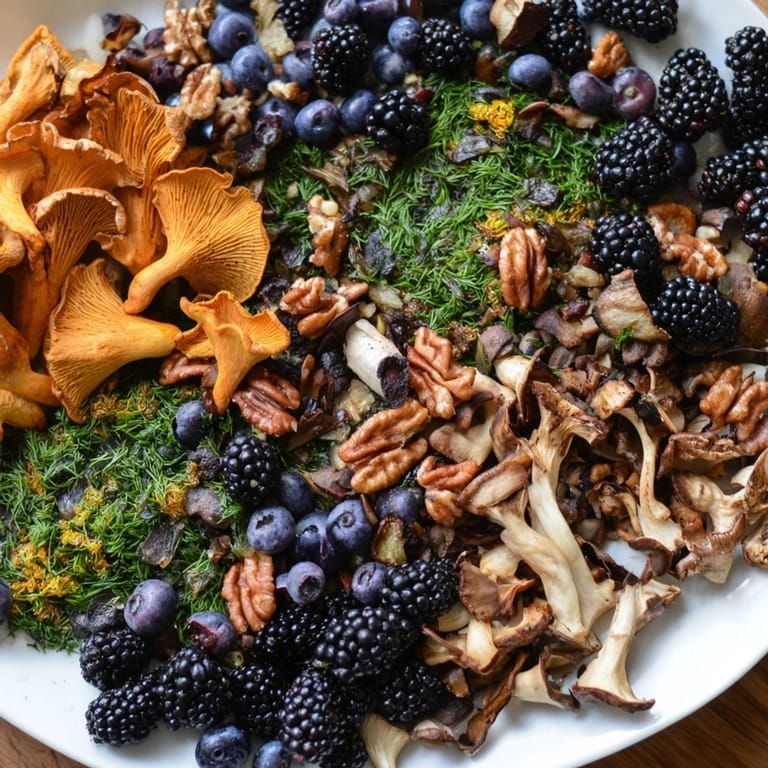
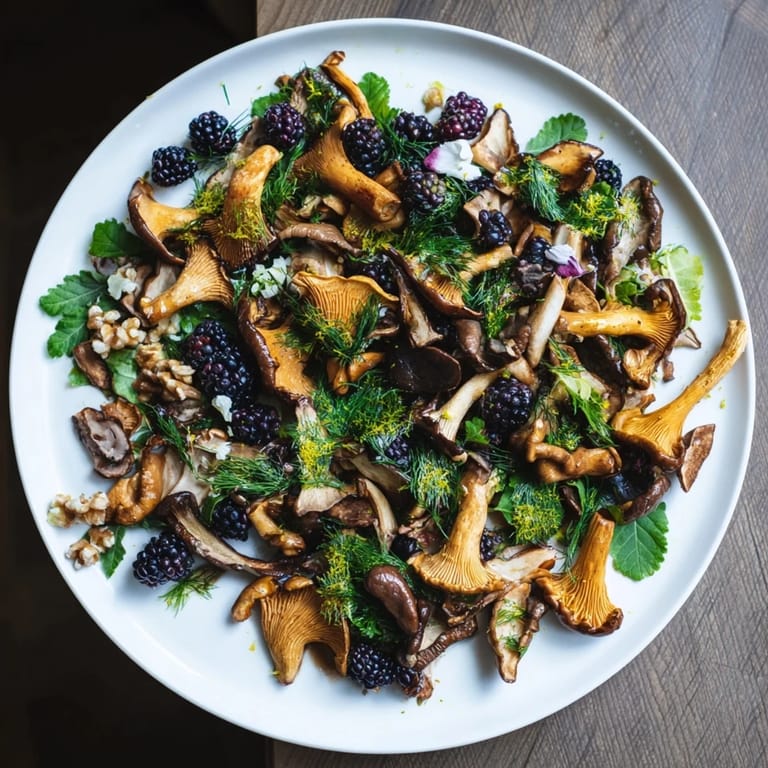
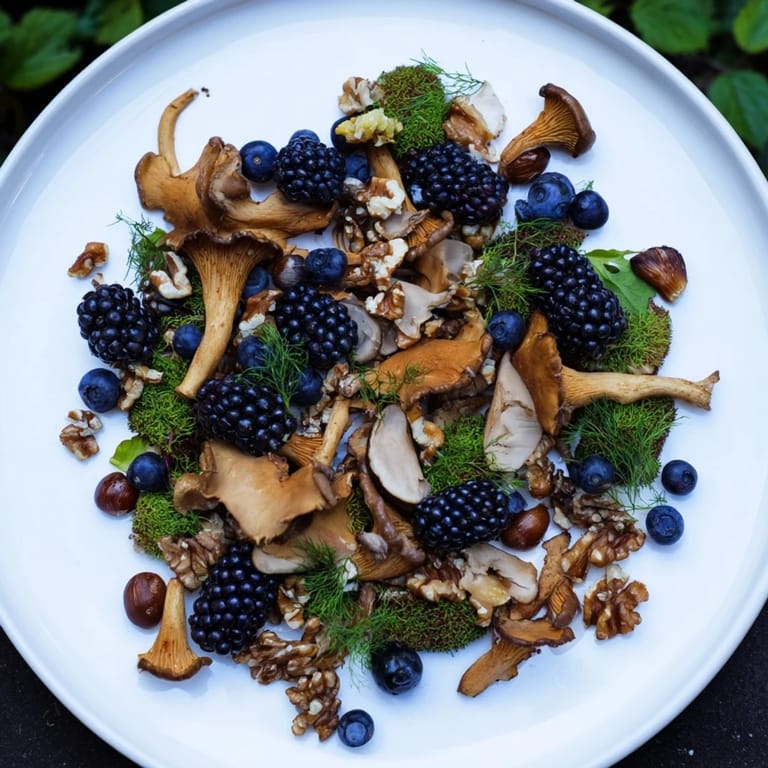
- Use a large platter or individual plates depending on your style. This is where you become an artist. Start with small organic clusters of mushrooms, spacing them around the plate like clearings in a forest. Nestle clusters of nuts near them, mixing the hazelnuts and walnuts so no one nut dominates. Scatter blackberries and blueberries in between, letting some rest against the mushrooms and others stand alone. The goal is to create density and visual interest without crowding. Generously spoon your herb moss around and between all these clusters, as if moss is growing on the forest floor around rocks and fallen branches. The herbs should peek out from between other ingredients.
- Add the final touches:
- If using edible flowers, place them thoughtfully as if they naturally grew in this woodland scene. Scatter microgreens or baby sorrel for a final layer of texture and color. Serve at room temperature so every flavor sings clearly.
 Save
Save My grandmother once told me that food is where memory lives. Making this dish for someone and watching them pause before the first bite, struck by its beauty, taught me she was right. That moment of recognition, of seeing the forest on their plate, is when this recipe becomes more than ingredients.
Why This Dish Captures the Pacific Northwest
The Pacific Northwest isn't just about mountains and rain, it's about what grows in that magical wet darkness between the trees. Mushrooms thrive there, and berries grow wild at every elevation. Creating this dish is an act of honoring that ecosystem, bringing its colors and textures to your table. Every component on this plate has grown under the same sky, in the same soil. When you eat it, you're tasting place and season together.
The Alchemy of Combining Warm and Cold
The secret magic of this dish lives in the temperature contrast. Warm mushrooms release their aroma and soften in your mouth, while cool berries burst with bright flavor and tartness. The herbs fall somewhere in between, carrying warmth from the plate but keeping their fresh snap. This interplay keeps your palate engaged through every bite, creating complexity from simplicity. It's why this works as both a sophisticated appetizer and a satisfying light lunch.
Variations and Seasonal Swaps
This recipe isn't rigid, it's a foundation for your own forest exploration. In summer, add roasted early vegetables like baby carrots or beets for earthiness. In spring, try fresh peas and asparagus tips. You can substitute the nuts with toasted pine nuts or pecans, or roast some root vegetables separately and arrange them with the other components. Some of my favorite versions include pickled shallots for a sharp note, or a drizzle of balsamic reduction to add sweetness and depth. Play with edible flowers that grow in your region or are sold at farmer's markets. The ingredient list is really just your jumping off point.
- Substitute pecans or pine nuts for a different earthy sweetness
- Add roasted root vegetables like beets or parsnips for more substance
- Try pickled shallots or a light balsamic glaze for brightness
 Save
Save This is the kind of dish that reminds you why you cook in the first place. Not for complicated techniques or exotic ingredients, but for those moments when something simple and honest from the earth becomes a gift you share. Serve it, watch people enjoy it, and let it become a memory they return to.
Recipe FAQs
- → What mushrooms work best in this dish?
Chanterelle, shiitake, and oyster mushrooms provide a perfect earthy mix that complements the other ingredients well.
- → Can I substitute the nuts used here?
Yes, pecans or pine nuts make excellent alternatives to hazelnuts and walnuts for a similar earthy flavor and crunchy texture.
- → How should the herb moss be prepared?
Finely chop fresh parsley, dill, chervil or tarragon, and chives, then toss them with olive oil, lemon zest, and flaky sea salt until vibrant and slightly clumping.
- → Is this dish suitable for vegans?
To make it vegan, omit the butter or replace it with a plant-based alternative while sautéing the mushrooms.
- → What drinks pair well with this creation?
Light Pinot Noir or crisp dry cider complement the earthy mushrooms and fresh berries beautifully.
- → Can additional ingredients enhance the dish?
Roasted root vegetables or pickled shallots add complexity and variation to the flavors and textures.