 Save
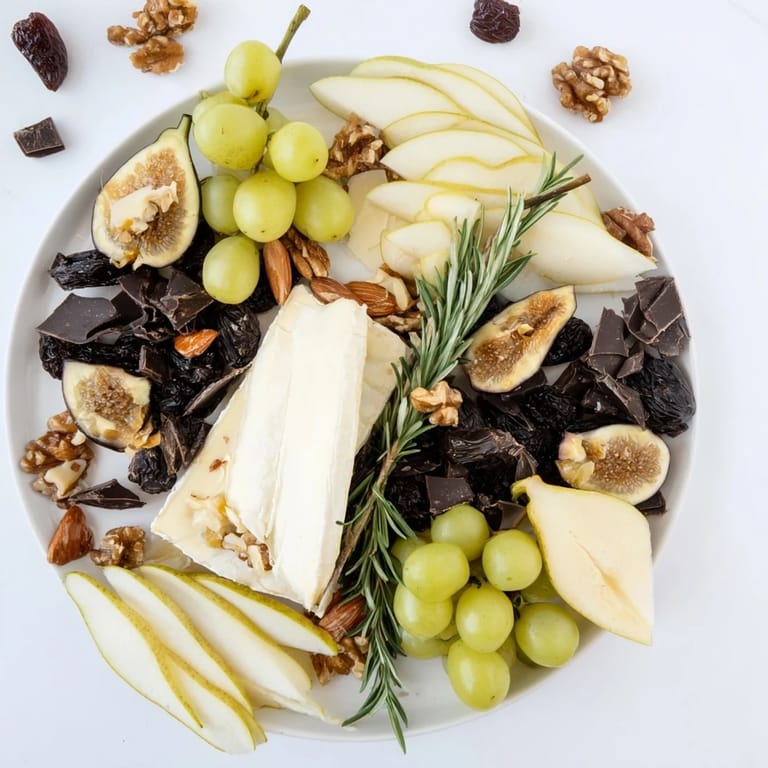
Save There's something about the winter solstice that makes me want to gather people around food that looks like it took hours but honestly takes minutes. I was reading about seasonal symbolism one December afternoon, half-listening to snow tap against the window, when this idea struck me: what if I could build a board that told a story right on the platter? Half dark and moody, half bright and warm, all meant to celebrate the turning of the year. My friends arrived skeptical until they saw it.
I served this at a gathering where everyone was stressed about year-end chaos, and something shifted when we all just stood there looking at it. Someone said it felt like hope and rest on the same board, and honestly, that's when I knew this wasn't just a cheese board—it was a moment. We sat longer than anyone expected, talking about what the new year might bring.
Ingredients
- Kalamata olives: Use pitted ones to spare your guests the awkward moment of spitting pits into their napkins.
- Oil-cured black olives: These are denser and earthier than green olives; they anchor the dark side with intensity.
- Dried mission figs: Halve them so people can actually pick them up; whole figs feel awkward on a board.
- Fig jam: A small amount goes a long way; it bridges the sweet and savory beautifully.
- Dark chocolate: Break it roughly into irregular pieces—perfection looks less inviting than something clearly handmade.
- Roasted almonds: The salt on roasted nuts cuts through the richness of the dark side perfectly.
- Fresh rosemary: Use it as both garnish and divider; the smell alone sells the board.
- Ripe Brie: Feel it gently before the gathering—it should yield slightly to pressure but not be falling apart.
- Pears: Slice just before serving or toss lightly with lemon juice to prevent browning.
- Honeycomb or honey: Honeycomb adds texture and surprise; drizzled honey is easier to portion.
- Toasted walnuts: Toast them yourself if you can; the warmth brings out their sweetness.
- Seedless green grapes: They provide a pop of bright color and a burst of juice that feels fresh against the creamy cheese.
- Fresh thyme: A small bunch scattered across the light side echoes the rosemary and adds herbaceous brightness.
- Baguette and crackers: Choose one crusty and one refined; variety means everyone finds their texture match.
Tired of Takeout? 🥡
Get 10 meals you can make faster than delivery arrives. Seriously.
One email. No spam. Unsubscribe anytime.
Instructions
- Create your dividing line:
- Lay out a row of rosemary sprigs down the center of your board, or use a neat line of crackers. This isn't just decoration—it's your visual anchor, the line between seasons.
- Build the dark side:
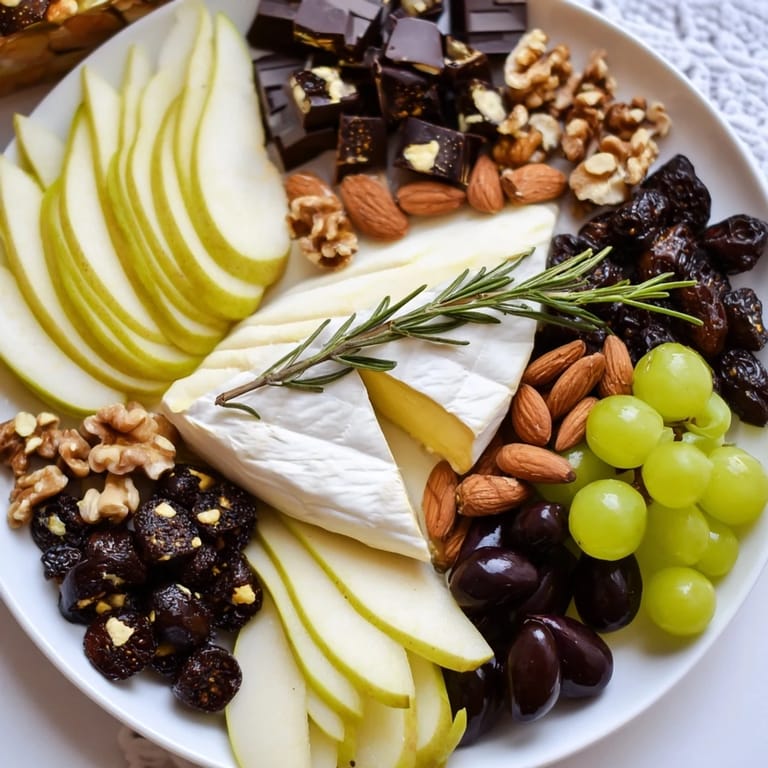
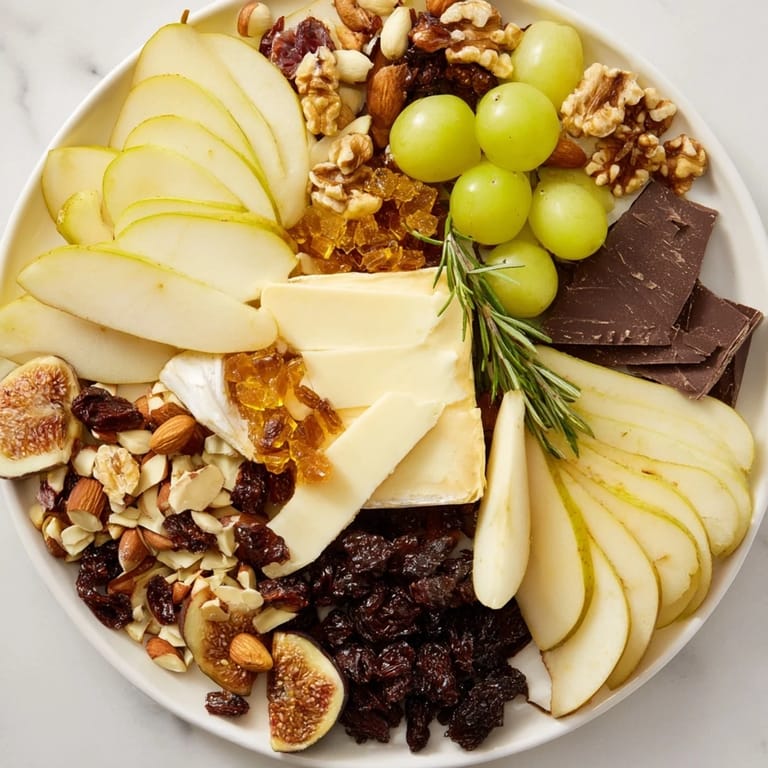
- Start by clustering the olives loosely, then nestle the fig halves between them. Dot the fig jam in a small pool or two, scatter the chocolate pieces like they landed there naturally, add the almonds, and tuck the remaining rosemary around everything so it feels abundant but not chaotic.
- Build the light side:
- Arrange the Brie as your centerpiece, then fan the pear slices around it. Position the honeycomb or drizzle honey nearby, scatter walnuts and grapes in clusters rather than spreading them thin, and tuck thyme throughout so the herbs frame the cheese.
- Position your vehicles:
- Place baguette slices and crackers along the center line or on a separate small plate—this prevents them from absorbing moisture and falling apart before anyone eats them.
- Serve at room temperature:
- Pull the board out 15 minutes before guests arrive so everything reaches the same gentle warmth. Cold cheese tastes muted; room-temperature cheese tastes like itself.
 Save
Save What surprised me most was watching people eat from this board differently than they would from separate plates. The contrasts made them more curious—someone who never eats olives tried one because it was next to chocolate, someone else discovered they actually like figs. It became less about the individual ingredients and more about the conversation between flavors.
The Symbolism Behind the Split
I wasn't sure whether people would actually notice or care about the dark-and-light concept, but it turns out humans are drawn to stories, even edible ones. The dark side—olives, figs, chocolate, earth tones—represents the quiet depth of winter and reflection. The light side—Brie, pears, honey, brightness—gestures toward the returning sun and warmth. Serving them together on one board says that both matter, that darkness and light are part of the same turning wheel. It's philosophy you can eat.
Timing and Prep
This is genuinely a 15-minute board if you buy pre-pitted olives and good cheese. The only real skill is knife work for the pears, and even that's forgiving. I usually prep my board an hour or two before people arrive, cover it loosely with plastic wrap, and let it sit at room temperature. Everything is already at its best—no last-minute panic, no timing coordination with other dishes. It's the rare recipe where doing it early is actually better than rushing at the last minute.
Pairing Suggestions
The first time I served this, I suggested a dry sparkling wine, mostly because it seemed elegant and proper. But then someone brought a light-bodied red—a Pinot Noir or young Grenache—and it was actually better. The wine travels between the two sides more gracefully, playing off the earthiness of the olives and the sweetness of the Brie without overwhelming either. A crisp white works too if you lean that way, but I'd skip anything heavy; this board is about brightness and balance, not weight.
- Sparkling wine cuts through the richness of the Brie side while complementing the dark, briny olives.
- A light red bridges both sides without favoring one over the other.
- Even a crisp water with fresh herbs will feel intentional and correct.
 Save
Save This board taught me that sometimes the most meaningful food is the kind that asks people to slow down and look before they eat. There's no cooking involved, but there's all the intention in the world.
Recipe FAQs
- → How do I arrange the dark and light sides effectively?
Divide your serving board in half using a sprig of rosemary or a row of crackers to visually separate the dark olives, figs, and chocolate from the lighter Brie, pears, and honey elements.
- → Can I substitute any ingredients if unavailable?
Yes, Brie can be swapped for Roquefort or Camembert, pears can be replaced with apples, and dried apricots work well instead of figs for a slightly different flavor profile.
- → What additional accompaniments complement this board?
Sliced baguette and assorted crackers provide texture contrast, while a dry sparkling wine or light-bodied red wine pairs beautifully with the rich and fresh elements.
- → Is this suitable for vegetarians?
Yes, the board is vegetarian, though prosciutto additions on either side can be omitted for strict vegetarians to maintain the balance.
- → How should I store leftovers?
Wrap any leftovers tightly and refrigerate. Bring back to room temperature before serving to allow the cheese and fruits to regain their intended flavors and textures.