 Save
Save There's something about the smell of beets hitting hot oil that pulls me right back to my grandmother's kitchen, where a pot of borscht was always simmering on the stove during the colder months. The first time I made it myself, I was nervous about getting the color right—I thought I'd somehow mess up the deep crimson that made the soup so beautiful. But once those grated beets hit the pan with the onions and carrots, the whole thing came together like magic, and I realized why she never followed a recipe written down.
I made this for a dinner party once, and watching my friends' faces as they tasted it for the first time was worth every minute of prep work. One guest asked if I'd learned to cook in Ukraine, and I had to laugh and admit it was all self-taught through trial and error. By the end of the meal, someone was already asking for seconds, and the pot was nearly empty.
Ingredients
- Beef chuck or brisket (400g): These cuts have enough fat and connective tissue to become silky after simmering, and they won't fall apart into shreds.
- Water (1.5 liters): This becomes your foundation—the longer the beef simmers, the more flavorful your broth becomes.
- Bay leaves and black peppercorns: These subtle aromatics anchor the broth without overpowering the earthiness of the beets.
- Beets (3 medium): They're the soul of this soup; grate them fresh rather than using canned, and you'll notice the difference immediately in both flavor and color.
- Carrots and onion: When sautéed together, they create a sweet, savory base that balances the beet's earthiness.
- Potatoes and cabbage: Potatoes add body and substance, while cabbage brings a subtle, gentle sweetness that rounds out the whole soup.
- Tomato paste, sugar, and vinegar: This trio is the secret—the paste adds depth, sugar smooths everything, and vinegar brightens it all with just the right amount of tang.
- Garlic (2 cloves): It goes in near the end, just enough to whisper itself into the finished soup.
- Sour cream and fresh dill: These aren't extras; they're essential to the final taste and texture.
Tired of Takeout? 🥡
Get 10 meals you can make faster than delivery arrives. Seriously.
One email. No spam. Unsubscribe anytime.
Instructions
- Start your broth:
- Place the beef with water, bay leaves, peppercorns, and salt in a large pot and bring it to a rolling boil. You'll see foam rise to the surface—skim it off patiently, because this step keeps your broth clear and clean-tasting. Lower the heat and let it simmer gently for 45 minutes, filling your kitchen with a warm, meaty aroma.
- Sauté your vegetables:
- While the beef cooks, heat oil in a skillet and add the chopped onion, stirring until it turns translucent and sweet-smelling. Add the grated carrots and beets, letting them soften and deepen in color, then stir in the tomato paste, sugar, and vinegar—the paste will caramelize slightly and smell incredible.
- Prepare the broth base:
- Remove the beef carefully and set it aside on a cutting board. If you'd like a perfectly clear broth, pour it through a fine strainer; otherwise, just return it to the pot at a gentle simmer.
- Build your soup:
- Add the diced potatoes first and give them a 10-minute head start so they soften evenly. Then add the shredded cabbage and the whole sautéed vegetable mixture, letting everything simmer together for another 10 minutes until the vegetables are completely tender.
- Bring it all together:
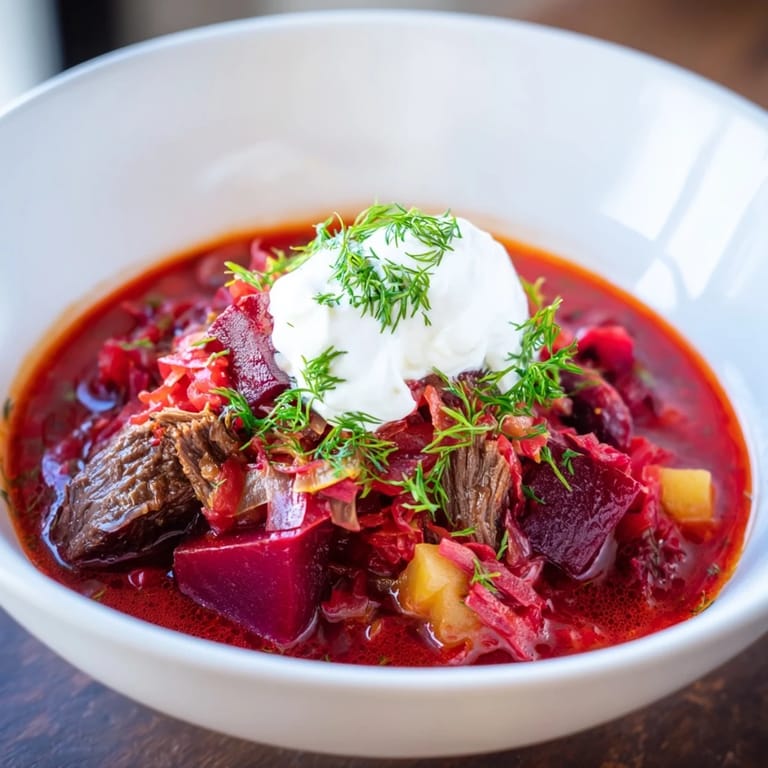
- Shred or cube the cooked beef—it should fall apart easily—and return it to the pot with the minced garlic. Taste and adjust your salt and pepper, then let the whole pot rest off the heat for 15 to 20 minutes so all the flavors meld and deepen.
 Save
Save The real magic of borscht is how it tastes even better the next day, when you reheat it and the flavors have deepened overnight. It's the kind of soup that makes your whole house smell like home, whether that's your actual home or just the home you're creating in that moment.
The Heart of This Soup
Borscht isn't just about following steps; it's about understanding that each ingredient brings something irreplaceable to the pot. The beets give it color and earth, the beef gives it soul, and the sour cream at the end is what makes you close your eyes and smile. I've learned that rushing through the sautéing step or skipping the rest period means you're missing the point entirely—this is a soup that rewards patience and attention.
Serving and Pairing
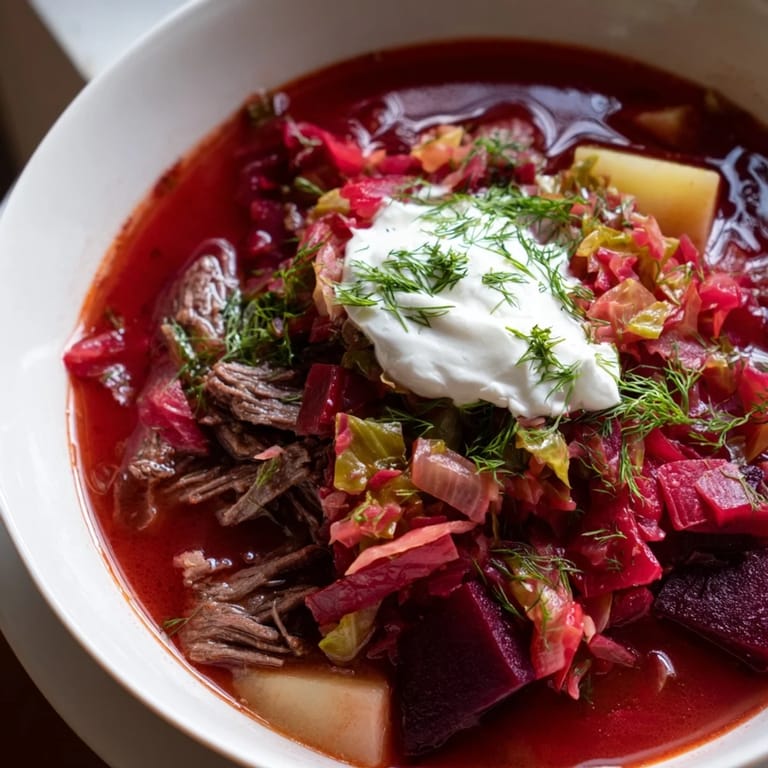
Serve this hot in deep bowls with a generous spoonful of sour cream stirred in or dolloped on top, and scatter fresh dill or parsley over everything. Rye bread is traditional and perfect for soaking up every last drop, and if you can find Ukrainian garlic rolls, they're worth seeking out. A simple green salad alongside keeps the meal feeling balanced, though honestly, this soup is complete on its own.
Making It Your Own
Once you've made this a few times and feel confident with the technique, you'll start to understand where you can play around. Some people add a splash of lemon juice at the very end for brightness, and that works beautifully. Others use different cuts of beef or add extra vegetables, and the soup adapts gracefully to whatever you have on hand or whatever mood you're in.
- If you want a vegetarian version, use vegetable broth instead and maybe add an extra potato or some mushrooms for depth.
- Borscht freezes incredibly well and actually tastes better after a day or two, so make extra without guilt.
- Taste and adjust your seasoning just before serving, because sour cream can mellow flavors slightly.
 Save
Save There's a reason borscht has survived centuries and traveled across continents—it's nourishing, honest, and it tastes like someone cares. Make this when you need comfort, and you'll understand why.
Recipe FAQs
- → What cuts of beef work best for this soup?
Beef chuck or brisket are ideal for slow simmering, as they become tender and flavorful during cooking.
- → Can I prepare the soup vegetarian style?
Yes, simply omit the beef and use vegetable broth instead to maintain a rich vegetable flavor.
- → Why are beets grated before cooking?
Grating beets helps them cook more evenly and release their vibrant color and sweetness into the broth.
- → How do the vinegar and sugar affect the flavor?
The vinegar adds a subtle tanginess that balances the sweetness brought by sugar, enhancing the overall depth of the broth.
- → Is it better to let the soup rest before serving?
Allowing the soup to rest for 15-20 minutes after cooking helps the flavors meld together, producing a richer taste.